Key takeaways for integrated device lifecycle control
- Technology deployment and asset management function as one continuous process, so every rollout decision affects inventory accuracy, license use, compliance and recovery value.
- Organizations that treat deployment as an isolated event face downstream costs from license waste, ghost assets, compliance exposure and lost recovery value.
- Flexera’s 2025 report shows enterprise IT visibility has dropped to 43 percent, which signals the need for a structured lifecycle approach that begins at procurement.
- Seven defined lifecycle stages, from procurement through recovery, create repeatable checkpoints, owners and outputs that keep asset records accurate and compliant from day one.
- Premier Logitech helps organizations implement this deployment-to-retirement framework; connect with a lifecycle expert to map a program that reduces TCO and recovers measurable value.
Seven-stage framework for the technology asset lifecycle
Seven stages structure the technology asset lifecycle. Each stage defines a primary owner, key output and compliance checkpoint. The stages are procurement, tagging and serialization, configuration and handover, inventory tracking, license and maintenance control, retirement planning and recovery and disposition.
Step 1: Align procurement data with tracking requirements
Procurement serves as the first control point in the lifecycle. Hardware specifications must include the fields that downstream asset management systems require, such as serial number format, asset tag placement, warranty start date and trade compliance status.
When procurement and ITAM teams define these fields together before purchase orders are issued, every asset arrives ready to enter the inventory system without manual rework. A device lifecycle management strategy can deliver reductions in total cost of ownership through improved financial predictability and asset optimization.
Key inputs include the approved vendor list, ITAM field schema and TAA sourcing requirements. Key outputs include a purchase order with tracking specifications and a pre-populated asset record template. Supply chain, IT asset management and finance coordinate at this stage.
Step 2: Apply tagging and serialization during configuration
Asset tagging must occur at the configuration stage, not after deployment. Tagging at configuration ensures every device enters the field with a unique identifier linked to a complete ITAM record before it leaves the facility.

Ghost assets, items that appear in the financial register but no longer physically exist, create inflated book value, distorted capital planning and audit compliance exposure. Serialization at configuration prevents ghost assets from being created at the front door.
TAA compliance callout: For government and regulated enterprise programs, Trade Agreements Act compliance must be verified and documented at the point of tagging. The tag record should include the country of origin and TAA status so that compliance remains traceable through the full lifecycle, not reconstructed at audit time.
Key inputs include device serial numbers, the ITAM tag schema and TAA documentation. Key outputs include tagged assets with complete ITAM records and a chain-of-custody log. Configuration and IT operations teams coordinate with compliance at this stage.
Step 3: Use standardized handover protocols to control custody
Handover represents the highest-risk transition in the deployment process. An asset that leaves the configuration facility without a signed handover record immediately becomes a candidate for ghost asset status.
Standardized handover protocols require a signed receipt, an ITAM record update at the moment of transfer and a defined escalation path when handover documentation is incomplete. Tracking initiatives that operate as one-time setups instead of ongoing programs experience data decay after go-live. Handover discipline forms the first line of defense against that decay.
Key inputs include the configured asset, ITAM record and handover checklist. Key outputs include a signed handover record and an updated ITAM status field. IT operations, the receiving end user or site manager and IT asset management all participate in this step.
Step 4: Maintain real-time inventory feeds from deployment systems
Deployment systems hold the most current asset data in the organization. When those systems do not feed the ITAM platform in real time, the asset register drifts. Without ongoing maintenance, a clean asset register becomes inaccurate within 90 days.

Real-time integration between deployment, MDM and ITAM platforms closes this gap. These integrations improve discovery accuracy, keep inventory current and reduce audit preparation time.
Key inputs include MDM data feeds, deployment system exports and ITAM integration specifications. Key outputs include a reconciled, real-time asset register. IT operations, IT asset management and the integration or platform team coordinate at this stage.
Step 5: Connect license and maintenance tracking to deployment data
Every deployed asset carries license entitlements and a maintenance schedule. When those records are not linked to the deployment record, organizations overprovision licenses and miss maintenance windows.
Organizations that integrate license tracking with deployment records have identified inefficiencies worth up to 30 percent of software licensing spend. Linking entitlement and maintenance data to asset records turns those savings into a repeatable outcome.
NIST and CMMC compliance callout: NIST SP 800-18r2 requires that system plans consolidate information about protected assets, system components, data flows and planned or implemented controls within an authorization boundary. License and maintenance records linked to deployment data support this requirement directly. CMMC assessments evaluate whether asset records are complete and auditable, so gaps in license or maintenance tracking create findings.
Key inputs include software entitlement records, maintenance contracts and deployment asset IDs. Key outputs include a license utilization report and a maintenance schedule tied to each asset record. IT asset management, finance and compliance coordinate at this stage.
Step 6: Define retirement pathways at deployment
Retirement planning at deployment functions as cost control. Assigning a disposition pathway at the point of deployment ensures that recovery value, data destruction requirements and recycling obligations are documented before the asset enters service.
Organizations face security and compliance risks with retired IT assets if sensitive data is not securely destroyed and disposition is not handled through controlled processes with full chain-of-custody tracking. The EPA recommends certified electronics recyclers and documented disposition for IT assets to support compliant end-of-life handling.
Key inputs include asset classification, data sensitivity level and expected refresh cycle. Key outputs include a documented disposition pathway assigned in the ITAM record. Reverse logistics, compliance and finance coordinate at this stage.
Step 7: Execute recovery and disposition with full traceability
Recovery and disposition convert lifecycle discipline into financial and compliance outcomes. Assets follow the assigned pathway, which can include redeployment, resale, donation or certified recycling.
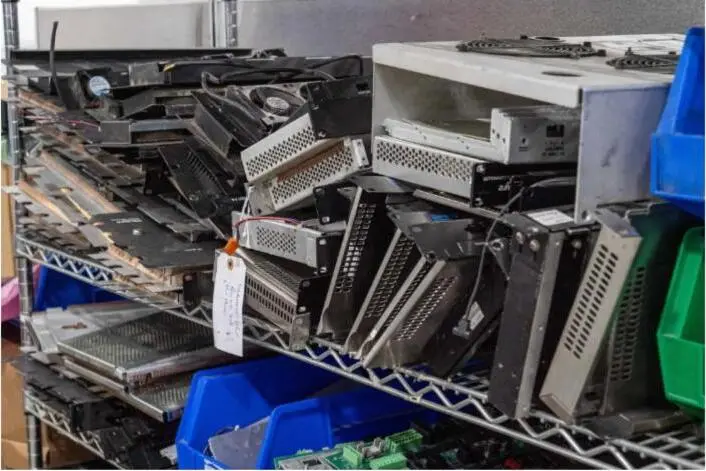
Documented data destruction, verified chain of custody and recorded recovery value complete the lifecycle record. These records support audit responses, ESG reporting and capital planning.
Role ownership across the lifecycle
The lifecycle framework depends on clear role definition to prevent accountability gaps. Five roles share responsibility across the lifecycle, and each controls checkpoints that protect data quality and compliance.
Asset owners accept custody and report status changes, which creates the handover records that prevent ghost assets. IT operations handles configuration, tagging, deployment and maintenance, the stages where most tracking failures originate.
Supply chain manages procurement, inbound logistics and disposition logistics, so assets enter and exit the organization with complete documentation. Compliance reviews regulatory checkpoints across all stages and validates that TAA, NIST and data security requirements are met at each transition.
Finance oversees asset valuation, depreciation and recovery accounting, which turns lifecycle discipline into measurable cost control. Each role coordinates with defined partners to maintain accuracy and compliance.
Measuring lifecycle performance with leading and lagging indicators
Effective lifecycle programs require measurement at two time horizons to balance prevention with validation. Lifecycle KPIs fall into two categories that work together.
Leading indicators signal future performance before failures occur and allow teams to intervene before costs materialize. Lagging indicators confirm whether the program is working after results are visible and validate that interventions produced the intended outcomes.
Leading indicators for technology asset lifecycle management include inventory accuracy rate, ghost asset rate, refresh compliance rate, license utilization rate and time to onboard. Lagging indicators include mean time to repair, warranty coverage rate, recovery value per retired asset and audit findings.
Organizations that reconcile inventory regularly can maintain high accuracy, while those that never reconcile see accuracy decrease over time. This pattern shows that lifecycle discipline functions as an ongoing practice, not a one-time setup.
License utilization patterns reveal whether the organization leaves money on the table or creates compliance risk. Low utilization reveals savings opportunities, while usage exceeding entitlement creates audit exposure.
The following example illustrates how lifecycle integration affects KPI outcomes over a 12-month period. Inventory accuracy improves in an integrated lifecycle, and ghost asset rate decreases after each reconciliation cycle. License utilization moves toward a more balanced range, and recovery value per asset becomes more predictable when documented at deployment.
Implementation questions about integrated lifecycle programs
How long does it take to integrate deployment and asset management processes?
Integration timelines depend on the number of systems involved, the quality of existing asset data and team readiness. Organizations with clean procurement data and an existing ITAM platform can establish core integrations within a few months.
Programs starting from fragmented data typically require a phased approach over a longer period, beginning with a pilot scope before scaling. Organizational readiness, including process adoption, user training and data governance, drives the timeline more than technology installation alone.
What are the primary cost drivers in a lifecycle integration program?
The largest cost drivers are integration labor between systems, data cleansing of existing asset records, tagging labor for assets already in the field and ongoing data stewardship. Hardware and software licensing for ITAM tools often represent a smaller portion of total program cost than organizations initially estimate.
Scoping integration requirements before selecting tools and budgeting for change management reduces the risk of cost overruns.
Which compliance frameworks most directly affect technology deployment and asset management in the United States?
For federal and regulated enterprise programs, the most relevant frameworks include the Trade Agreements Act for hardware sourcing, NIST SP 800-18r2 for system security and supply chain risk management planning, CMMC for defense contractor environments and EPA guidance for responsible electronics recycling at end of life.
Export Administration Regulations apply when controlled technology or technical data may be transferred across borders or accessed by foreign nationals. Organizations should map their asset lifecycle stages to the specific control requirements of each applicable framework.
What team skills are required to sustain a lifecycle integration program?
Sustained programs require data stewardship skills to maintain asset record accuracy, integration management skills to keep system feeds functioning and cross-functional coordination between IT operations, supply chain, finance and compliance. A designated asset management owner with authority to enforce handover and reconciliation protocols consistently appears in programs that maintain accuracy over time.
Many organizations supplement internal teams with a lifecycle services partner to cover capacity gaps in configuration, tagging and reverse logistics.
When should an organization revisit its lifecycle integration framework?
A framework review is warranted when inventory accuracy drops below acceptable thresholds, when a major hardware refresh or platform migration is planned, when regulatory requirements change or when ghost asset rates increase after a reconciliation cycle.
Organizations that add new device categories, such as IoT endpoints or mobile fleets, should also review whether existing tagging and tracking processes extend to those asset classes before deployment begins.
Conclusion: Turning lifecycle structure into measurable results
Technology deployment and asset management operate as a single integrated process. Every decision made at procurement, configuration and handover determines the accuracy, compliance posture and recovery value of assets years later.
The seven-stage framework gives operations, supply chain and IT teams a repeatable structure with defined owners, outputs and compliance checkpoints at each stage. The TCO reductions described at the outset depend on connecting deployment decisions to ongoing asset visibility and control, a connection the seven-stage framework makes repeatable.
Premier Logitech supports this framework across the full lifecycle from TAA-compliant procurement and configuration through real-time inventory management, depot repair and certified asset recovery. Organizations can engage Premier Logitech for end-to-end program management or for individual services where gaps exist.
