Key Takeaways for IT Lifecycle Programs
- IT lifecycle management replaces fragmented, reactive asset handling with a governed program that controls costs and recovers value at every stage.
- The five-stage model of planning, deployment, operations, refresh and disposition creates a repeatable framework that reduces budget exposure and compliance gaps.
- Structured lifecycle programs deliver measurable gains, including lower operating costs, reduced breach risk, fewer outages, reclaimed residual value and stronger ESG reporting.
- Compliance mandates such as TAA, NIST SP 800-88, CMMC and SOC 2 must be addressed at every lifecycle stage.
- Organizations ready to consolidate vendors and close visibility gaps can connect with a lifecycle specialist at Premier Logitech to map current flows and improve program performance.
The Five Stages of IT Asset Lifecycle Management
The five-stage model below reflects the standard framework used across enterprise and government environments, drawing on guidance from Kaseya, Blancco and CHG-MERIDIAN.
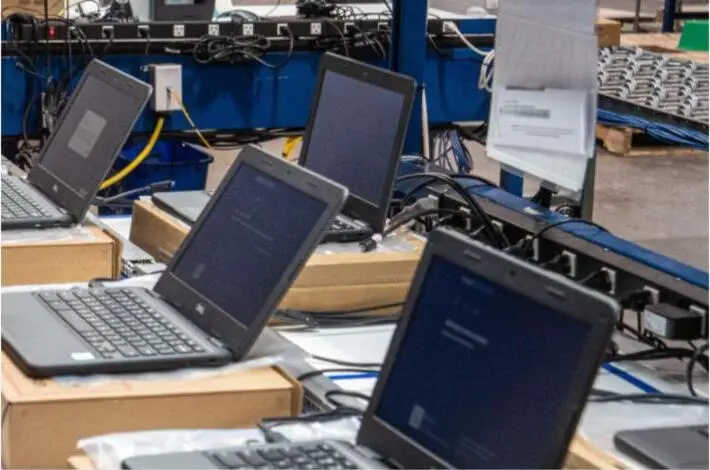
- Planning and Procurement. Teams align asset purchases with business needs, existing inventory and total cost of ownership. TAA-compliant sourcing applies to government contracts. Premier Logitech supports aggregated procurement across hardware, software and peripherals, including open-market and trade-compliant channels.
- Deployment and Configuration. Teams provision assets to documented security baselines, enroll them in monitoring platforms and add them to asset registers linked to users, locations and contracts. Actions include asset tagging with barcodes, QR codes or RFID, imaging, BIOS configuration, SIM and IMEI pairing and kitting for new-hire or day-one programs.
- Operations and Maintenance. Teams sustain assets through patch management, hardware health monitoring, license compliance checks and warranty tracking. This is the longest phase of the hardware lifecycle and the phase most vulnerable to deferred maintenance costs.
- Optimization and Refresh Planning. Teams track hardware age against warranty and support expiry dates. Organizations that manage reactive replacement cycles routinely pay 30 to 40 percent more per unit than those buying on a planned schedule. Rapid exchange and next-day replacement programs reduce downtime during refresh cycles.
- Disposition and Recycling. Teams decommission assets with certified data destruction, compliant e-waste disposal and full documentation. They remove assets from registers and reallocate or cancel software licenses. Only 22.3 percent of e-waste was properly recycled in 2022, so certified disposition carries regulatory and reputational weight.
Cost and Risk Benefits of Structured IT Lifecycle Management
A structured ITLM program converts unpredictable capital events into planned budget lines. The program improves cost control, risk posture and asset recovery.
- Cost control: Structured lifecycle programs reduce operational costs. Eliminating ghost assets, right-sizing software licenses and avoiding emergency procurement all contribute to lower spend.
- Risk reduction: Software vulnerabilities account for 31 percent of breaches. Running software past end of support creates permanent unpatched exposures. Lifecycle tracking triggers timely refresh or decommission before assets become liabilities.
- Downtime prevention: The average cost of IT downtime is $14,056 per minute. Proactive maintenance and planned refresh cycles reduce unplanned outages and service disruptions.
- Asset recovery value: Recovering a portion of an asset residual value through resale, reuse or parts harvesting can return meaningful budget for large enterprises. Certified refurbishment and grading programs support secondary market resale instead of premature destruction.
- Sustainability: Global e-waste is projected to reach 74.7 million tonnes by 2030. Extending asset life through repair and refurbishment reduces new production demand and supports ESG reporting obligations.
Compliance Requirements for Government and Enterprise IT Assets
The cost and risk benefits above depend on meeting compliance requirements at every lifecycle stage. Government and regulated enterprise environments carry specific obligations that shape how assets are sourced, maintained and retired.
- TAA (Trade Agreements Act): Federal procurement requires products manufactured in TAA-designated countries. Premier Logitech sources and validates TAA-compliant hardware for government programs, including those requiring CAGE Code verification.
- NIST SP 800-88: The primary media sanitization reference for federal agencies, defining Clear, Purge and Destroy levels for assets at disposition. NIST 800-88 is referenced by GDPR, HIPAA, PCI DSS and DoD contracts.
- CMMC (Cybersecurity Maturity Model Certification): CMMC Level 2 requires DoD contractors handling CUI to maintain baseline configurations and inventories, perform tracked maintenance and sanitize or destroy media before disposal. Premier Logitech holds CMMC certification and supports contractors through audit-ready documentation.
- SOC 2: SOC 2 auditors require proof of security baselines, approval workflows and disposal verification at each lifecycle phase, including data sanitization certificates linked to individual asset serial numbers. Premier Logitech SOC 2 certification supports enterprise customers through each audit cycle.
- ISO 9001 and ISO 14001: Quality and environmental management certifications govern repair processes, refurbishment standards and responsible recycling practices across Premier Logitech operations.
Review compliance requirements for a specific program or agency with the Premier Logitech team.
Comparing Single-Source and Fragmented Vendor Models
Most large organizations manage IT lifecycle tasks across multiple vendors. A 3PL handles warehousing, a separate depot repair provider manages repairs, an OEM processes warranty claims and an ITAD firm handles disposition. A typical organization manages an average of 83 security solutions across 29 different vendors. Fragmentation at that scale creates visibility gaps, compliance handoff risks and redundant overhead.
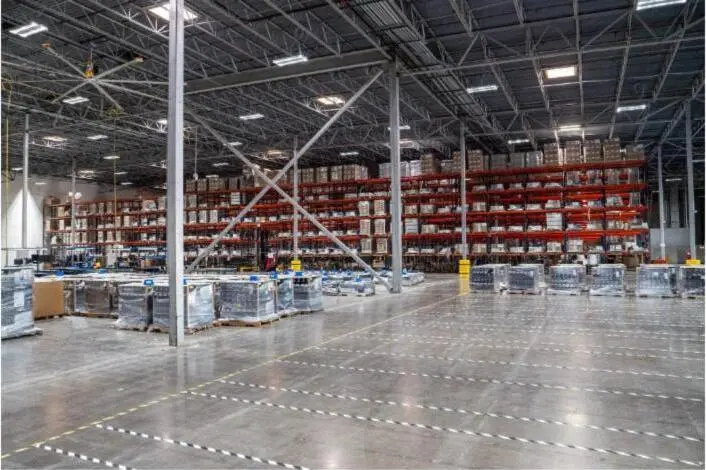
A single-source model consolidates those relationships under one partner with end-to-end accountability. Premier Logitech operates as that partner. The company manages sourcing, configuration, fulfillment, depot repair, rapid exchange and certified disposition under one program. Clients gain a single point of contact, unified reporting and consistent compliance documentation across every stage.
For OEMs with warranty obligations, Premier Logitech holds Authorized Service Center status for more than 20 OEM brands, covering Level 1 through Level 4 repair. That authorization removes the compliance risk of routing warranty repairs through noncertified providers.
Best Practices Checklist for IT Lifecycle Management
- Maintain a discovery-verified asset inventory with hardware specifications, acquisition dates, warranty expiry and ownership records updated continuously. This inventory serves as the source of truth for lifecycle decisions.
- Tag every asset at deployment using barcodes, QR codes or RFID for traceability across its full lifecycle, so each device connects back to the inventory record.
- Set automated alerts for end-of-life, end-of-support and contract renewal dates, beginning refresh planning 12 to 18 months in advance. These alerts use inventory data to trigger proactive replacement.
- Enforce standardized decommissioning checklists that include data wipe confirmation, license reclamation, CMDB status updates and ITAD handoff documentation. These steps close gaps where data or value can leak.
- Conduct software-use audits 60 to 90 days before renewals to identify underused licenses and right-size agreements, using findings to reduce recurring spend.
- Track five core KPIs, including average asset lifespan, unplanned downtime, assets outside OEM support without an alternative contract, total cost of ownership per asset and percentage of hardware decommissioned sustainably. These metrics show whether lifecycle policies work in practice.
- Integrate IT asset management data with ITSM workflows for incident, change and problem management, so service teams act on accurate asset records.
- Require data sanitization certificates linked to individual serial numbers for every disposed asset, creating an audit trail for regulators and internal stakeholders.
Addressing Common Concerns About Lifecycle Consolidation
- Warranty obligations limit repair options. Premier Logitech holds ASC authorization for more than 20 OEM brands. Warranty repairs route through certified channels and preserve OEM relationships and coverage terms.
- Return volumes are too high for a single partner to absorb. Premier Logitech depot operations support high-volume programs, with capacity for tens of thousands of repairs per week and flexible intake models for seasonal or surge volumes.
- Switching from multiple vendors creates transition risk. Premier Logitech operates as a modular or end-to-end partner. Organizations can engage individual services such as depot repair, configuration and ITAD before consolidating into a full lifecycle program.
- Government programs require pre-vetted partners. Premier Logitech meets baseline requirements for federal and defense programs with the certifications and credentials described in the compliance section above.
Next Steps to Map Current IT Lifecycle Flows
The starting point for lifecycle improvement is an accurate map of current asset flows, from procurement through disposition, with performance data at each handoff. That map reveals where fragmentation, compliance gaps and missed recovery value concentrate.
Premier Logitech has supported enterprises, OEMs and government agencies in building and improving lifecycle programs since 2007. The process begins with a discovery call to assess current flows, identify the highest-impact gaps and define a program structure that fits existing operational requirements.
Schedule a discovery call with Premier Logitech to begin mapping IT lifecycle flows.
Frequently Asked Questions
What is the difference between IT lifecycle management and IT asset management?
IT asset management focuses on tracking and improving individual assets such as servers, laptops and software licenses from acquisition to disposal. IT lifecycle management is broader and governs the full IT environment, including services, infrastructure, software policies and assets. ITLM uses ITAM data to decide whether to maintain, refresh or retire each asset. ITLM defines the strategic program, and ITAM supplies the operational data that supports it.
Which compliance frameworks apply to IT lifecycle management for government agencies?
U.S. government and defense programs typically require alignment with the Trade Agreements Act for procurement, NIST SP 800-88 for media sanitization, CMMC for handling Controlled Unclassified Information and SOC 2 for service organization controls. Federal agencies also operate under 40 U.S.C. 524 for asset accountability and OMB Circular A-123 for internal financial controls. Premier Logitech holds certifications across TAA, CMMC, SOC 2, ISO 9001 and ISO 14001 and carries CAGE Code 4WAJ9 as a pre-vetted federal partner.
How does a single-source lifecycle partner differ from using multiple vendors?
A fragmented model distributes lifecycle tasks such as warehousing, repair, configuration and disposition across separate vendors with separate contracts, reporting systems and compliance documentation. Each handoff between vendors creates a visibility gap and a potential compliance risk. A single-source partner manages every stage under one program with unified reporting, consistent data handling standards and a single point of accountability. For organizations with high return volumes or strict government compliance requirements, consolidation reduces administrative overhead and closes the gaps where assets, data and value are most often lost.
What happens to data on decommissioned IT assets?
Certified data destruction occurs before any asset leaves organizational control. NIST SP 800-88 defines three sanitization levels, Clear for internal reuse, Purge for assets transferred externally and Destroy for highest-sensitivity data. Each method must be documented with a certificate linked to the specific asset serial number. Premier Logitech performs secure data destruction and provides compliance documentation that supports SOC 2 audits, CMMC assessments and HIPAA obligations. Functional assets that pass sanitization can then be refurbished, graded and remarketed through secondary market channels to recover residual value.
Can an organization engage Premier Logitech for only part of the IT lifecycle?
Premier Logitech operates as both a full lifecycle partner and a modular services provider. Organizations can engage individual services such as depot repair, configuration and fulfillment, transportation or ITAD on a standalone basis without committing to an end-to-end program. This approach allows teams to address the highest-priority gaps first and expand the engagement as operational needs evolve. The modular model suits OEMs managing warranty repair volumes and enterprises that need certified disposition capacity without restructuring existing procurement relationships.
