Last updated: August 26, 2026
Key Takeaways for IT Reverse Logistics
- The 5 Rs of reverse logistics (Returns, Repair, Resell, Repackaging and Recycle) create a step-by-step framework that routes every IT asset to the highest-value disposition path.
- Each R functions as a separate warehouse stage with clear inputs, outputs and handoff rules that shorten processing time and raise recovery rates.
- Zone layout, RMA data integrity and continuous grading workflows act as core controls that prevent bottlenecks and support compliance records.
- Single-partner consolidation with ASC-authorized repair, NIST-compliant data destruction and TAA/CMMC certifications removes hand-off gaps and protects recovery value.
- Premier Logitech delivers end-to-end lifecycle services that turn returns into a competitive advantage, supported by certified repair, secure data handling and compliant recycling.
The 5 Rs as a Warehouse Operating System for IT Returns
The 5 Rs create a sequential decision framework that routes every returned IT asset through the highest-value disposition path available. Each R represents a discrete warehouse stage with defined inputs, outputs and handoff criteria. Together, the stages form a closed-loop operating system that reduces processing time, improves recovery rates and supports compliance documentation.
The five stages in order are:
- Returns – Receive, scan and triage inbound assets at a dedicated intake zone.
- Repair – Assess functional condition and route to the appropriate depot repair level.
- Resell – Grade assets and assign to primary, secondary or liquidation channels.
- Repackaging – Refurbish cosmetics, standardize packaging and apply resale-ready labeling.
- Recycle – Sanitize data, harvest recoverable parts and route end-of-life assets to certified downstream partners.
See how Premier Logitech can build a 5R workflow for an IT returns operation.
Returns: Intake Zone Design and RMA Controls
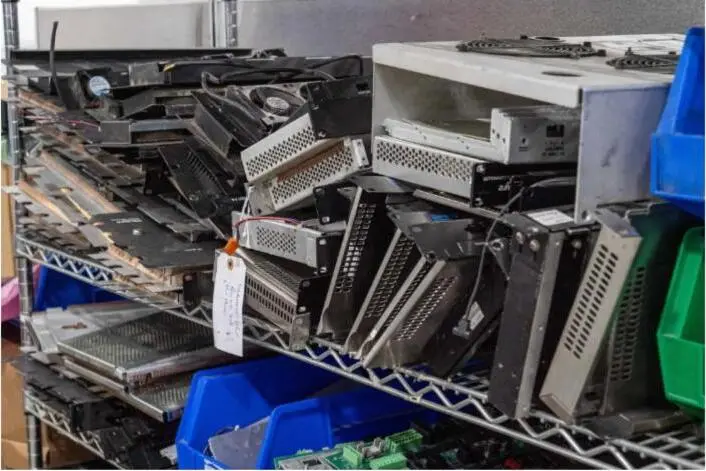
A functional returns zone starts with physical separation from outbound dispatch. Returns areas positioned near dispatch doors create inbound pallet competition with outbound courier collections, which slows both flows. The intake zone works best with four distinct areas: inbound receipt and sorting, inspection and grading, resaleable stock holding and quarantine and disposition.
At the dock, every inbound asset receives an RMA scan that matches the physical unit to its digital record. Warehouse management systems block direct check-in of returned goods when a conclusive reference number is missing, so RMA data integrity at intake serves as the first control point. Once scanned and verified, assets with data-bearing storage such as laptops, tablets and servers move immediately to a locked, access-controlled holding area with clear physical segregation from peripherals such as monitors and accessories, per IT asset return best practices.
Zone sizing should reflect peak volume, not average volume. January return volumes in electronics can run three to four times higher than mid-year volumes, and a zone designed for average throughput will create backlogs during the periods that matter most. Those backlogs then cascade into downstream stages and slow repair, grading and resale decisions.
Repair: Triage, Testing and Depot Levels
Once assets clear the intake zone, repair triage determines whether a returned asset moves to depot repair or bypasses it. Inspection stations for IT assets must support power-on checks, connectivity testing, battery health evaluation, port verification and core operating function assessment, as documented in reverse logistics warehouse design guidance. Grading should follow a documented condition scale such as good, fair, poor and non-functional, with photo examples and defined test criteria for each tier.
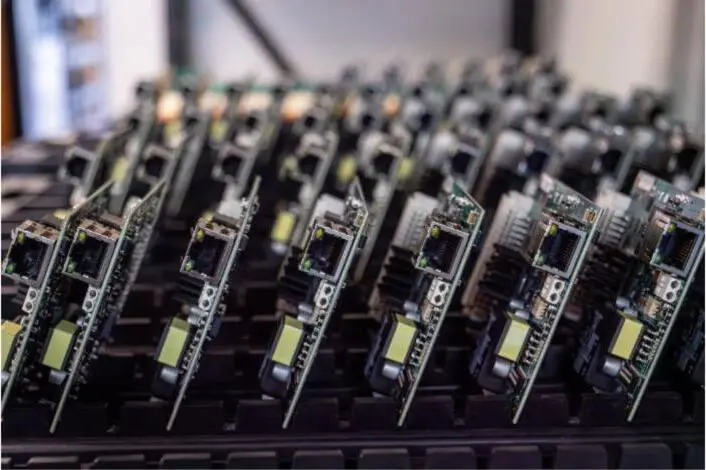
Depot repair spans four levels of complexity:
- L1 – Software reloads, basic diagnostics and cleaning.
- L2 – Component-level replacement such as batteries, keyboards and displays.
- L3 – Board-level repair and advanced diagnostics.
- L4 – Full system rebuild or OEM-escalated repair.
Premier Logitech operates as an authorized service center for multiple OEM brands and provides L1–L4 depot repair within a single facility network. ASC authorization matters because OEM warranty compliance requires certified repair pathways, and unauthorized repair voids warranty coverage and removes access to the highest-value resale channels. Because Premier Logitech holds ASC status across multiple brands, its repair capacity supports high-volume programs without the vendor hand-offs that introduce delays and chain-of-custody gaps.
Resell: Channel Assignment and Recovery Yield
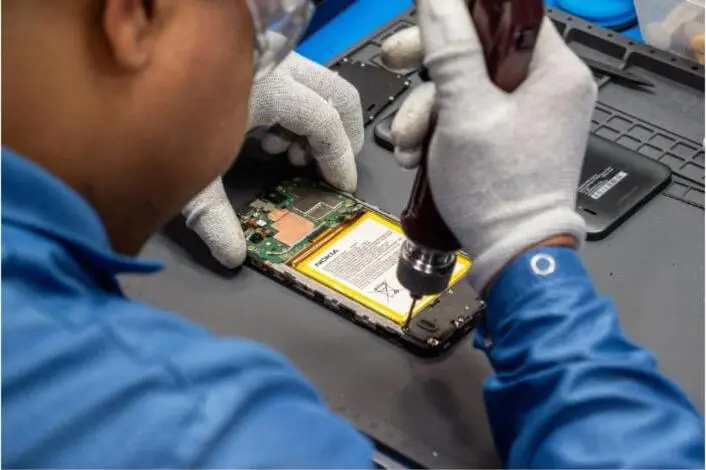
Condition grade drives channel assignment and protects asset value. A structured routing decision prevents assets from being liquidated at a fraction of their recoverable value when a higher-value channel exists. Asset values in ITAD programs typically drop by 1% to 3% each month due to delays in processing and disposition, so fast, accurate channel routing acts as a direct financial lever.
Standard channel tiers for IT assets include:
- Primary market – Certified refurbished, near-new condition, full OEM warranty support.
- Secondary market – Graded refurbished, cosmetic wear acceptable, functional warranty.
- Liquidation – Bulk lot disposition for assets below secondary-market threshold.
- Parts harvest – Disassembly for component recovery before recycling.
Net Recovery Yield, defined as resale proceeds minus disposition costs divided by original retail or cost value, provides a clear measure of reverse logistics profitability for IT and electronics returns. Tracking this metric by SKU and channel highlights where routing decisions leave value on the table.
Repackaging: Refurbishment Standards and Data-Rich Labels
An asset that passes inspection and repair still requires resale-ready presentation. Cosmetic refurbishment at this stage covers cleaning, minor surface restoration and accessory verification. Standardized packaging ensures the unit arrives at the next channel partner or end customer in a condition that supports the assigned grade.

Labeling should capture the condition grade, serial number, any applicable warranty terms and the processing date. This data supports downstream channel compliance and feeds back into inventory management systems to keep WMS records accurate. Disconnected WMS and ERP inventory updates after repackaging lead to stock inaccuracies and replenishment errors, so label data must sync to the system of record at the point of repackaging completion, not in a batch at end of day.
Recycle: Data Sanitization and Certified Material Disposition
Assets that reach the Recycle stage follow two parallel workflows: data sanitization and material disposition. Data sanitization must follow NIST SP 800-88 methods, Clear, Purge or Destroy, selected based on device condition and intended disposition. ITAD programs target a data sanitization rate of 99.999% using these methods. Each sanitized or destroyed asset requires a Certificate of Data Destruction documenting the serial number, method used, standard referenced, processing date and facility identity.
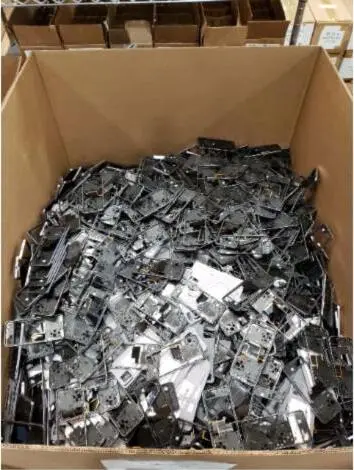
Material disposition routes non-recoverable assets to certified recycling partners. Compliance reporting for government-adjacent and enterprise programs must satisfy TAA, NIST, CMMC and ISO documentation requirements. Premier Logitech holds certifications across these frameworks, including CAGE Code 4WAJ9 for federal government programs, and provides compliance reporting as part of its end-to-end lifecycle services. This integrated approach closes the documentation gap that often appears when recycling moves to a non-integrated third party.
Get compliance-ready recycling and data destruction programs from Premier Logitech.
5R Decision Matrix for IT Asset Routing
The table below maps device condition, warranty status and estimated recovery value to the appropriate R path. Each program should calibrate thresholds to its own product mix and channel agreements.
| Device Condition | Warranty Status | Estimated Recovery Value | Recommended R Path |
|---|---|---|---|
| Functional, cosmetically sound | In warranty | High | Resell, primary market |
| Functional, minor cosmetic wear | In or out of warranty | Moderate-high | Repair → Repackaging → Resell, secondary market |
| Functional, significant cosmetic damage | Out of warranty | Moderate | Repair → Resell, liquidation or secondary |
| Non-functional, repairable | In warranty | Moderate | Repair (L2–L4) → Resell or Repackaging |
| Non-functional, beyond economic repair | Any | Low, parts value only | Recycle, parts harvest then certified recycling |
| Data-bearing, failed storage media | Any | Minimal | Recycle, physical shredding per NIST SP 800-88 Destroy method |
KPI Dashboard for 5R Performance
The following KPIs create a baseline measurement framework for IT and electronics reverse logistics operations. Benchmark ranges come from published industry sources, and individual program targets vary by product category and volume.
| KPI | Definition | Industry Benchmark Range | Your Program Baseline |
|---|---|---|---|
| Net Recovery Yield | (See definition in Resell section) | Asset value recoverable via resale and remarketing | [Enter baseline] |
| First-Pass Yield | Share of returns processed correctly without rework | World-class remanufacturing programs target high first-pass rates | [Enter baseline] |
| Turn Time (Receipt to Disposition) | Average days from dock receipt to confirmed disposition path | Leading operations achieve short turn times with automation and integrated routing | [Enter baseline] |
| Cost per Processed Unit | Total labor, handling and disposition cost per returned unit | Electronics triage runs at competitive costs per unit depending on diagnostics required | [Enter baseline] |
| Refurbishment and Recycling Rate | Share of returns kept in productive channels vs. landfill | High refurbishment and recycling rates are achievable in mature programs | [Enter baseline] |
Common Bottlenecks in IT Returns Warehouses
Most reverse logistics failures do not stem from a single broken step, they accumulate in the handoffs between steps. Value is lost throughout the process along a chain of operational steps, decisions and waiting times between classification, decision-making and restocking.
The most common bottlenecks in IT returns warehouses include:
- Fragmented vendor hand-offs – Separate vendors for repair, repackaging and recycling create custody gaps and inconsistent documentation. Single-partner consolidation removes these transitions.
- Batch-based grading – When grading runs only twice daily, no unit can avoid waits regardless of team speed or staffing levels. Continuous grading workflows tied to real-time WMS updates remove this structural delay.
- Incomplete RMA data – Incomplete RMA data, the control point described in the Returns stage, leaves goods uncategorized upon arrival and causes them to stagnate in indefinite quarantine states. Standardized RMA intake with mandatory field validation at the point of authorization prevents this.
- Compliance documentation gaps – Government and enterprise programs require chain-of-custody records from intake through final disposition. Gaps in this chain create audit risk under CMMC and NIST frameworks.
- Visibility gaps – Inventory management systems often lack accurate, real-time data on returned stock status, which undermines inventory accuracy across warehouse operations. Real-time tracking integrated across WMS and ERP resolves this.
Premier Logitech addresses these bottlenecks through a single-source model that consolidates repair, refurbishment, fulfillment and recycling under one operational roof, supported by real-time lifecycle analytics and TMS visibility.
Nearshore and DFW-Hub Advantages for Reverse Logistics
Geography shapes reverse logistics economics and service levels. Premier Logitech operates three facilities in the Dallas-Fort Worth area, one of the world's busiest air freight hubs, with nearshore operations in Laredo and Nuevo Laredo on the U.S.-Mexico border. This footprint positions inbound returns processing close to major carrier networks while enabling cost-effective labor for high-volume sorting, grading and repackaging through maquiladora operations.
For OEMs and telecom providers managing national return volumes, DFW proximity shortens transit time for inbound returns from major population centers. The nearshore model supports scalable labor capacity during peak return periods without the overhead of expanding domestic headcount. Both locations operate under Premier Logitech's compliance and security frameworks and maintain TAA, NIST and CMMC standards across the full geographic footprint.
Frequently Asked Questions
How the 5R Decision Matrix Handles Mixed-Condition IT Returns
The matrix maps three variables, device condition, warranty status and estimated recovery value, to a disposition path. At intake, a trained technician or automated grading system assigns a condition grade based on documented criteria that cover cosmetics, functionality and data-bearing status. That grade, combined with warranty lookup, produces a routing decision without supervisor escalation for standard cases. Borderline cases escalate to a defined review step rather than sitting in an undefined queue. The matrix should be calibrated to each program's product mix and updated as channel pricing and repair costs change.
Impact of TAA, NIST, CMMC and ASC Certifications
The Trade Agreements Act requires that IT products procured for U.S. government use originate from designated countries. TAA compliance in reverse logistics means that refurbished assets re-entering government supply chains meet sourcing documentation requirements. NIST SP 800-88 defines the data sanitization methods, Clear, Purge and Destroy, required for federal and enterprise data security. CMMC ties defense contractor eligibility to demonstrated cybersecurity maturity, with audit requirements that extend to subcontractors and service providers. ASC authorization means a repair facility has been certified by a specific OEM to perform warranty-valid repairs on that brand's products. Without ASC status, repairs may void OEM warranties and remove access to primary-market resale channels.
Starter Metrics for a New 5R Program
Turn time from dock receipt to confirmed disposition provides the most immediate indicator of workflow health. It reveals whether intake, grading and routing function as a connected system or as isolated steps. Net Recovery Yield by SKU and channel shows whether assets reach their highest-value disposition path. First-Pass Yield highlights rework rates that signal grading inconsistency or repair quality issues. Cost per processed unit provides the unit economics baseline for evaluating automation investments or vendor consolidation decisions. Together, these four metrics give operations leaders a clear picture of throughput, recovery performance and cost efficiency.
Cost Benefits of Single-Partner Consolidation
Fragmented vendor relationships introduce hand-off delays, inconsistent documentation and duplicate overhead at each transition point. When repair, repackaging, fulfillment and recycling sit with separate vendors, each transition requires a new chain-of-custody record, a new quality check and a new scheduling coordination. Consolidating these services under one partner removes redundant touches, reduces transit between facilities and creates a single data stream for compliance reporting. The operational savings compound across high-volume programs where each hand-off multiplies across thousands of units per week.
Required Documentation for IT Asset Recycling and Data Destruction
Each asset processed through the Recycle stage requires a Certificate of Data Destruction that includes the asset's serial number or service tag, the sanitization or destruction method used, the NIST standard referenced, the processing date and the facility or provider that handled the item. For government programs, this documentation must be retained and auditable to satisfy CMMC and NIST requirements. Downstream recycling partners must hold certifications such as R2 or e-Stewards to support regulatory compliance reporting. Programs operating under ISO 14001 environmental management frameworks also require documented material disposition records for recycled components.
Next Steps: Building a 5R Program with Premier Logitech
A structured 5R workflow converts a cost-intensive returns operation into a measurable recovery system. The framework performs best when each stage has defined inputs, documented decision criteria and real-time visibility into asset status. It scales effectively when a single partner holds the certifications, repair authorizations and compliance frameworks to execute every stage without hand-off gaps.
Premier Logitech has operated as that partner since 2007 and serves OEMs, telecom providers and government agencies with end-to-end lifecycle services from intake through certified recycling. ASC authorization for more than 20 OEM brands, L1–L4 depot repair, TAA, NIST and CMMC compliance and DFW-hub logistics combine into a single-source program that removes the fragmentation that costs operations leaders recovery value every day.
