Last updated: June 29, 2026
Key Takeaways on Electronics Returns Costs
- Returns processing cost for electronics and IT hardware includes labor, inbound freight, testing, data sanitization, refurbishment, compliance and disposition.
- Direct costs cover only part of total spend, while fully loaded costs add asset depreciation, compliance overhead and lost resale value from delays.
- Repair level, OEM authorization requirements and data security obligations are the main variables that raise per-unit electronics returns costs.
- Repair and refurbishment programs turn returns from a pure cost center into a partial cost offset by generating resale recovery value.
- Premier Logitech provides end-to-end reverse logistics and refurbishment programs that reduce fully loaded returns costs and capture recovery value, get started today.
Average 2026 Cost Profile for Electronics Returns
Processing costs for electronics returns in 2026 reflect product complexity, repair authorization rules and disposition channel. A consumer wearable in a retail program carries a lower per-unit cost than an enterprise laptop in a government program that requires data destruction and compliance reporting.
Across electronics and IT hardware, direct processing costs such as labor, inbound logistics and basic triage represent only a portion of total program spend. The National Retail Federation’s 2024 returns report estimated that U.S. retailers lost roughly $890 billion in sales to returns, with fraud and abuse accounting for a significant share. For electronics, cost per return rises above general merchandise because technical labor, certification requirements and data security obligations add specialized expense.
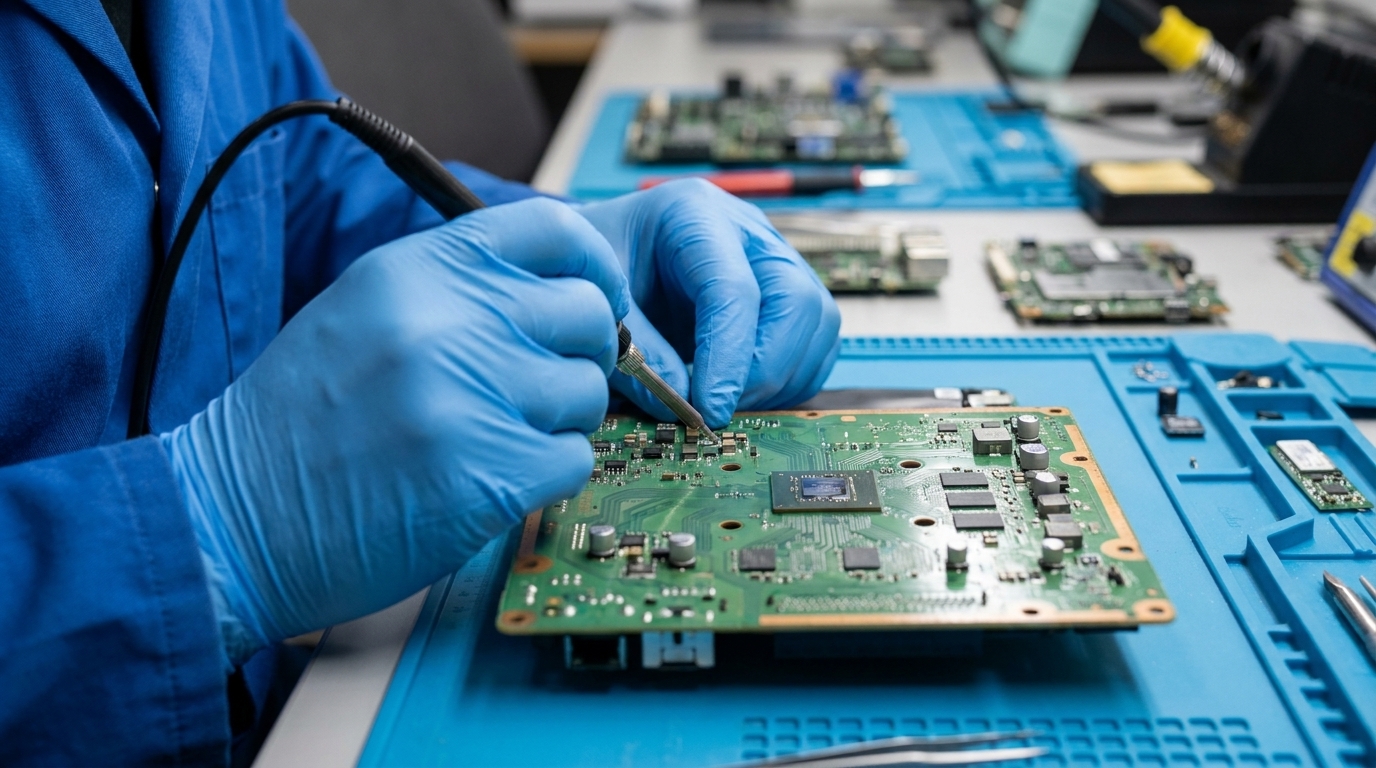
Repair level is the largest variable within direct cost. Level 1 triage and cosmetic work carry lower labor cost than Level 3 or Level 4 board-level depot repair. Programs without ASC authorization must route repairs through OEM channels, which adds cycle time and cost without increasing recovery value. These repair-related costs form one component of the broader refund and returns expense.
Get a benchmark analysis of current returns program costs.
Fully Loaded Cost to Process an Electronics Refund
The direct cost of processing a refund covers visible line items such as inbound freight, receiving labor, inspection and restocking or disposition. For electronics, these direct costs form the starting point rather than the full picture.
Beyond these visible line items, fully loaded cost adds several categories that rarely appear on a single invoice. Asset depreciation during transit and processing time reduces resale value on high average-order-value devices. Compliance overhead, including data wipe certification, chain-of-custody documentation and recycling manifests, adds labor and third-party vendor expense. Lost resale value from delayed processing compounds depreciation, especially for devices tied to rapid product refresh cycles.
A fragmented vendor model amplifies each of these cost categories. When inbound logistics, depot repair, data destruction and remarketing sit with separate vendors, coordination overhead and duplicate handling increase. Gaps in chain-of-custody documentation also raise risk and inflate fully loaded cost beyond what any single line item suggests. A Radial analysis found that returns cost retailers 20–65% of item price.
Key Cost Drivers in Tech and IT Hardware Returns
Several factors specific to electronics and IT hardware push returns costs above general merchandise benchmarks.
OEM authorization requirements limit which service providers can perform warranty-valid repairs. Programs without ASC-authorized partners must either void warranty coverage or route units back through OEM depots, which increases cost and cycle time.
Beyond repair authorization, data security obligations apply to nearly every returned device that has stored user or enterprise data. Certified data destruction or secure wipe adds a per-unit cost that has no equivalent in most other product categories.
These processing requirements become more costly when combined with product refresh velocity in the tech industry. Processing delays directly erode resale value, and a laptop that sits unprocessed for 30 days loses measurable secondary market value compared with a unit processed and regraded within the same week.
High return rates in consumer electronics, driven by warranty claims, no-fault returns and upgrade programs, create volume pressure on operations. Underfunded or fragmented programs struggle to absorb this volume without cost escalation. Optoro’s 2024 returns report highlights the scale of returns and associated processing costs.
Impact of Repair and Refurbishment on Net Returns Cost
Repair and refurbishment programs shift returns from a pure cost center to a partial or full cost offset. A returned device that is triaged, repaired to functional condition, cosmetically refurbished and regraded for secondary market resale generates recovery value that reduces net program cost.
The economics depend on repair authorization, grading accuracy and disposition channel access. ASC-authorized repair preserves OEM warranty validity on repaired units, which supports higher resale prices in certified refurbished channels. Accurate cosmetic grading that sorts units into Grade A, B and C tiers allows remarketing teams to price inventory correctly and move volume without margin erosion from misgraded units.
Programs that skip refurbishment and send returned units directly to liquidation or recycling forfeit the recovery value that refurbishment can create. For enterprise IT hardware with high original average order value, that forfeited value can represent a material cost compared with the processing investment required to recover it.
Premier Logitech operates certified refurbishment and grading programs with access to secondary market channels. That structure enables clients to capture recovery value instead of absorbing it as a write-off.
Model the recovery value in the current returns stream.
Compliance Cost Factors in Government and Enterprise Returns
Government and large enterprise programs carry compliance overhead that consumer-facing programs do not face. Each requirement adds measurable cost to the per-unit processing total.
Data destruction certification under NIST 800-88 or equivalent standards requires documented, auditable processes and often third-party verification. For agencies that operate under CMMC or SOC 2 frameworks, chain-of-custody documentation must be maintained at every handling step. TAA compliance rules restrict which facilities and personnel can handle certain categories of government IT equipment.
Environmental compliance adds a parallel cost layer. E-waste regulations vary by state, and national programs must maintain recycling documentation across multiple jurisdictions. ISO 14001-aligned disposal processes require vendor certification and audit trails that increase administrative overhead.
Fragmented vendor relationships make compliance documentation harder to maintain and more expensive to audit. A single-source partner with established certifications across NIST, CMMC, SOC 2, TAA and ISO frameworks consolidates compliance overhead into one auditable program instead of spreading documentation across multiple vendors.
How Outsourced Reverse Logistics Reduces Returns Expenses
Outsourcing reverse logistics to a single ASC-authorized partner with end-to-end capabilities addresses the main cost drivers described above, including fragmented vendor spend, compliance overhead, processing delays and missed recovery value.
Consolidation removes duplicate handling, reduces coordination labor and creates a single chain-of-custody record that satisfies compliance requirements across government and enterprise programs. Real-time visibility into inventory status, repair stage and disposition channel allows operations teams to manage program performance without manual reconciliation across multiple vendor portals.
The ASC authorization discussed earlier allows Premier Logitech to perform warranty-valid repairs in-house across multiple OEM brands, which reduces cycle time and preserves resale value on repaired units. Repair capacity at scale supports programs with high return volumes and provides a partner that can absorb volume without cost escalation.
Nearshore operations complement existing facilities and provide cost-competitive processing capacity with proximity to major logistics infrastructure. That footprint supports programs that require both speed and cost efficiency.
Internal Readiness Checklist for Returns Programs
Operations and supply chain leaders can use the following checklist to evaluate current returns program efficiency before engaging an outsourced partner.
- Is there a single consolidated view of returns volume, repair status and disposition across all vendors?
- Are all repair vendors ASC-authorized for the OEM brands in the returns stream?
- Is certified data destruction documented at the unit level with auditable chain-of-custody records?
- Are returned devices graded and routed to the highest-value disposition channel available?
- Is compliance documentation for NIST, CMMC, TAA and ISO maintained in a single auditable record?
- Is the current vendor structure creating duplicate handling, coordination overhead or processing delays?
- Is recovery value from refurbishment and resale captured and reported against program cost?
Frequently Asked Questions
What is included in the fully loaded cost of an electronics return?
Fully loaded cost includes inbound freight, receiving and triage labor, testing and repair, data sanitization, cosmetic refurbishment, grading, compliance documentation and disposition logistics. It also includes any residual recycling or disposal fees, asset depreciation during processing time and lost resale value from delayed or inaccurate grading.
Why are electronics returns more expensive to process than general merchandise?
Electronics returns require technical labor for testing and repair, certified data destruction, OEM authorization compliance for warranty-valid repairs and accurate grading for secondary market resale. Each requirement adds cost that general merchandise returns do not carry.
How does ASC authorization affect returns processing costs?
ASC authorization allows a service provider to perform warranty-valid repairs in-house instead of routing units through OEM depots. In-house repair reduces cycle time, preserves resale value on repaired units and removes the markup and handling fees associated with OEM depot routing.
What compliance frameworks apply to government IT returns?
Government IT returns programs commonly require compliance with NIST 800-88 for data destruction, CMMC for cybersecurity supply chain requirements, TAA for trade compliance and ISO 14001 for environmental disposal. Many programs also require SOC 2 documentation for data handling processes.
How does a single-source reverse logistics partner reduce total program cost?
A single-source partner removes duplicate handling between vendors, consolidates compliance documentation into one auditable record and reduces coordination labor. It also provides real-time visibility across the full returns lifecycle, which lowers direct processing costs and the administrative overhead tied to managing multiple vendor relationships.
Conclusion: Building a Lower-Cost Electronics Returns Program
Returns processing costs in electronics and IT hardware stem from repair authorization requirements, compliance overhead, processing speed and disposition channel access. Programs that rely on fragmented vendor relationships absorb added costs at every handoff through duplicate handling, compliance gaps and missed recovery value.
Premier Logitech consolidates those fragmented costs into one ASC-authorized, compliance-certified partner with end-to-end capabilities from triage through remarketing. That structure supports a returns program with lower fully loaded cost, higher recovery value and a single auditable compliance record.
Request a program assessment for current returns operations.
