Last updated: July 1, 2026
Key takeaways for enterprise mobile repair depots
- Enterprise device programs depend on specialized mobile repair depots that manage high-volume returns with documented chain of custody, OEM integration and compliance reporting.
- Authorized Service Center (ASC) status confirms genuine parts, approved procedures and warranty integrity, which protects programs from liability and failed audits.
- Depots with L1-L4 repair capabilities recover more asset value by routing each device to the correct repair level instead of defaulting to replacements.
- Compliance frameworks such as TAA, NIST, CMMC, SOC 2 and ISO support audit readiness and procurement approval for government and regulated enterprise buyers.
- Premier Logitech delivers scalable, compliant depot services with multi-facility U.S. and nearshore capacity, get started today.
How a mobile repair depot differs from a retail repair shop
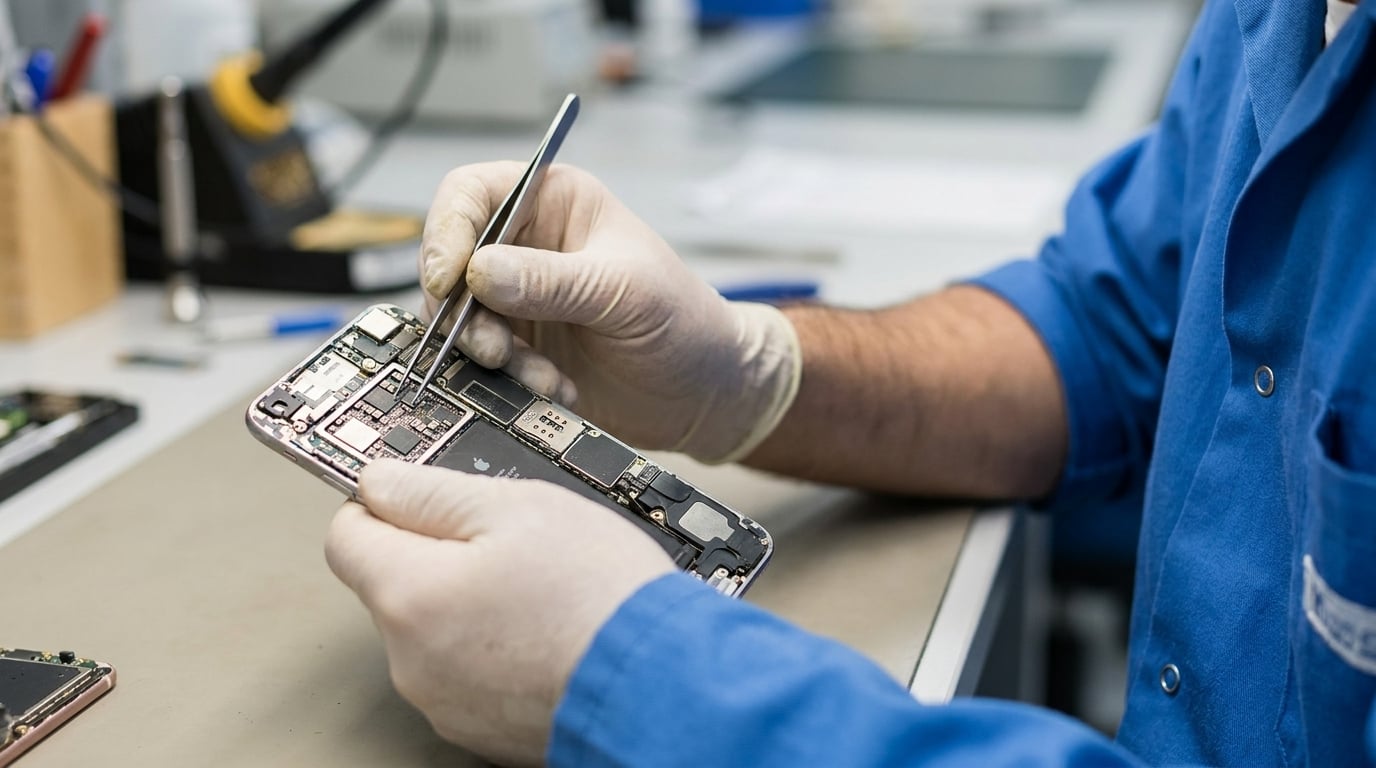
A mobile repair depot is a purpose-built facility that processes device returns at program scale. It integrates with OEM warranty systems, carrier return portals and enterprise asset management platforms. Intake, triage, repair, grading and disposition all occur within a documented chain of custody.
A retail repair shop serves individual consumers on a walk-in basis. It operates outside OEM authorization frameworks and lacks the infrastructure for RMA management, compliance reporting or bulk device handling. The two models serve different markets and cannot substitute for each other in enterprise programs.
The strongest mobile repair depots combine OEM authorization, multi-level technical capability and certified compliance within a single operational footprint. OEM authorization forms the foundation for that capability.
Authorized Service Center status and its impact on high-volume returns
Authorized Service Center (ASC) status means a depot has been vetted and credentialed by an OEM to perform warranty and out-of-warranty repairs using genuine parts and approved procedures. That authorization protects warranty integrity, satisfies OEM program requirements and enables direct system integration with manufacturer platforms.
Consumer repair chains typically operate without OEM authorization. They source parts through open-market channels, which introduces quality variability and voids manufacturer warranties. For enterprise and carrier programs, that exposure creates downstream liability, failed audits and rejected warranty claims.
ASC status also signals operational maturity. OEMs audit authorized partners on quality systems, technician certification and data handling before granting and renewing authorization. A depot holding multiple OEM authorizations has passed that scrutiny across a broad device portfolio.
Talk to a lifecycle expert about qualifying a depot program.
How enterprise depot repair networks manage high-volume returns
Enterprise depot repair networks process returns through a structured workflow. Core stages include inbound logistics, receiving and intake, triage and grading, repair routing, quality verification, disposition and outbound fulfillment. Each stage remains tracked and reportable.
Rapid exchange programs allow a depot to ship a replacement unit before the defective device completes repair. This model reduces end-user downtime and accelerates program cycle times. These programs depend on pre-positioned inventory, real-time system integration and defined service-level agreements with the OEM or carrier.
Reverse logistics depots also manage in-warranty and out-of-warranty claim support, cosmetic refurbishment, parts reclamation and e-waste disposition. Each function requires specialized handling and documentation that often involves separate vendors. A full-service depot consolidates those capabilities under a single partner, which reduces vendor management overhead and preserves chain-of-custody integrity across all disposition paths.
L1-L4 depot repair capabilities and what each level covers
Repair depth is categorized by level. Clear definitions help procurement teams match depot capability to program requirements.
- Level 1 (L1): Software-based diagnostics, firmware updates, OS imaging and basic functional testing. No hardware disassembly required.
- Level 2 (L2): Module-level replacement, including screens, batteries, cameras and other field-replaceable units. This level requires OEM-approved parts and tooling.
- Level 3 (L3): Board-level repair and component replacement. This work requires certified technicians and specialized equipment such as BGA rework stations.
- Level 4 (L4): Full depot rebuild, including PCBA-level repair, sub-assembly replacement and comprehensive functional validation. This level supports complex OEM and carrier warranty programs.
Programs that route all returns to L1 or L2 leave recoverable value unused. A depot with L1-L4 capability triages each device to the appropriate repair level. That approach maximizes yield and reduces unnecessary replacements.
Compliance and security certifications for enterprise and government depot programs
Government and regulated enterprise buyers require documented compliance before awarding depot contracts. The following certifications form a standard evaluation checklist.
- TAA (Trade Agreements Act): Required for federal procurement. Confirms that products and services originate from compliant countries.
- NIST SP 800-series: Establishes cybersecurity and data handling standards that apply to device sanitization and secure repair workflows.
- CMMC (Cybersecurity Maturity Model Certification): Required for defense contractors and suppliers that handle controlled unclassified information.
- SOC 2: Validates that a service organization’s controls meet Trust Services Criteria for security, availability and confidentiality.
- ISO 9001/14001: Covers quality management systems and environmental management, which support repair quality and e-waste programs.
- TAPA: Addresses cargo security standards for high-value technology shipments in transit.
Premier Logitech holds certifications across these frameworks and carries CAGE Code 4WAJ9, which identifies it as a pre-vetted partner for U.S. federal government programs.
Talk to a lifecycle expert about compliance requirements for a depot program.
Scalability, visibility and total cost of ownership in depot selection
A depot partner’s scalability determines whether it can absorb volume spikes from product launches, recalls or seasonal return cycles without service degradation. Facilities with modular capacity and nearshore overflow options provide operational flexibility that single-site depots cannot match.
Real-time tracking and lifecycle analytics reduce hidden costs in depot programs. When operations teams lack visibility into return status, repair stage and disposition, they carry excess buffer inventory and miss asset recovery windows. A depot that integrates with a transportation management system and provides inventory reporting closes that gap.
Total cost of ownership extends beyond repair labor. Asset recovery through certified refurbishment and secondary market grading offsets program costs. Responsible recycling programs reduce e-waste liability. Vendor consolidation, which replaces separate repair, fulfillment and recycling providers with a single partner, reduces administrative overhead and contract complexity.
Decision checklist for evaluating a mobile repair depot partner
The following checklist supports RFP development and depot evaluation.
- ASC authorization for the OEM brands in the program portfolio
- Documented L1-L4 repair capability with certified technicians and defined procedures
- TAA, NIST, CMMC, SOC 2 and ISO certifications that align with the buyer’s industry
- Established rapid exchange programs with pre-positioned inventory
- Real-time visibility into return status, repair stage and disposition
- Refurbishment, grading and secondary market disposition for asset value recovery
- Multi-facility or nearshore capacity that absorbs volume variability
- Ability to serve as a single vendor across repair, fulfillment and recycling functions
Frequently asked questions about enterprise depot repair
What is the difference between L1 and L4 depot repair?
L1 covers software diagnostics and firmware work with no hardware disassembly. L4 covers full depot rebuilds including board-level and PCBA repair. Programs with diverse device conditions benefit from a depot that triages each unit to the appropriate level instead of applying a single repair path to all returns.
Why does OEM authorization matter for enterprise depot programs?
OEM authorization confirms that a depot uses genuine parts, follows approved procedures and integrates with manufacturer warranty systems. The practical impact includes rejected warranty claims, lost device value and added administrative work when authorization is absent. Enterprise and carrier programs typically require ASC status as a contractual condition to avoid that exposure.
What compliance certifications should a depot hold for government contracts?
Federal and defense programs require TAA compliance, NIST-aligned data handling, CMMC certification and a valid CAGE Code. State and local government programs often require ISO 9001 and SOC 2. Buyers should request current certificates of compliance and audit documentation during the RFP process.
How do rapid exchange programs work in enterprise depot operations?
A rapid exchange program ships a replacement device to the end user or program manager before the defective unit completes the repair cycle. The depot manages pre-positioned replacement inventory, tracks the inbound defective unit and reconciles the exchange through the OEM or carrier system. This model reduces end-user downtime and accelerates program cycle times.
Can a single depot partner handle repair, refurbishment, recycling and fulfillment?
A single depot partner can manage all lifecycle functions when it operates as a full lifecycle services provider. Consolidating those functions under one partner reduces vendor management complexity, improves chain-of-custody documentation and creates a single data source for program reporting. Premier Logitech provides end-to-end services from RMA intake through secondary market disposition and responsible recycling.
Conclusion: selecting a depot partner for long-term reverse logistics success
Selecting a mobile repair depot is a supply chain decision with compliance, financial and operational consequences. The evaluation framework above, which covers authorization, repair depth, certifications, scalability, visibility and total cost of ownership, gives operations leaders a structured basis for vendor selection and RFP development.
Premier Logitech combines multiple OEM authorizations, L1-L4 repair capability, multi-facility U.S. operations and nearshore capacity with a full compliance portfolio that spans TAA, NIST, CMMC, SOC 2 and ISO frameworks. The company has served OEMs, telecom carriers and government agencies since 2007 as both a single-source lifecycle partner and a modular services provider.
