Last updated: July 12, 2026
Key Takeaways for Enterprise Returns Management
- Enterprise returns management software must handle high-value IT, telecom and OEM assets with full reverse logistics capabilities beyond basic consumer portals.
- Key technical requirements include structured RMA intake, multi-level depot repair, ERP integration and support for warranty claim workflows.
- Compliance with frameworks such as TAA, NIST SP 800-88, CMMC, SOC 2 and OEM ASC authorization is essential for regulated and government programs.
- Consolidating to a single partner improves visibility, reduces costs and increases asset recovery value through integrated repair, refurbishment and remarketing services.
- Premier Logitech delivers enterprise-grade returns management with the compliance, repair authorizations and network infrastructure required for complex IT and telecom operations; explore how our certified capabilities support complex programs.
How Enterprise Returns Management Software Supports High-Value Assets
A returns management system at its core handles the intake, routing and disposition of returned products. Consumer-facing platforms manage return requests, refund workflows and customer portals. Enterprise reverse logistics software must go further, covering the physical movement, inspection, repair, compliance documentation and value recovery of high-value technology assets.
Tech and telecom reverse logistics involve high-value components, tight regulatory controls and multi-step processes including diagnosis, data sanitization, refurbishment, cross-border movement and final disposition, none of which lightweight DTC portals are architected to support. The gap between a consumer returns portal and a full-lifecycle reverse logistics platform is structural rather than a simple feature list difference. This structural gap calls for a more rigorous evaluation approach.
Evaluation Framework for Service Scope and Technical Capabilities
Reverse logistics software and service partners for enterprise IT or telecom operations must meet clear baseline criteria. The following capabilities define a minimum viable platform for complex programs:
- Structured RMA intake with device validation, serialization and condition triage at receipt
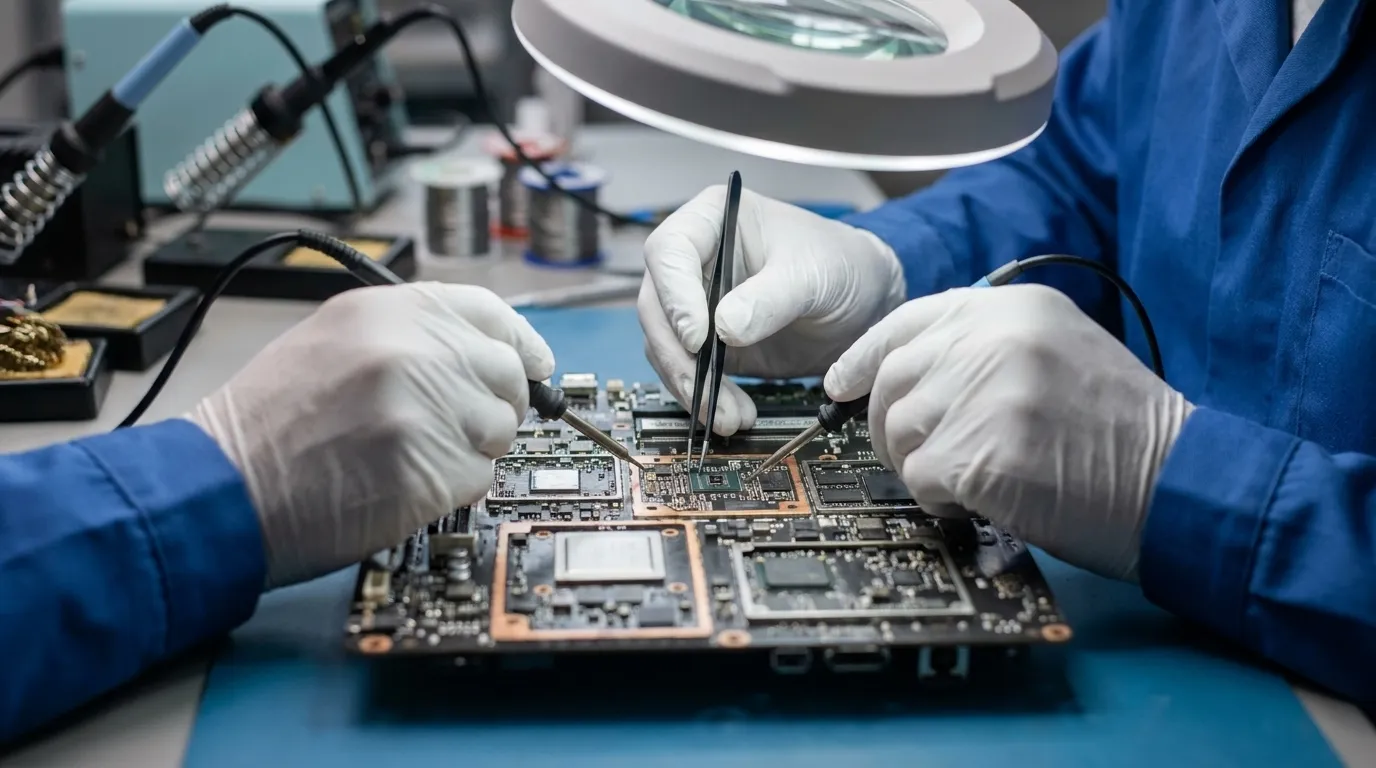
- Depot repair across all levels, L1 through L4, covering diagnostics, component-level repair and cosmetic refurbishment
- Rapid exchange and next-day replacement programs for field-deployed assets
- ERP, OMS and warranty system integration to synchronize return status, inventory and claim data in real time
- In-warranty and out-of-warranty claim support aligned to OEM authorization requirements
- Parts reclamation and harvesting to recover value from non-repairable units
- Grading and certified refurbishment for secondary market resale channels
Industry data indicates that approximately 68% of consumer electronics returns are No Fault Found cases, which are units that function but require testing, cleaning and routing into refurbishment or recommerce channels. An enterprise platform must process this volume efficiently, prevent bottlenecks and route assets to the correct next step.
Compliance, Certifications and Regulatory Alignment
Enterprise IT and government operations face compliance requirements with no equivalent in DTC returns. A returns management system serving these environments must align to the following frameworks:
- TAA (Trade Agreements Act): Required for U.S. federal procurement and governs country-of-origin requirements for IT hardware
- NIST SP 800-88: Defines media sanitization standards for secure data destruction on returned devices
- CMMC (Cybersecurity Maturity Model Certification): Required for defense contractors handling controlled unclassified information
- SOC 2: Establishes security, availability and confidentiality controls for service organizations handling sensitive data
- ASC Authorization: OEM-issued Authorized Service Center status required to perform warranty repairs on branded hardware without voiding coverage
These compliance requirements, covering lithium battery regulations, e-waste handling, customs documentation and data sanitation, create legal and contractual exposure when routed through non-compliant partners. Organizations that route regulated assets through non-compliant providers assume risk that no software portal can offset.
Premier Logitech holds certifications across TAA, TAPA, ISO quality frameworks, NIST, CMMC and SOC 2 and operates with a CAGE Code that identifies the company as a pre-vetted partner for U.S. federal government programs. ASC authorization across more than 20 OEM brands enables warranty-compliant depot repair that most logistics providers cannot offer.
Scalability, Visibility and Network Coverage for Returns
Real-time tracking through an integrated transportation management system provides the visibility operations teams need to manage SLA commitments, identify bottlenecks and report on asset status across the full return cycle. Without this infrastructure, supply chain leaders manage by exception instead of by data.
Network geography also affects performance. U.S.-based facilities with nearshore capacity reduce cross-border complexity and transit costs for North American programs. Premier Logitech operates multiple facilities in the Dallas-Fort Worth area, one of the most connected logistics hubs in North America, with nearshore operations in the Laredo and Nuevo Laredo corridor that support cost-effective, compliant cross-border processing.
Total Cost of Ownership and Asset Recovery Economics
Fragmented vendor relationships increase cost at every handoff between the returns portal, the depot repair vendor, the refurbishment partner and the recycler. Each handoff introduces coordination overhead, data gaps and margin erosion that compound as volumes scale.
Single-partner consolidation removes these accumulated costs by routing assets through one integrated system. This structural advantage grows as return volumes increase and as programs add new product lines or geographies.
Outsourced depot repair typically delivers operational savings compared with in-house operations once all fixed costs are accounted for. When combined with consolidation, outsourced repair also reduces internal management burden and improves asset recovery value.
Common Enterprise Pain Points and Single-Partner Solutions
Operations leaders managing enterprise IT returns encounter recurring structural problems. These issues reflect program design rather than software configuration and require a different class of partner.
- Fragmented vendor relationships: The accountability gaps and slow disposition mentioned earlier compound when teams coordinate separate contracts for each stage of the return cycle. A single partner with end-to-end capability eliminates those gaps.
- Missing supply chain visibility: Without integrated tracking across the full return cycle, teams cannot report on asset status, SLA performance or recovery value. Real-time transportation management and lifecycle analytics close that gap.
- Missed asset recovery value: Assets routed to recycling without triage, repair or grading forfeit recoverable value. Structured refurbishment and secondary market programs capture that value instead.
- Compliance exposure: Non-authorized repair voids OEM warranties. Non-compliant data destruction creates regulatory liability. ASC authorization and certified compliance frameworks address both.
- Inability to scale for volume spikes: Seasonal returns, product recalls or end-of-lease cycles create surges that fixed-capacity partners cannot absorb. Scalable depot operations with high weekly repair throughput handle those spikes without program disruption.
Enterprise reverse logistics differs fundamentally from ecommerce returns management. Assets carry higher value, compliance requirements are stricter, repair workflows are more complex and the consequences of mishandling are more severe. A DTC returns portal does not address these requirements.
Frequently Asked Questions About Enterprise Returns
How DTC Returns Platforms Differ from Enterprise Reverse Logistics Systems
A DTC returns management platform handles customer-facing workflows such as return requests, refund processing, label generation and basic routing. An enterprise reverse logistics system manages the full post-return lifecycle, including RMA intake, device validation, multi-level depot repair, compliance documentation, data sanitization, grading, refurbishment and final disposition. Enterprise systems also integrate with ERP, OMS and warranty platforms and support regulatory frameworks like NIST, CMMC and TAA that DTC platforms are not designed to address.
Why ASC Authorization Matters for Enterprise Depot Repair
OEM Authorized Service Center status is required to perform warranty repairs on branded hardware without voiding coverage. Organizations that route warranty returns through non-authorized repair facilities risk losing warranty protection on repaired units and may face contractual penalties from OEM partners. ASC authorization also signals that the repair facility meets the OEM quality, tooling and process standards, which is a requirement for enterprise and government programs where asset integrity is nonnegotiable.
Key Compliance Frameworks for Government and Regulated Programs
A partner serving U.S. government or regulated enterprise clients should support TAA compliance for hardware sourcing, NIST SP 800-88 for media sanitization, CMMC for defense-related programs and SOC 2 for data security controls. Environmental compliance, including e-waste handling and responsible recycling, is also required for programs with sustainability reporting obligations. Partners with CAGE Codes are pre-vetted for federal procurement, which simplifies contracting for public-sector programs.
How Vendor Consolidation Influences Asset Recovery Value
Fragmented vendor relationships introduce delays and data gaps at every handoff between intake, repair, refurbishment and disposition. Each delay reduces the market value of the returned asset. A single partner with integrated triage, repair, grading and remarketing capability routes assets to the highest-value disposition channel faster and with fewer handling errors. Programs that consolidate to a single end-to-end partner consistently recover more value per unit than programs that manage multiple disconnected vendors.
Required Repair Levels for Enterprise Depot Programs
Enterprise depot repair programs require coverage across all four levels. L1 covers basic diagnostics, cleaning and software resets. L2 covers component replacement and board-level repair. L3 covers advanced diagnostics and subassembly repair. L4 covers full system rebuild and engineering-level repair.
Programs that only support L1 and L2 will route repairable units to recycling prematurely and forfeit recovery value. Full L1 through L4 capability, combined with cosmetic refurbishment and grading, increases the percentage of returned units that reenter service or secondary market channels.
Next Steps for Enterprise Returns Management Programs
Selection of a returns management system for enterprise IT, telecom or OEM operations requires evaluation of service scope, compliance credentials, repair authorization, network infrastructure and total cost of ownership, not just portal features. The evaluation framework in this guide provides a structured starting point for that assessment.
Premier Logitech operates as a single-source reverse logistics and lifecycle services partner for large IT OEMs, telecom providers, consumer electronics companies and U.S. government agencies. With ASC authorization across more than 20 OEM brands, certifications spanning TAA, NIST, CMMC and SOC 2 and scalable depot operations supported by a DFW logistics hub and nearshore facilities, Premier Logitech is built for operational demands that DTC-focused platforms cannot meet.
Build a returns management program aligned to compliance, repair and asset recovery requirements.
