Last updated: August 21, 2026
Key takeaways for reverse logistics leaders
- The reverse logistics market is projected to reach USD 822.12 billion in 2026, driven by rising return volumes, stricter compliance rules and fragmented vendor stacks that reduce asset recovery value.
- Core operational challenges include unpredictable volumes, disconnected systems, fraud, rising compliance costs and rapid asset depreciation that require specialized processing capabilities.
- Effective provider evaluation covers service scope, ASC authorization, technical repair depth, compliance certifications, data security, scalability, visibility, network coverage and total cost of ownership.
- Provider selection depends on monthly return volume, product categories, ASC requirements, government compliance needs and the priority placed on consolidating vendors under a single lifecycle partner.
- Premier Logitech delivers end-to-end reverse logistics solutions with ASC authorization for more than 20 OEM brands and full compliance coverage; talk to a lifecycle expert to map return flows and identify consolidation opportunities.
Reverse logistics for IT and telecom in practice
Reverse logistics covers the processes that move products from end users back through the supply chain for return, repair, refurbishment, resale or responsible disposal. For IT and telecom organizations, this scope includes warranty intake, secure data destruction and certified recycling.
The five R’s of reverse logistics, applied to IT and telecom, are:
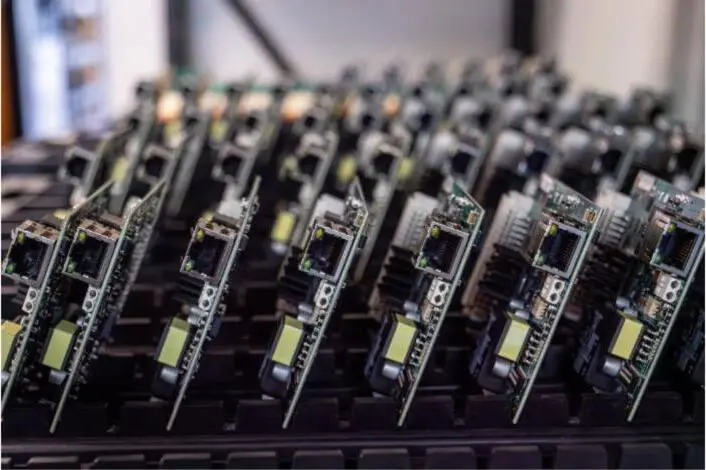
- Returns — RMA intake and triage for defective or end-of-lease devices such as enterprise laptops and mobile handsets.
- Repairs — Depot repair at L1 through L4 for smartphones, networking equipment and connected devices.
- Refurbishment — Cosmetic restoration and functional testing that restore units to sellable condition for secondary market channels.
- Repackaging — Grading, labeling and kitting of B-stock inventory for resale or redeployment.
- Recycling — Certified e-waste disposal and parts reclamation for units that cannot be recovered.
Current reverse logistics challenges for operations teams
Returned items frequently sit in warehouses or carrier networks without clear status, which delays refunds, restocking and value recovery. That visibility gap compounds other operational pressures facing logistics leaders in 2026.
The primary operational challenges include:
- Unpredictable volumes — Promotional cycles and product launches create return spikes that overwhelm static processing capacity.
- Disconnected systems — Separate OMS, WMS, TMS, ERP and warranty platforms create double data entry, invalid claims and missed supplier recovery opportunities.
- Fraud and policy abuse — An estimated 13.7% of returns are fraudulent, which drives direct margin loss through false defect claims and repeat returners.
- Rising compliance costs — Data-privacy mandates, e-waste regulations and government cybersecurity frameworks such as NIST SP 800-171 and CMMC add audit and documentation work to every disposition decision.
- Asset depreciation — Returned consumer electronics sell for 15–40% less than original price even when fully functional, so processing speed and refurbishment quality directly influence value recovery.
Regulatory requirements intensify these challenges for government and defense programs. DoD contractors must implement all 110 NIST SP 800-171 controls and post scores to SPRS before contract award. The Buy American Act domestic content threshold rose to 65% in January 2024 and will reach 75% by 2029, which adds sourcing complexity to every disposition and redeployment decision.
Reverse logistics scenarios specific to telecom and IT
These challenges play out differently across return volumes and product categories. Telecom providers and IT OEMs face distinct return scenarios that require tailored provider capabilities.
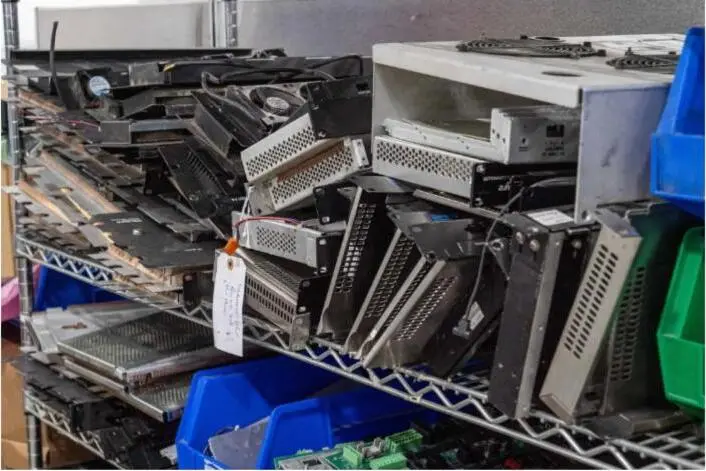
High-volume warranty returns for mobile carriers: A national carrier that processes tens of thousands of handset returns each month needs a partner with ASC-authorized repair capability, automated triage and grading workflows that move units to refurbishment or recycling without manual bottlenecks. An estimated 68% of consumer electronics returns are classified as No Fault Found, so most devices retain recoverable value when processed through structured inspection and refurbishment instead of fragmented handling.
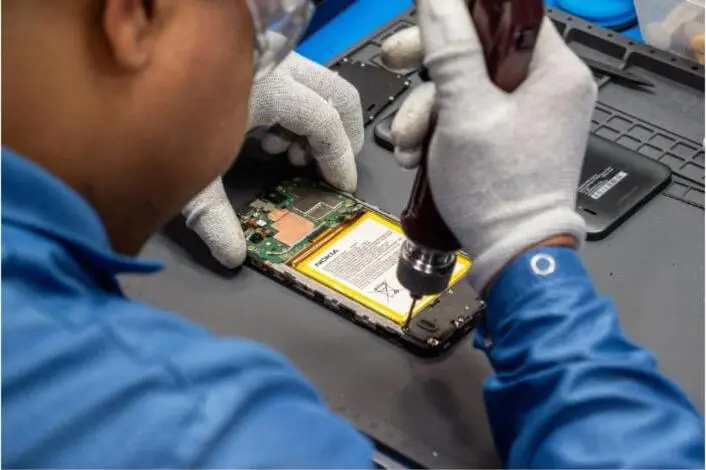
IT asset disposition for enterprise and government: An enterprise IT team decommissioning end-of-lease laptops and servers requires certified data destruction, chain-of-custody documentation and compliance reporting aligned to NIST SP 800-88, ISO/IEC 27001 and SOC 2. Government contractors add TAA-compliant sourcing and CMMC requirements to that compliance stack.
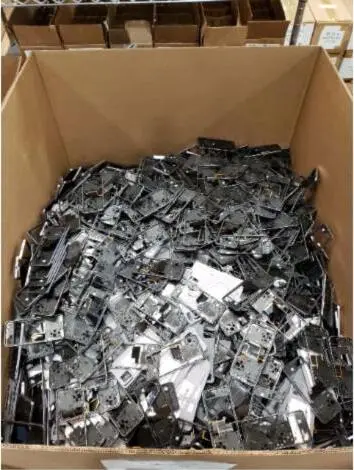
Mid-market OEM warranty programs: A mid-size consumer electronics OEM that manages warranty claims across multiple product lines needs a partner that handles L1 through L4 depot repair, in-warranty and out-of-warranty claim support and rapid exchange programs. A single provider that covers these functions reduces the need for separate vendor relationships.
How to evaluate reverse logistics providers for electronics
A structured evaluation framework reduces the risk of selecting a provider that cannot scale or meet compliance requirements. Candidates should be assessed across these dimensions:
- Service scope — The provider should clarify whether it covers the full lifecycle from RMA intake through recycling or only select functions.
- ASC authorization — The provider should hold OEM-authorized service center status for the brands present in the return stream.
- Technical repair depth — The provider should demonstrate capability for component-level repair, BGA rework and functional testing, not only cosmetic refurbishment.
- Compliance certifications — The provider should hold TAA, NIST, CMMC, SOC 2, ISO 9001 and ISO 14001 certifications that align with the buyer’s industry.
- Data security — The provider should offer certified data destruction with serialized certificates of destruction and chain-of-custody records.
- Scalability — The provider should absorb volume spikes without degrading processing quality or turnaround times.
- Visibility and reporting — The provider should deliver real-time tracking, lifecycle analytics and compliance reporting through an integrated platform.
- Network coverage — The provider should operate facilities and carrier relationships that support national or nearshore program requirements.
- Total cost of ownership — The provider’s pricing model should account for asset recovery value, not only processing fees.
Applying these criteria to current vendor relationships often reveals gaps in coverage or capability. Talk to a lifecycle expert to benchmark the current provider stack against these criteria.
Selecting the right provider category for the operation
Once evaluation criteria are clear, the next step is matching the operation’s profile to the right provider category. This checklist supports that selection process:
- Monthly return volume: Operations that process high return volumes each month benefit from a dedicated reverse logistics specialist with scalable depot repair capacity rather than a generalist 3PL.
- Product categories: IT hardware, telecom devices, consumer electronics and government-issued equipment each carry distinct repair, data security and disposition requirements that generalist providers often cannot meet.
- ASC requirements: When OEM warranty terms require authorized service center repairs, the provider must hold ASC status for the relevant brands. Traditional 3PLs focus on warehousing and transportation rather than OEM-authorized technical repair.
- Government compliance needs: Organizations that serve federal agencies or DoD contractors require providers with TAA-compliant sourcing, NIST SP 800-171 alignment, CMMC certification and SOC 2 reporting.
- Vendor consolidation priority: Organizations that manage separate vendors for repair, fulfillment and recycling should evaluate single-vendor lifecycle partners that remove handoff friction and unify reporting.
The refurbished and reconditioned IT hardware market is projected to reach USD 20.86 billion in 2026, with IT and telecommunications representing a significant share of that volume. Organizations that consolidate reverse logistics under a single authorized partner capture a larger portion of that recovery value.
Premier Logitech as an ASC-authorized lifecycle partner
Founded in 2007, Premier Logitech operates as an ASC-authorized lifecycle partner for IT OEMs, telecom providers, consumer electronics companies and government agencies across the United States. The company holds ASC status for more than 20 OEM brands, which enables authorized repair that generalist 3PLs cannot provide.
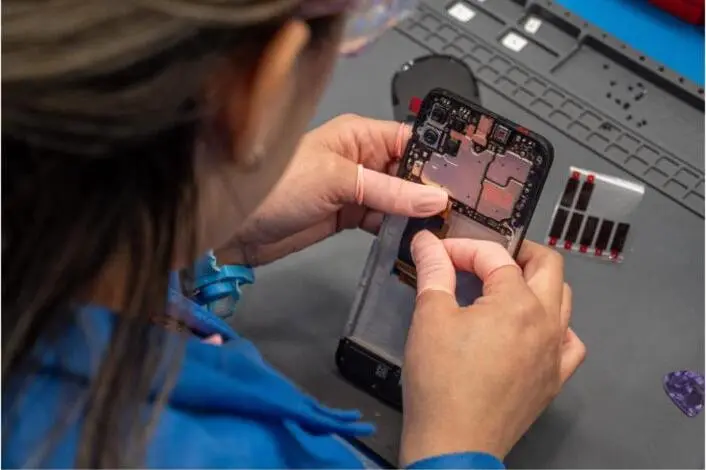
Premier Logitech’s compliance posture covers TAA, TAPA, ISO 9001, ISO 14001, NIST, CMMC and SOC 2, with a CAGE Code that identifies the company as a pre-vetted partner for U.S. federal government programs. Secure data destruction, chain-of-custody documentation and compliance reporting sit inside every disposition workflow.
The company operates three DFW facilities with nearshore operations in Laredo and Nuevo Laredo, Mexico, supported by a network of more than 120 vetted LTL carriers in North America. Clients can engage Premier Logitech for end-to-end lifecycle program management or select individual services, including depot repair, configuration, fulfillment or transportation, on a modular basis.
Organizations that manage fragmented vendor relationships across repair, fulfillment and recycling gain single-vendor consolidation with Premier Logitech, which unifies operations, reduces administrative overhead and improves asset recovery outcomes.
Frequently asked questions about reverse logistics providers
What is the difference between a 3PL and a specialized reverse logistics provider for electronics?
Traditional 3PLs handle warehousing, transportation and basic returns processing as part of a broader fulfillment offering. Specialized reverse logistics providers for electronics perform component-level diagnostics, OEM-authorized depot repair, certified data destruction, refurbishment grading and secondary market integration from a single facility. For IT and telecom returns, this distinction matters because most returned devices carry recoverable value that depends on technical processing, not only storage and shipping.
What compliance frameworks should a reverse logistics provider support for government contracts?
Government contractors and their supply chain partners typically require alignment with NIST SP 800-171 for protecting Controlled Unclassified Information, CMMC certification at the appropriate level, TAA-compliant sourcing and SOC 2 reporting for data security assurance. Providers that handle end-of-life electronics for federal programs may also need to meet R2v3 certification requirements and GSA Bulletin FMR B-34 standards for responsible electronics disposition. Premier Logitech supports TAA, NIST, CMMC, SOC 2 and ISO frameworks and holds a CAGE Code for federal government programs.
Why does ASC authorization matter when selecting a reverse logistics partner?
OEM warranty terms frequently require that repairs occur at an authorized service center to preserve warranty coverage and maintain product quality standards. A provider without ASC status for the relevant brands cannot perform in-warranty repairs under OEM terms, which forces organizations to maintain separate vendor relationships or risk warranty voidance. Premier Logitech holds ASC authorization for more than 20 OEM brands, which covers a broad range of IT, telecom and consumer electronics product lines.
How does single-vendor consolidation improve reverse logistics outcomes?
Fragmented vendor stacks with separate providers for repair, fulfillment and recycling create data handoff gaps, slower processing and reduced visibility across the product lifecycle. The disconnected platforms described earlier also delay defect signals that product teams need for quality and design decisions. A single-vendor partner unifies intake, repair, refurbishment, disposition and reporting under one record per returned unit, which improves decision speed and asset recovery value.
What return volumes are appropriate for a specialized reverse logistics partner versus a generalist 3PL?
Organizations that process high monthly return volumes of IT hardware, telecom devices or consumer electronics benefit most from a specialized partner, especially when OEM warranty obligations, government compliance requirements or secondary market resale programs are in place. Generalist 3PLs are structured for standard ecommerce returns and often lack the technical repair depth, ASC authorizations and compliance certifications that complex electronics programs require. Mid-market and enterprise operations with recurring return streams and asset recovery goals align well with a specialized lifecycle partner.
Next steps for improving reverse logistics performance
Three connected actions help operations leaders move from evaluation to execution:
- Map current return flows — Document every touchpoint from RMA intake through final disposition, and identify handoff gaps, vendor overlaps and compliance exposures. This map reveals where value and visibility drop.
- Gather performance data — Use that map to collect processing timelines, asset recovery rates, compliance audit results and vendor costs at each touchpoint, which establishes a baseline for comparison.
- Schedule a consultation — Bring the process map and performance data to a structured conversation with a lifecycle specialist who can identify consolidation opportunities and align service scope with program requirements.
Premier Logitech partners with IT OEMs, telecom providers, consumer electronics companies and government agencies to design and operate reverse logistics programs that recover asset value, meet compliance requirements and scale with return volume. Talk to a lifecycle expert and start mapping a more efficient program today.
