Last updated: August 22, 2026
Key Takeaways for High-Tech Returns Programs
- Reverse logistics for high-tech manufacturers requires OEM authorizations, certified compliance programs and depot repair infrastructure beyond basic warehouse and carrier services.
- Generic 3PLs lack OEM Authorized Service Center status, data destruction certifications and electronics-specific workflows needed to handle high-tech returns at scale.
- Manufacturers should evaluate partners on lifecycle scope, technical repair capabilities, compliance certifications and real-time visibility to shorten cycle times and increase recovery value.
- 2026 trends show rising refurbishment volumes, expanding trade-in programs and tightening privacy regulations that favor specialized providers with deep OEM relationships and documented compliance.
- Premier Logitech executes the full five Rs as an OEM-authorized partner with more than 20 ASC designations and national compliance certifications. Map reverse-logistics flows with a lifecycle specialist.
Why General 3PLs Struggle with High-Tech Returns
General 3PLs are built for forward logistics, so returns processing sits outside their core design. Electronics-specific requirements often receive bolt-on treatment instead of dedicated infrastructure. Consumer electronics return rates typically range from 8% to 15% and remain below 20%, yet each return triggers complex workflows that many general 3PLs cannot manage efficiently at scale.
The gaps start with authorization and compliance. General 3PLs usually lack OEM Authorized Service Center status, so returned units cannot be repaired under warranty terms. Many also lack certifications for secure data destruction, TAA-compliant handling or NIST-aligned asset disposition. These gaps create fragmented vendor relationships, compliance exposure and lost recovery value on every return cycle.
Specialized providers close these gaps through integrated programs that combine depot repair authorization, certified data destruction, refurbishment grading and secondary-market remarketing. Refurbishment capabilities at specialized providers directly shape recovery economics. A returned device repaired and resold as certified refurbished generates far more value than one diverted to parts or scrap.
Service Scope Across the Full Returns Lifecycle
Given these structural differences, manufacturers evaluating reverse logistics partners should confirm that the provider covers the full returns lifecycle without external handoffs. Relevant scope includes RMA intake, triage, depot repair, refurbishment, grading, secure data destruction, asset disposition and redeployment or remarketing.
Fragmented vendor relationships across repair, fulfillment and recycling create bottlenecks at every handoff point, and these delays directly erode asset value. Every day an electronic device sits in the reverse supply chain it loses market value. Manual reconciliation across disconnected systems compounds that depreciation by adding administrative time to each transfer.
Premier Logitech operates as a single-source partner across the full technology lifecycle, from sourcing through recycling. Clients can also engage individual services on a standalone basis, including returns processing, depot repair, configuration and fulfillment or transportation, without a full program restructure.
Compare current reverse-logistics flows with a full-scope program design.
Technical Repair Capabilities and OEM Authorization
OEM-authorized repair sets the technical threshold that separates specialized providers from general 3PLs. ASC authorization allows a provider to perform warranty repairs under OEM terms, use genuine parts and return units to service without voiding coverage. Without this status, returned units either go back to the OEM, which adds cycle time, or receive out-of-warranty repairs that create liability.
OEMs evaluating a repair partner should assess component-level and depot repair capability, process and asset visibility, turnaround management, inventory integration, testing and quality assurance, and capacity for high-volume programs. Each factor affects cycle time, repair yield and warranty compliance.
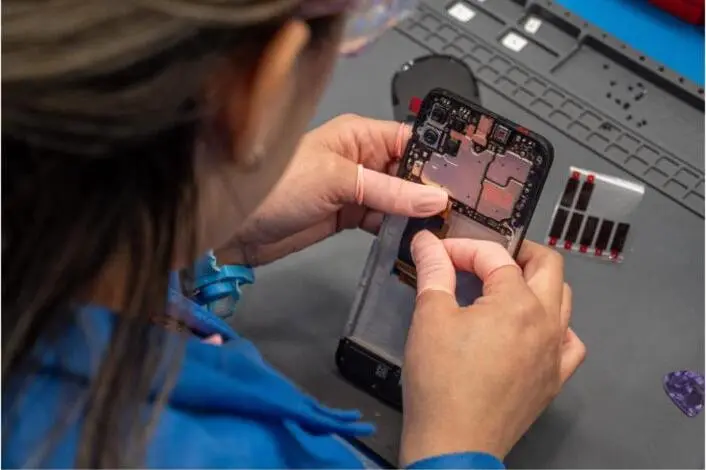
Premier Logitech holds ASC authorization with more than 20 OEM brands and performs depot repair at L1 through L4 levels. Repair capacity supports high-volume programs across multiple product lines. The company also performs certified refurbishment and cosmetic grading for secondary market channels, which allows manufacturers to recover value from returned inventory instead of writing it off.
Review OEM-authorized repair options for specific product lines.
Quality, Security and Compliance Standards
Compliance requirements for high-tech reverse logistics have grown more complex in 2026. As of early 2026, 20 states have comprehensive consumer privacy laws in effect, and each state sets different obligations for businesses that process personal information. On April 21, 2026, House Republicans introduced the SECURE Data Act, a federal privacy bill that would replace the state-by-state patchwork with a single national framework.
For manufacturers handling returned devices, these developments reinforce the need for certified data destruction at every disposition point. Devices that pass through uncertified handlers create audit exposure regardless of downstream outcomes, even when final disposition meets policy.
Premier Logitech operates under TAA, TAPA, ISO, NIST, CMMC and SOC 2 frameworks. Secure data destruction follows documented standards with compliance reporting available for audits. The company holds CAGE Code 4WAJ9 as a pre-vetted partner for U.S. federal government programs, and that security posture extends across commercial OEM programs.
Assess compliance coverage for an existing returns program.
Scalability and Flexible Program Design
High-volume returns programs require elastic capacity that can absorb spikes without sacrificing service levels. Return volumes often surge after product launches, holiday cycles and end-of-life transitions. A partner that cannot handle these surges without extending cycle times creates downstream inventory and revenue pressure.
Reverse logistics costs two to three times more than forward operations because returns arrive off-schedule and require item-by-item inspection and grading. Providers without dedicated returns infrastructure absorb those costs through slower processing and lower throughput, which reduces recovery value.
Premier Logitech supports both modular and full lifecycle program structures. Manufacturers can engage a single service, such as depot repair or returns processing, or consolidate the full reverse logistics program under one partner. This flexibility allows operations teams to right-size the engagement while volume patterns stabilize.
Plan scalable returns capacity for upcoming volume cycles.
Visibility, Data and Performance Metrics
High-volume electronics returns create latency and error risk when data fragments across carriers and systems. Fragmentation slows processing and weakens disposition decisions. A unified data layer that normalizes carrier events and automates routing rules supports consistent processing at scale.
Reverse logistics KPIs for OEM repair flows include total RMA cycle time, depot repair turnaround time, No Fault Found rate, repair yield, repeat failure rate, cost per RMA, redeployment rate and recovery-versus-scrap rate. Manufacturers need real-time access to these metrics to manage performance and address bottlenecks before they compound.
Premier Logitech provides real-time tracking through its Transportation Management System, inventory reporting, device traceability and lifecycle analytics. Operations teams gain clear visibility into asset status at each stage of the returns workflow, from intake through final disposition.
Network Coverage for National Programs
Geographic footprint determines how quickly returned assets reach processing and how efficiently forward and reverse flows integrate. Effective reverse logistics networks combine forward and reverse flows and treat return operations as part of the broader transportation network, not a separate silo.
Premier Logitech operates three facilities in the Dallas-Fort Worth area near one of the world’s busiest air cargo hubs. Nearshore operations in Laredo and Nuevo Laredo, Mexico provide cost-competitive capacity for labor-intensive refurbishment and assembly workflows. The carrier network spans more than 120 vetted LTL carriers across North America and supports both standard and white-glove delivery requirements.
Evaluate network coverage for national and cross-border returns.
Total Cost of Ownership for Reverse Logistics
These fragmented relationships create hidden costs that do not appear in individual vendor invoices. Handoff delays between vendors extend cycle times and slow revenue recovery. Inconsistent grading standards reduce recovery value, and duplicate compliance reporting increases administrative overhead.
Enterprise and education procurement channels can reduce total cost of ownership by sourcing certified refurbished devices. That purchasing behavior reflects the recovery value available when refurbishment programs meet certifiable standards. Manufacturers that capture this value through internal returns programs reduce net cost per unit across the full lifecycle.
Consolidating reverse logistics under a single authorized partner reduces vendor management overhead, removes inter-vendor handoff delays and creates a single compliance and reporting chain. Premier Logitech replaces fragmented repair, fulfillment and recycling relationships with one accountable program structure.
2026 Trends Reshaping Reverse Logistics Strategy
Three converging trends are increasing the strategic importance of reverse logistics for high-tech manufacturers in 2026.
- Rising refurbishment volumes: Omdia reported that display panel shipments to the refurbished smartphone market reached 298 million units in Q1 2026, exceeding shipments to smartphone manufacturers for new devices for the first time. The refurbished channel now acts as a primary demand driver, not a secondary outlet.
- Trade-in program scale: U.S. consumers received more than $6.4 billion through mobile trade-in programs in 2025, a 42 percent increase from the prior year and the largest annual total Assurant has tracked since 2015. The volume of assets entering the reverse supply chain continues to grow.
- Tightening regulatory requirements: Circular economy mandates and e-waste regulations are accelerating demand for certified refurbishment and responsible recycling programs. The global certified refurbished consumer electronics market is experiencing strong growth and is projected to expand significantly as regulatory pressure and sustainability commitments converge.
Each of these trends favors partners with deep OEM relationships, certified refurbishment infrastructure and documented compliance programs. General 3PLs without these capabilities face structural disadvantages as return volumes and regulatory requirements increase.
RFP Questions for Reverse Logistics Procurement
Procurement teams evaluating reverse logistics partners for high-tech OEM programs can use the following questions in RFPs and vendor assessments:
- Which OEM brands have granted Authorized Service Center designation, and what repair levels does each authorization cover?
- What data destruction standards guide operations, and what compliance documentation is produced for each processed asset?
- What depot repair levels occur in-house, and which repair functions are subcontracted to third parties?
- How does the provider integrate reverse logistics data with forward logistics and inventory management systems?
- What certifications does the provider hold relevant to government and enterprise compliance requirements, including TAA, NIST, CMMC and SOC 2?
- How does the provider handle No Fault Found returns, and what disposition workflow applies when a reported failure cannot be reproduced?
- What KPIs does the provider track and report, and how frequently does the client receive performance data?
- How does the provider scale capacity during volume surges, and what SLA commitments apply during peak periods?
Next Steps for High-Tech Manufacturers
High-tech manufacturers evaluating reverse logistics partners in 2026 face growing return volumes, tightening compliance requirements and rising expectations for certified refurbishment execution. Generic 3PLs often fall short of OEM-authorization, data-security and scalability requirements that the market now demands.
Premier Logitech executes the full five Rs, which include return, repair, refurbish, resell and recycle, as an OEM-authorized partner with more than 20 ASC designations, a national U.S. footprint and compliance certifications spanning TAA, NIST, CMMC and SOC 2. The starting point is a discovery conversation that maps current reverse-logistics flows and identifies where consolidation, authorization gaps or compliance exposure create cost and risk. Schedule a reverse-logistics discovery session.
Frequently Asked Questions
What is the difference between a specialized reverse logistics provider and a general 3PL for electronics manufacturers?
A general 3PL handles receiving, storage and outbound shipping, which covers standard distribution needs. For electronics returns, that scope remains insufficient. Specialized reverse logistics providers for high-tech manufacturers perform structured triage, component-level diagnostics, L1 through L4 depot repair, cosmetic refurbishment, certified data destruction and secondary-market grading.
Specialized providers also hold OEM Authorized Service Center designations, which allow warranty repairs under OEM terms using genuine parts. Without ASC authorization, a provider cannot legally perform warranty repairs, so manufacturers must route units back to the OEM or accept out-of-warranty repair risk. Specialized providers maintain compliance certifications for data security and environmental disposition that general 3PLs typically do not hold.
What certifications should a reverse logistics partner hold for high-tech OEM programs?
Relevant certifications depend on the manufacturer’s customer base and regulatory environment. For programs serving U.S. federal government customers, TAA compliance and a CAGE Code represent baseline requirements. NIST and CMMC frameworks apply to programs handling controlled unclassified information or supporting defense-related supply chains.
SOC 2 certification addresses data security controls relevant to enterprise customers. ISO 9001 and ISO 14001 cover quality management and environmental management respectively. For data destruction, NIST 800-88 provides the standard methodology for media sanitization. Manufacturers should confirm that a prospective partner holds current certifications and can produce asset-level compliance documentation, not only program-level attestations.
How does OEM authorization affect repair quality and warranty compliance?
OEM Authorized Service Center status means the provider has been vetted and approved by the OEM to perform repairs under warranty terms. This authorization typically requires use of genuine OEM parts, adherence to OEM-specified repair procedures, employment of technicians trained and certified by the OEM and participation in periodic audits.
Repairs performed outside an authorized network may void warranty coverage, create liability for the manufacturer and produce inconsistent quality outcomes. For high-volume programs, ASC authorization also enables direct integration with OEM warranty claim systems, which reduces administrative overhead and accelerates credit processing for in-warranty units.
What metrics should manufacturers track to evaluate reverse logistics program performance?
Core KPIs for an OEM reverse logistics program include total RMA cycle time from authorization through final disposition, depot repair turnaround time, No Fault Found rate, repair yield, repeat failure rate, cost per RMA, redeployment rate and recovery-versus-scrap rate. No Fault Found rate is particularly important because a high NFF rate indicates either a product quality issue or an intake process that fails to capture accurate failure information.
Redeployment rate and recovery-versus-scrap rate measure how effectively the program converts returned assets into recoverable value instead of write-offs. Manufacturers should establish baseline targets for each metric before program launch and review performance data on a cadence that supports timely operational adjustments.
Can a manufacturer engage Premier Logitech for a single service rather than a full lifecycle program?
Premier Logitech operates as both a single-source lifecycle partner and a modular services provider. Manufacturers can engage an end-to-end program that spans sourcing, configuration, fulfillment, reverse logistics and recycling, or select individual services such as depot repair, returns processing, transportation or IT asset recovery on a standalone basis.
This structure allows operations teams to consolidate specific functions without restructuring the entire supply chain. It also provides a path to expand the engagement over time as program requirements evolve or as the manufacturer identifies additional consolidation opportunities across the vendor base.
