Last updated: August 29, 2026
Key Takeaways
- Selecting the wrong WMS for 20-plus sites creates compliance gaps, ERP integration failures and reverse-logistics bottlenecks that compound daily.
- Enterprise-grade platforms must deliver native ERP integration, robotics readiness, returns throughput, compliance traceability, multi-site orchestration and predictable total cost of ownership.
- High-volume returns automation is the fastest-growing WMS function, and platforms without native disposition modules become bottlenecks at scale.
- SAP EWM fits SAP-centric stacks, while Manhattan Active leads for cloud-native, AI-driven exception handling, and both still require a compliant reverse-logistics partner.
- Premier Logitech completes the WMS lifecycle by executing physical repair, refurbishment and compliant recycling, and connecting a WMS to a scalable reverse-logistics operation turns disposition decisions into asset recovery.
Enterprise WMS Requirements for High-Volume Logistics
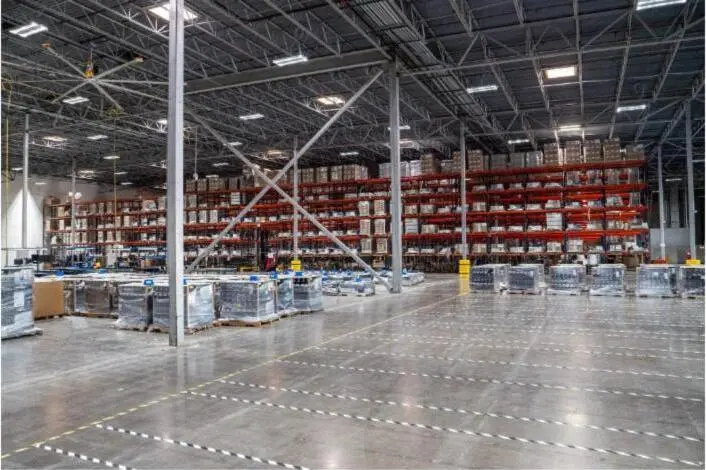
An enterprise-grade WMS serves as the execution platform for receiving, putaway, picking, packing, shipping and returns across multiple facilities. It maintains real-time synchronization with ERP, TMS and automation systems while supporting lot and serial traceability, compliance reporting and multi-site orchestration at scale.
Six criteria separate enterprise-grade platforms from mid-market alternatives. Logistics leaders evaluating SAP EWM, Manhattan Active, Blue Yonder and Oracle should assess each platform against these dimensions and rank them by operational priority before shortlisting.
- ERP integration risk: Native integration depth and API governance matter more than feature lists.
- Robotics and automation readiness: Interoperability with existing WMS, ERP and scanning infrastructure takes priority over individual product features, because products that cannot integrate create more friction than they remove.
- Reverse-logistics throughput: Platforms with native returns modules and disposition rules reduce exposure.
- Compliance traceability: Lot, serial and chain-of-custody tracking must satisfy TAA, ISO, NIST, CMMC and SOC 2 requirements without custom development.
- Multi-site orchestration: The platform must support repeatable deployment and consistent process templates across sites.
- Total cost of ownership: Implementation timelines and unbudgeted costs shape the real economics of any platform decision.
Build a WMS evaluation framework tailored to large enterprise logistics teams.
WMS Capabilities for High-Volume Returns
Online return rates vary by category, and electronics consistently generate complex disposition decisions that generic WMS workflows cannot resolve efficiently. The performance gap between platforms widens as return volume grows.
Platforms that support ML-driven grading recommendations and bulk disposition approvals close that gap fastest. That capability gains importance each year as returns volumes and automation maturity increase.
Returns processing is forecast to grow at the highest rate among warehouse automation application functions through 2031, as vision stations and rule engines enable rapid grading, repair, recycle or restock decisions. A WMS without a dedicated returns module becomes a bottleneck once returns reach enterprise scale.
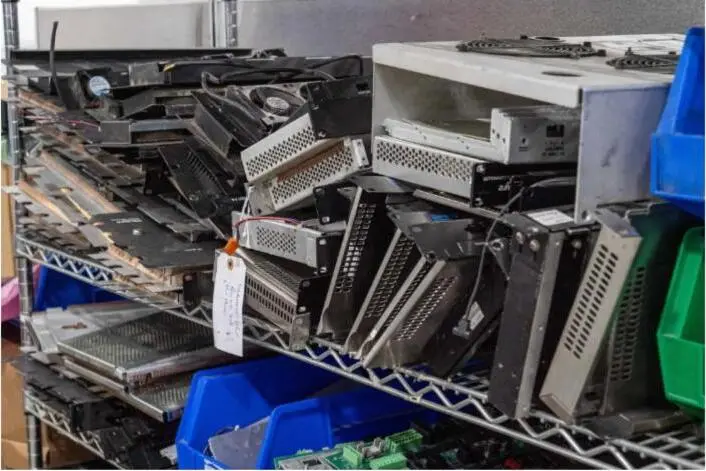
Premier Logitech processes repairs across its ASC-authorized network and operates rapid-exchange programs that keep return cycles short. That capacity sits behind any WMS a client operates and converts disposition outputs into physical action without adding vendors.
Manhattan Associates made its AI Agent Workforce commercially available in January 2026, including Wave Coordinator, Labor and Dock Agents for real-time exception handling. The KNAPP AeroBot App built with SAP BTP became available in the SAP Store by November 2025 with a clean-core approach that separates automation extensions from core SAP modules. Both moves signal that leading platforms now converge on automation-native architectures for returns-intensive environments.
SAP EWM and Manhattan Active in Global Distribution Networks
Forrester’s Warehouse Management Systems Landscape, Q2 2026 covers 11 vendors and frames WMS selection around fulfillment time, supply chain cost reduction and complex supplier relationship management. The 2026 Gartner WMS Magic Quadrant weights cloud maturity heavily, and approximately 55 to 68 percent of new WMS implementations are cloud-based SaaS deployments as of 2025 to 2026, with cloud often the right choice for 70 to 80 percent of companies when economics favor it.
SAP EWM integrates natively with SAP S/4HANA, which reduces ERP integration risk for organizations already on the SAP stack. That native integration extends to robotics, because its clean-core architecture, reinforced by the KNAPP AeroBot release, supports automation extensions without destabilizing core modules. The same centralized design that enables robotics readiness also strengthens compliance traceability through native batch and serial management. Multi-site orchestration follows SAP’s centralized single-instance model, which provides a unified data model and faster enterprise control but reduces local flexibility and requires heavier change management at the site level.
Manhattan Active WMS runs on a cloud-native, continuously updated architecture that removes upgrade projects. Its AI Agent Workforce addresses real-time exception handling at the execution layer. ERP integration risk runs higher for non-Manhattan ERP environments because the platform relies on API-led connectivity rather than native stack integration. Reverse-logistics throughput is competitive, and the platform’s omnichannel design handles high return volumes well in retail and consumer electronics environments.
For global distribution networks running SAP ERP, SAP EWM carries lower integration risk and stronger compliance traceability out of the box. For networks prioritizing continuous cloud delivery and AI-native execution, Manhattan Active leads on robotics readiness and exception management. Both platforms still require a compliant, scalable reverse-logistics partner to execute physical disposition.
Platform Limits and When to Avoid Each WMS
Platform fit depends on operational context, and specific scenarios can turn a strong WMS into a source of risk. The following conditions highlight where each platform creates more risk than value.
SAP EWM: Avoid when the organization runs a non-SAP ERP and lacks the integration budget to build and maintain API-led connectivity. Also avoid when the deployment timeline cannot absorb SAP implementation complexity across 20-plus sites simultaneously.
Manhattan Active WMS: Avoid when the organization requires on-premise or hybrid deployment for data sovereignty, defense or pharmaceutical compliance. Also avoid when the ERP environment is highly customized and cannot support clean API integration without significant re-engineering.
Blue Yonder: Avoid when the organization needs deep ASC-authorized repair integration or government-grade compliance traceability that the platform does not natively support. Blue Yonder’s strength is demand-driven fulfillment, and reverse-logistics disposition workflows require supplemental services.
Oracle WMS Cloud: Avoid when the organization is not on Oracle Fusion or NetSuite, because ERP integration complexity rises sharply outside the Oracle stack. Also avoid when robotics interoperability is a near-term requirement, because integration projects can outweigh performance advantages if the WMS lacks direct automation ties.
These platform-specific constraints highlight a universal limitation. Any platform selection leaves a gap between WMS disposition outputs and physical repair, refurbishment and compliant recycling, and that gap widens as return volumes, OEM warranty requirements and government contract obligations increase.
How Premier Logitech Closes the WMS Execution Gap
A WMS manages data and routing. Premier Logitech manages the physical asset, the execution layer that closes the gap described above.
Premier Logitech holds ASC authorization for more than 20 OEM brands, which enables L1 through L4 depot repair that satisfies OEM warranty requirements. That authorization creates a compliance barrier that general repair vendors cannot cross. Rapid-exchange programs keep device cycles short for enterprise and government clients managing large deployed fleets.
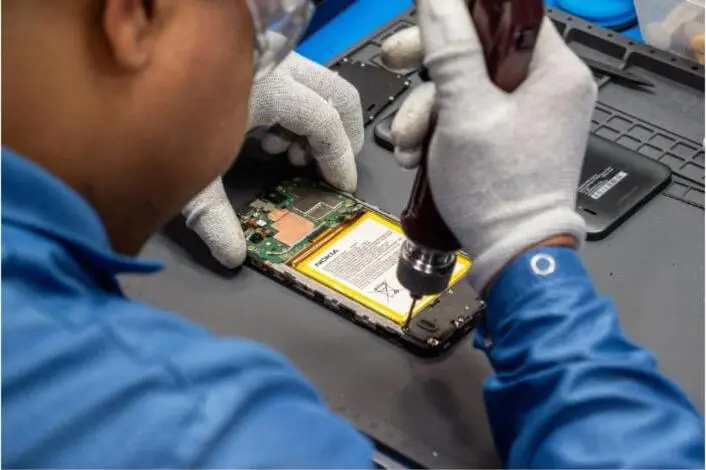
Compliance coverage spans TAA, ISO 9001 and 14001, NIST, CMMC and SOC 2. For government and regulated enterprise clients, that stack satisfies audit requirements that most reverse-logistics providers cannot document. Meeting those requirements demands more than certifications and requires operational controls that prevent audit exposure. Premier Logitech’s compliance framework addresses access controls and segregation of duties through least-privilege design and audit logging, built into operations rather than added after go-live.
Three DFW facilities and nearshore operations in Laredo and Nuevo Laredo provide geographic reach and a cost structure that supports both domestic and cross-border programs. A network of more than 120 vetted LTL carriers connects those facilities to any WMS-managed distribution network in North America.
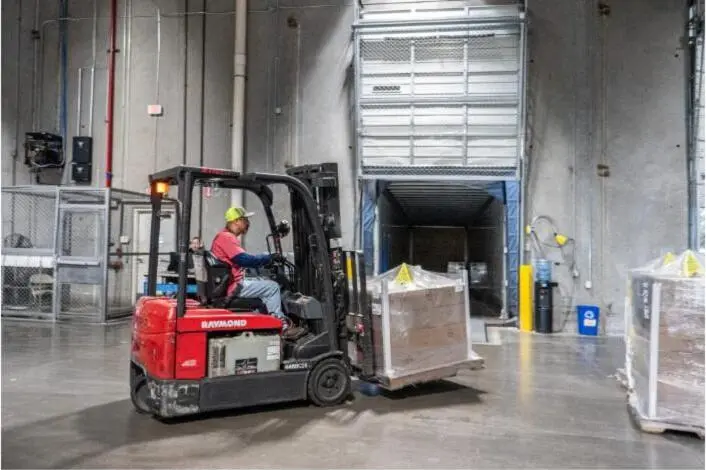
Clients engage Premier Logitech as a single-source lifecycle partner or select individual services on a modular basis. Reverse logistics, depot repair, configuration, fulfillment and transportation can align with the existing WMS environment instead of forcing changes to that environment.
Connect a WMS to a compliant, scalable reverse-logistics operation.
Frequently Asked Questions
What is the biggest hidden cost in a multi-site WMS deployment?
The largest unbudgeted costs in multi-site WMS deployments are cutover productivity loss, internal project team opportunity cost and post-go-live customization backlogs. Most vendor ROI models exclude these categories. Organizations managing 20 or more sites also face standardization risk, because sites that use different receiving workflows or carrier integrations require template governance to prevent inconsistent execution and long-term support overhead. Budgeting a portion of total implementation cost for ongoing data reconciliation and validation tools provides a practical starting point for high-volume networks.
How does returns automation affect WMS selection for electronics logistics teams?
Returns automation changes WMS evaluation criteria significantly for electronics logistics teams. Platforms with native disposition rule engines, ML-driven grading recommendations and bulk approval workflows reduce per-return labor cost and processing time. Electronics return rates often run in the range of 8 to 15 percent by volume, and each return requires inspection, grading and disposition routing that manual workflows cannot sustain at enterprise scale. A WMS without a dedicated returns module forces teams to build custom workflows or rely on external systems, which increases integration risk and reduces traceability. WMS selection should be evaluated alongside the physical repair and refurbishment partner, because disposition outputs only create value when the downstream operation executes them effectively.
When does cloud WMS outperform on-premise for large enterprise logistics?
Cloud WMS outperforms on-premise when an organization needs to onboard new sites without provisioning local servers and absorb seasonal volume spikes without capacity planning projects. Continuous software updates without multi-month upgrade cycles also favor cloud deployments. Cloud-native architectures produce structured, real-time data flows that AI and robotics orchestration layers require. On-premise remains the better choice when regulatory or sovereign constraints require data to stay on-site, when warehouse connectivity is unreliable or when recent server investments still carry multi-year amortization. Hybrid deployments, with a cloud control plane and on-premise data plane for scan events, address multi-site networks with mixed connectivity profiles but introduce additional operational complexity.
What compliance certifications should a reverse-logistics partner hold for government and enterprise contracts?
Government and regulated enterprise contracts typically require TAA compliance for product sourcing, NIST alignment for data security controls, CMMC certification for defense-related programs and SOC 2 for data handling and audit documentation. ISO 9001 and ISO 14001 certifications address quality management and environmental responsibility, which matter for e-waste and recycling programs. ASC authorization from OEM brands is a separate but equally important credential, because it determines whether a repair partner can perform warranty-valid repairs that protect asset recovery value and OEM relationship compliance. Organizations should verify that a reverse-logistics partner holds all applicable certifications before program launch, not after an audit finding.
Can a single partner manage both WMS-connected fulfillment and reverse logistics for a 20-plus site operation?
A single partner managing both functions reduces integration complexity, removes handoff gaps between fulfillment and returns and provides unified visibility across the asset lifecycle. The practical requirement is that the partner holds the operational scale, OEM authorizations and compliance certifications to serve all sites without subcontracting critical functions. Premier Logitech operates as both a single-source lifecycle partner and a modular services provider, so logistics teams can engage the full service stack or select individual capabilities based on program requirements.
Next Step: Turn a WMS into a Full Reverse-Logistics Solution
The right WMS creates the data foundation for enterprise logistics. What happens after the disposition decision, including repair, refurbishment, grading, remarketing and compliant recycling, determines whether that foundation generates asset recovery value or absorbs cost.
Premier Logitech connects to any WMS environment and executes the physical lifecycle from returns intake through compliant disposition. ASC authorization for more than 20 OEM brands, TAA and CMMC compliance and a DFW-plus-nearshore footprint provide the infrastructure needed to scale without adding vendors.
Build a reverse-logistics program that works with an existing WMS.
