Last updated: July 28, 2026
Key Takeaways for Enterprise ITAD Decisions
- Enterprise IT asset disposition in 2026 must align with state e-waste laws, RCRA rules and data security frameworks at the same time.
- Bulk recycling kits support small, low-risk volumes but lack serial-number tracking, certified data destruction and multi-state compliance reporting.
- Managed ITAD programs deliver end-to-end accountability with chain-of-custody documentation, NIST SP 800-88 Rev. 2-aligned destruction and scalable logistics.
- Premier Logitech’s certified infrastructure, ASC-authorized repair network and real-time TMS provide compliance depth and asset recovery that kit-based approaches cannot match.
- Schedule an assessment with Premier Logitech to review the current program and close compliance gaps at scale.
Five-Criteria Framework for Comparing Kits and Managed ITAD
Enterprise leaders gain clarity when they evaluate disposition options against a shared framework. Five criteria highlight the practical differences between bulk recycling kits and managed ITAD programs.
- Service scope, which defines what the program covers from intake through final disposition
- Compliance depth, which identifies the regulatory frameworks the program satisfies and documents
- Chain-of-custody visibility, which tracks assets at the serial-number level throughout the process
- Multi-site scalability, which determines whether the program operates consistently across distributed locations
- Total cost of ownership, which combines processing fees, logistics costs, compliance risk exposure and asset recovery value
Bulk recycling kits perform adequately on service scope for low-volume, low-risk assets. Managed ITAD programs outperform on every other criterion, especially compliance depth and scalability, where kit-based approaches create structural gaps that expand with fleet size. Understanding what compliance depth means in practice requires a closer look at the regulations that govern enterprise IT asset disposal in 2026.
Map this five-criteria framework to the current disposition program with Premier Logitech’s team.
Compliance Requirements Shaping ITAD in 2026
RCRA remains the primary federal framework for hazardous electronic waste. It requires cradle-to-grave tracking from generation through transport, treatment and final disposal. EPA fines reach up to $93,058 per day per violation for RCRA hazardous waste. As of 2026, 25 states plus the District of Columbia have enacted some form of e-waste legislation, with 25 states operating Extended Producer Responsibility laws that shift financial and operational obligations onto manufacturers and downstream partners.
Several states prohibit lithium battery disposal in municipal solid waste, with enforcement mechanisms that carry significant financial consequences. California imposes fines up to $70,000 per day for illegal disposal of hazardous electronic waste, while New York applies similar penalty structures for illegal e-waste disposal.
Data security frameworks add further requirements. NIST SP 800-88 Revision 2, enforced in 2026, renders the DoD 5220.22-M three-pass overwrite standard obsolete for SSDs and NVMe media because wear-leveling prevents full sector access. Compliant disposition now requires Cryptographic Erasure with verified AES-256 or physical destruction to NAID AAA specifications. CMMC 2.0, HIPAA, FISMA and DFARS each add serial-number-level documentation requirements that mail-back kits cannot generate.
Premier Logitech’s certified processes align with TAA, ISO 14001, NIST, CMMC and SOC 2 requirements. Its CAGE Code 4WAJ9 positions the company as a pre-vetted partner for federal agencies that operate under strict disposition standards. Bulk recycling kits provide no equivalent compliance documentation.
Data Destruction and Chain-of-Custody in Practice
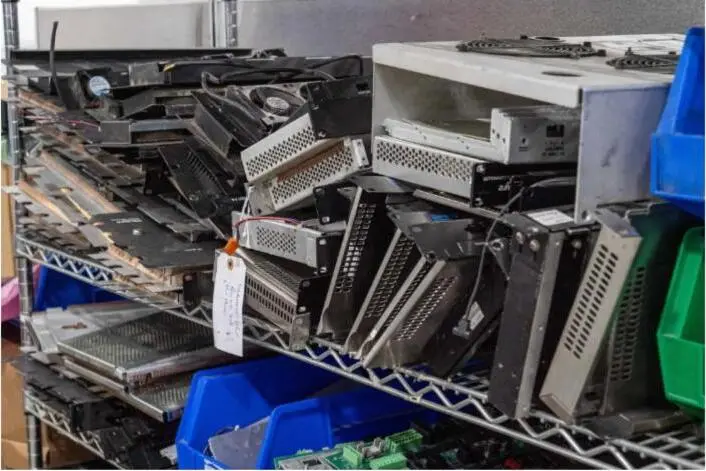
Managed ITAD providers track assets from the moment they leave the client facility. They document make, model and serial number to establish a clear chain of custody that records every transfer, storage location and processing step through final disposition.
A complete compliance pack from a managed ITAD program includes a Certificate of Data Destruction, an itemized asset report at the serial-number level, a chain-of-custody report, an environmental recycling report and an exceptions report for auditors and internal governance. Mail-back kits typically provide a single certificate of recycling, if any documentation is provided, with no serial-number-level traceability.
NAID AAA certification mandates rigorous procedures for securely destroying data from electronic devices, including employee screening and strict chain-of-custody protocols. NAID AAA also mandates unannounced audits, continuous employee background checks and multi-factor authentication on administrative systems. These controls provide legally defensible proof that scheduled audits alone cannot match.
Premier Logitech’s real-time Transportation Management System provides operational visibility across every asset in transit. Its ASC-authorized repair network, which spans more than 20 OEM brands, supports triage, refurbishment and grading decisions at intake. This structure routes assets to the highest-value outcome instead of defaulting them to recycling.
Scaling Programs Across Sites and Volumes
Third-party ITAD vendors deliver high scale flexibility and fit distributed organizations. In-house or kit-based programs offer limited scale flexibility and require additional vendors as volume grows.
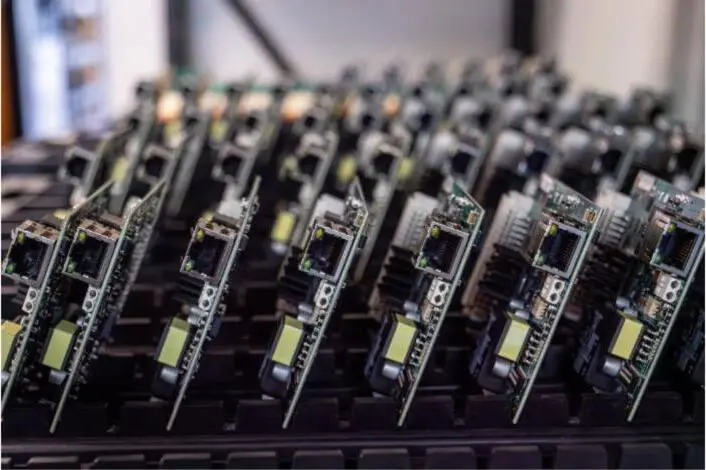
Premier Logitech operates three DFW facilities with nearshore operations in Laredo and Nuevo Laredo, Mexico, and a network of more than 120 vetted LTL carriers across North America. This infrastructure supports nationwide deployments, including hardware refreshes, data center decommissions and multi-location retirement programs, under a single program structure with unified reporting.

Multi-state and international remote workforces create compliance complexity because all 50 U.S. states maintain differing data breach notification laws and e-waste regulations. Organizations must document exact equipment locations and engage national ITAD providers that can handle regional requirements. Bulk recycling kits cannot manage this complexity at scale, and each additional site introduces a new documentation gap and compliance exposure.
Real-Time Tracking and Centralized Reporting
Best practices for enterprise IT asset disposal include centralized asset management tools with reporting capabilities, documented chain of custody for all transfers and annual audits. Managed ITAD programs deliver these outputs as standard. Kit-based programs do not.
Premier Logitech’s TMS provides real-time inventory visibility, exception reporting and audit-ready compliance packs across every active program. Its single-point-of-contact model replaces fragmented vendor relationships that create reporting inconsistencies and compliance blind spots in multi-vendor environments. Operations and supply chain leaders receive consolidated data, not separate reports from separate recyclers across separate states.
Addressing Cost, Warranty and Recovery Concerns
Enterprise leaders managing high return volumes often focus on cost, warranty obligations and asset recovery uncertainty when they evaluate managed ITAD programs.
On cost, retired enterprise equipment frequently retains a meaningful portion of its original value. A mature ITAD partner can return remarketing proceeds to the organization and convert disposal from a cost center into a revenue line. ITAD cost structures typically include processing, data destruction, logistics and reporting fees that are often offset by resale revenue or avoided data breach penalties. Many enterprise ITAD programs operate at lower net cost than expected and some become net-positive through remarketing revenue.
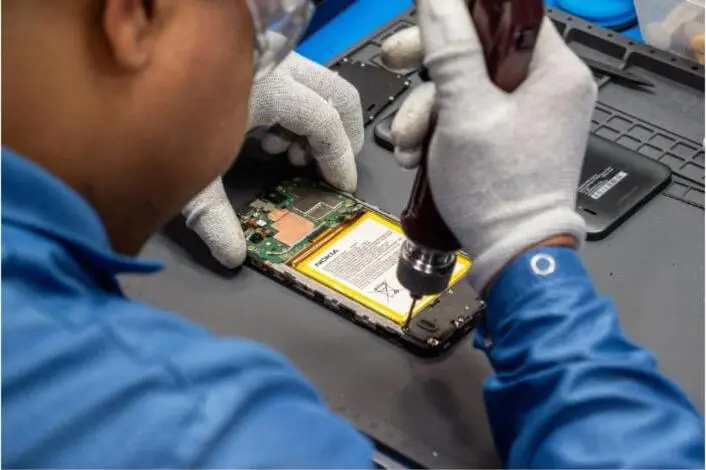
On warranty obligations, Premier Logitech holds ASC authorization for more than 20 OEM brands. That authorization allows the team to handle in-warranty and out-of-warranty claims, perform L1–L4 depot repair and route functional assets back into certified refurbishment channels. Kit-based programs cannot replicate these capabilities.
On asset recovery, Premier Logitech’s certified refurbishment, grading and remarketing capabilities ensure that assets with residual value are identified at intake and processed accordingly. When structured effectively, remarketing revenue can make the ITAD program budget-neutral or create a positive impact on the IT department’s budget.
Regulatory Trends and Government Program Needs in 2026
EPR law expansion continues across states in 2026, with new covered device categories and stricter manufacturer reporting obligations taking effect. Lithium battery rules are tightening in multiple jurisdictions, and federal RCRA enforcement remains active with per-day, per-violation penalty structures that accumulate rapidly for enterprises managing large fleets across several states.
Global e-waste reached 62 million metric tons in 2022 with only 22.3% formally collected and recycled. Projections indicate volumes will climb to 82 million metric tons by 2030, and regulatory pressure will track that growth.
For government contractors and agencies, Premier Logitech’s CAGE Code 4WAJ9, TAA compliance and CMMC-aligned processes satisfy federal procurement and disposition requirements. Financial and privacy laws including HIPAA, FACTA, GLBA, CCPA, CMMC 2.0, FISMA and DFARS require strict disposal rules for data on retired hardware, with civil penalties and potential contract termination for non-compliant disposition. Premier Logitech’s certifications and reporting infrastructure support these requirements across every engagement.
Internal Readiness Checklist for Enterprise ITAD
Before selecting a disposition approach, enterprise operations and ITAD leaders confirm several internal foundations.
- A named policy owner is assigned for IT asset disposition across all sites and remote workers
- A live asset inventory captures every device from procurement through retirement, including serial numbers and assigned locations
- All active and prospective vendors hold R2v3, e-Stewards or NAID AAA certification with documented audit history
- Data destruction procedures align with NIST SP 800-88 Rev. 2 for all media types, including SSDs and NVMe drives
- Chain-of-custody documentation covers every handoff from site collection through final disposition
- Compliance reporting satisfies multi-state EPR obligations and federal RCRA requirements for all states where devices are generated
- Vendor integration with finance and procurement systems supports quarterly reconciliation of disposition records
- A single point of contact exists for escalation, exception reporting and audit support across all active programs
Frequently Asked Questions
What types of IT assets does a managed ITAD program accept?
A full managed ITAD program handles the complete range of enterprise IT hardware, including laptops, desktops, servers, storage arrays, networking equipment, mobile devices, tablets, monitors, peripherals and data-bearing components. Premier Logitech’s program also supports consumer electronics, telecom equipment and wearables for OEM and enterprise clients. Bulk recycling kits are generally limited to portable devices below a defined size and weight threshold and are not designed for server-class hardware, large-format equipment or assets that require specialized handling.
What compliance documentation does a managed ITAD program deliver?
The compliance pack described earlier satisfies regulatory requirements across multiple frameworks. Premier Logitech’s documentation aligns with NIST SP 800-88 Rev. 2, CMMC, SOC 2 and ISO 14001 requirements, and its reporting structure supports audits under RCRA, state EPR laws and federal data security frameworks.
How does a single managed ITAD program handle compliance across multiple states?
Multi-state compliance requires mapping each device’s state of origin to the applicable EPR law, RCRA obligations, lithium battery rules and data security requirements for that jurisdiction. A national managed ITAD partner maintains current knowledge of state-level requirements and builds compliant workflows for each location into a unified program. Premier Logitech’s nationwide carrier network, DFW logistics hub and nearshore operations support consistent program execution across all U.S. locations, with consolidated reporting that satisfies multi-state documentation requirements under a single vendor relationship.
How does asset recovery work within a managed ITAD program?
At intake, each asset is assessed for functional condition, cosmetic grade and secondary market value. Assets with residual value are routed to certified refurbishment and remarketing channels. Assets without resale value are processed for responsible recycling. Premier Logitech’s ASC-authorized repair network supports L1–L4 depot repair, cosmetic refurbishment and grading, which enables higher recovery rates than programs that default all retired assets to recycling. Remarketing proceeds are applied against program costs, and clients receive transparent reporting on asset valuation and recovery outcomes.
What is the first step in engaging Premier Logitech for enterprise IT asset disposition?
The engagement process starts with a consultation that assesses current disposition practices, asset volumes, compliance obligations and program gaps. Premier Logitech’s lifecycle experts develop a customized proposal that covers service scope, logistics design, compliance reporting and integration requirements. The team then finalizes pricing, aligns deployment timelines and defines operational requirements before program launch. Organizations can engage Premier Logitech for end-to-end ITAD program management or select individual services such as secure data destruction, transportation or refurbishment on a standalone basis.
Conclusion: Selecting a Scalable ITAD Partner
Bulk e-waste recycling kits serve a narrow use case. For enterprises that manage distributed fleets, multi-state compliance obligations, high return volumes and strict data security requirements, kits introduce structural gaps that expand with scale.
A full managed ITAD program from a certified national single-vendor partner closes those gaps. It delivers serial-number-level chain of custody, NIST SP 800-88 Rev. 2-aligned data destruction, audit-ready compliance documentation and scalable logistics, all under one program structure with one point of contact.
Premier Logitech has delivered end-to-end technology lifecycle and reverse logistics services since 2007. Its ASC-authorized network, DFW logistics hub, nearshore operations and certified compliance infrastructure support the complexity that enterprise IT asset disposal demands in 2026 and beyond.
