Last updated: July 29, 2026
Key Takeaways
- Revenue-positive ITAD turns retired IT assets into net revenue by prioritizing resale and refurbishment when market demand exceeds processing costs.
- A resale-first workflow evaluates devices by condition and routes functional assets to refurbishment or resale before any recycling occurs.
- Volume consolidation, free-pickup thresholds and national logistics networks reduce per-unit costs and support revenue-positive programs.
- Compliance with NIST SP 800-88 Rev. 2, CMMC, R2v3, e-Stewards and TAA standards requires serial-number documentation and certified downstream accountability.
- Premier Logitech delivers certified, OEM-authorized ITAD and reverse logistics services that maximize recovery value; assess program revenue recovery potential with a lifecycle specialist.
Resale-First ITAD That Turns E-Waste into Revenue
A resale-first workflow follows a structured triage sequence that prioritizes value recovery. Assets are received, inventoried at the serial-number level and graded by condition. Each device then moves to the highest-value disposition path before recycling enters the discussion.
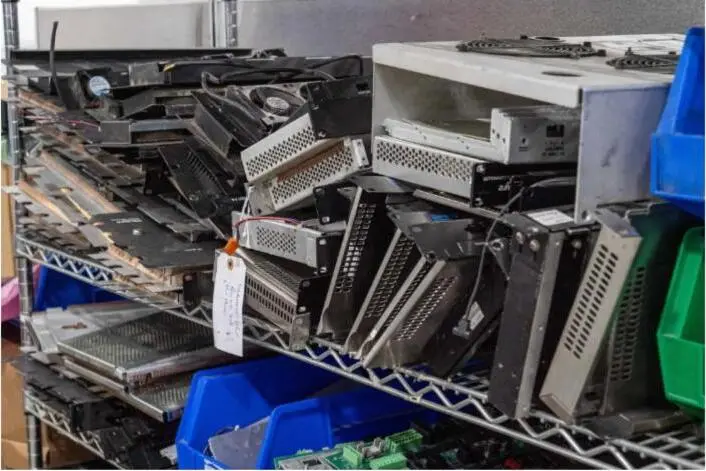
A closed-loop supply chain framework routes A and B condition items to refurbishment or resale, C items to parts harvesting and D items to certified recycling. This structure preserves value at every tier.
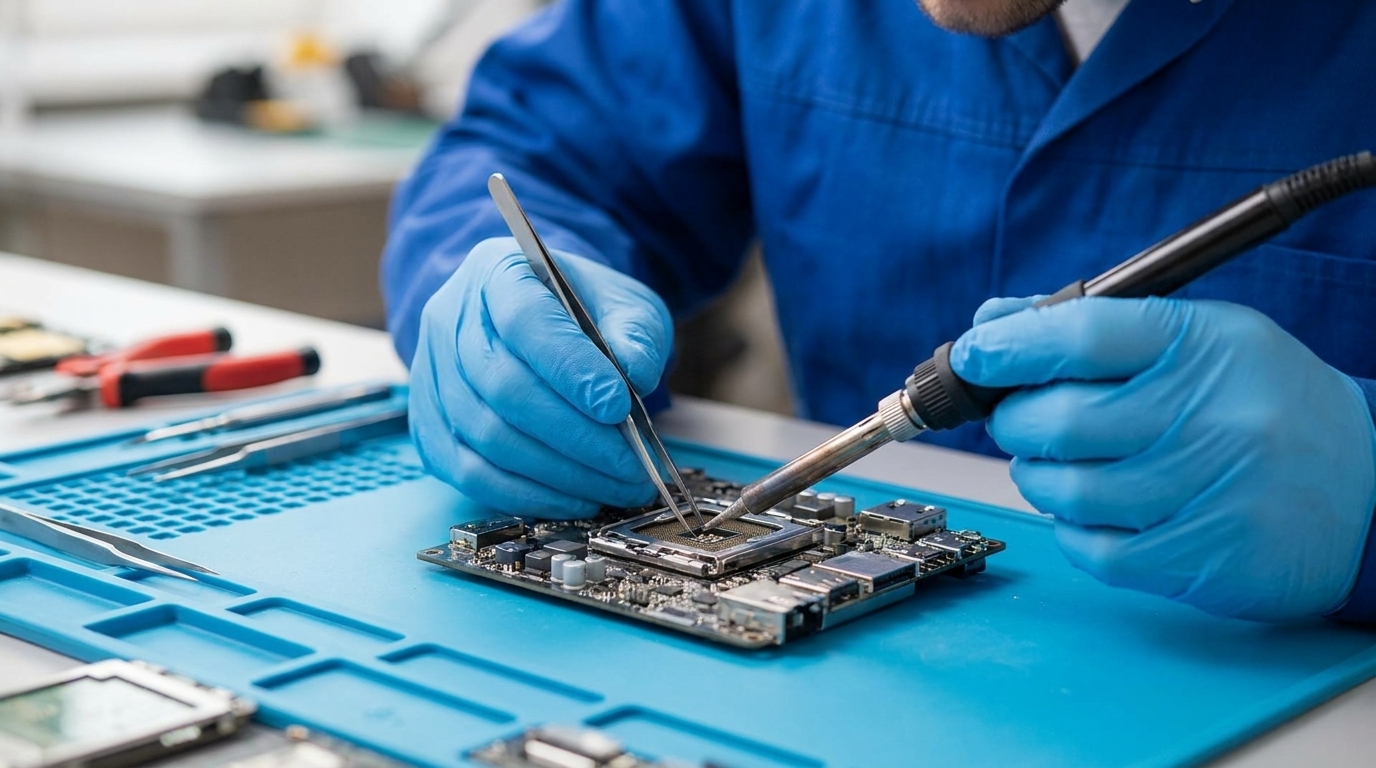
Premier Logitech executes this model with more than 20 OEM Authorized Service Center authorizations and L1–L4 depot repair capabilities. Devices that pass triage enter certified refurbishment and grading workflows for secondary market channels. Assets that cannot be resold move to responsible recycling under documented chain-of-custody controls.
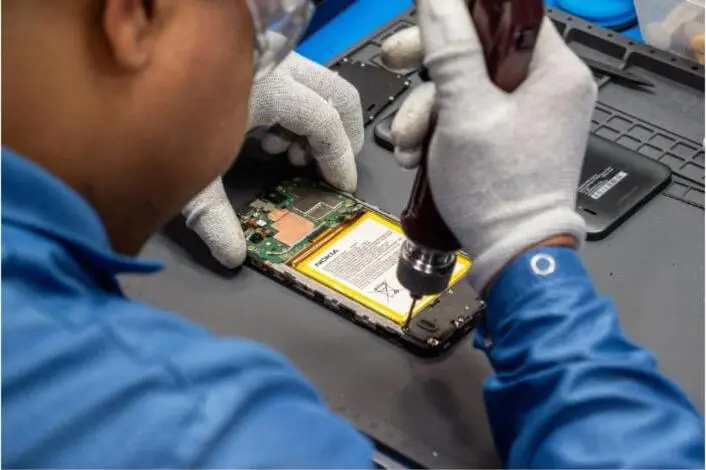
Up to 47% of devices destroyed for data security reasons are still functional, according to Blancco’s 2025 State of Data Sanitization report. A resale-first triage process captures that value instead of eliminating it.
Volume-Based Pricing and Free-Pickup Thresholds
Larger volumes of retired IT assets support better pricing through economies of scale. Consolidated disposition events reduce per-unit logistics and processing costs. When remarketing value is strong, these consolidated pickups can produce net-positive outcomes.
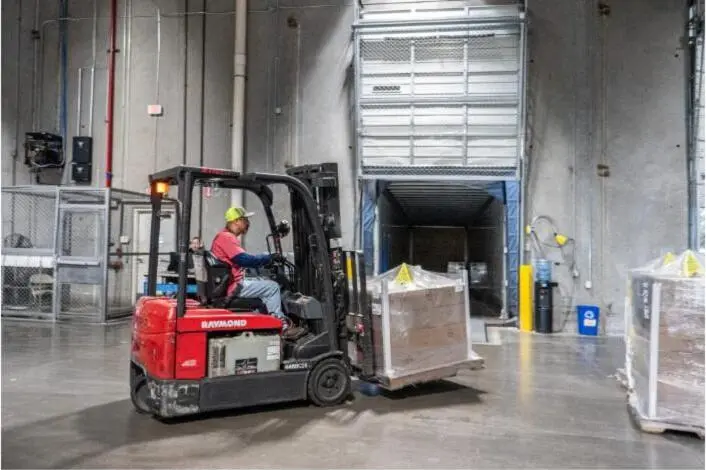
Organizations evaluating free-pickup eligibility typically ask four related questions that together define program economics.
- What qualifies for free pickup? A qualified load typically includes standard business electronics such as laptops, monitors, servers, network gear and mobile devices in sufficient quantity to justify truck dispatch and downstream processing. Exact thresholds vary by asset mix and geography.
- What increases pickup cost? Large copiers, specialty devices, loose lithium batteries and CRT monitors often carry additional handling fees even within a mixed load.
- What reduces per-unit cost? Assets that are boxed, palletized and staged near a loading dock lower labor costs. This preparation improves eligibility for no-cost or revenue-positive programs.
- When does onsite destruction apply? Classified or sensitive media may require onsite shredding with serialized certificates of destruction. That service is priced separately from standard pickup programs.
Premier Logitech’s carrier network across North America supports consolidated multi-site pickups. This structure allows enterprises to aggregate assets from distributed locations into a single disposition event.
Compliance Standards for Secure, Documented ITAD
Enterprise and government organizations manage overlapping compliance obligations during IT asset retirement. Each standard addresses a specific risk domain and documentation requirement.
NIST SP 800-88 Rev. 2, which superseded Rev. 1 on September 26, 2025, establishes three sanitization tiers: Clear, Purge and Destroy. Purge-level sanitization through verified cryptographic erasure on AES-256 encrypted drives now serves as the standard for most enterprise media. Physical destruction remains required for classified data or unverified SSD encryption.
CMMC 2.0 Level 2 and above requires defense contractors to implement NIST SP 800-171 Practice MP.L2-3.8.3 for sanitization or destruction of media before disposal. Missing serial-number documentation risks contract termination. CMMC Phase II requirements were suspended on July 13, 2026, while Phase I self-assessment requirements remain active.
R2v3, administered by SERI, requires documented data security plans, sanitization methods aligned to media types, verification procedures and chain-of-custody tracking from receipt to final disposition. It integrates with ISO 14001 and ISO 45001 and requires downstream vendor qualification through audit programs.
e-Stewards, managed by the Basel Action Network, prohibits export of hazardous e-waste to developing countries and requires GPS tracking for all export shipments. It mandates NAID AAA certification for data destruction and serialized certificates of destruction for every device.
The Trade Agreements Act governs product sourcing for federal contracts and requires that IT assets originate from designated countries. Premier Logitech’s TAA-compliant sourcing and disposition processes support federal procurement requirements across government agency clients.
Premier Logitech operates with TAA, NIST and CMMC alignment along with ISO quality frameworks, SOC 2 and TAPA certifications. Its CAGE Code 4WAJ9 identifies it as a pre-vetted partner for U.S. federal government programs.
Verify program compliance coverage with a certified ITAD partner.
National Logistics Consolidation for Multi-State Enterprises
Multi-state enterprises face rising logistics costs when each site manages disposition independently. A hub-and-spoke consolidation model addresses this challenge by aggregating assets from regional collection points into centralized processing facilities before final disposition.
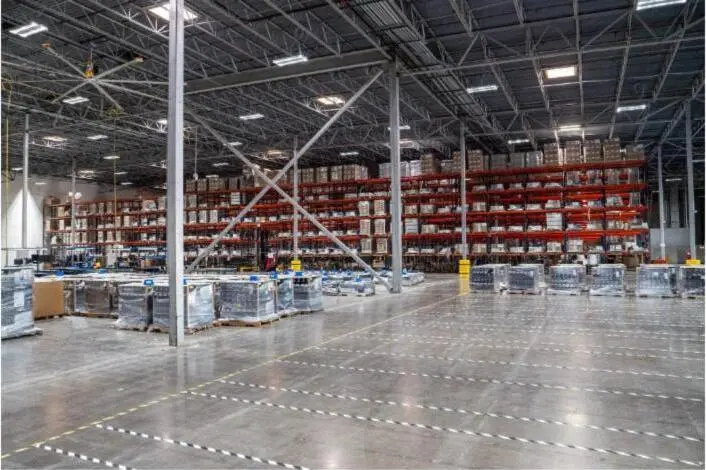
Premier Logitech operates three DFW-area facilities with nearshore operations in Laredo and Nuevo Laredo, Mexico. This footprint positions the company near a major air cargo hub and supports cost-competitive cross-border processing for eligible programs.
Key consolidation tactics include:
- Scheduling coordinated multi-site pickups to reduce per-unit freight costs
- Using serialized asset tagging at collection to maintain chain-of-custody before assets reach the processing facility
- Routing assets through regional staging points to consolidate LTL shipments into full truckload moves
- Using a transportation management system for real-time tracking and freight audit across the carrier network
- Applying backhaul opportunities on outbound delivery routes to reduce reverse logistics costs
Reverse-network design should incorporate backhauls and zonal processing to lower reverse logistics expenses, while maintaining full traceability. Premier Logitech’s vetted North American LTL carriers support this model at national scale.
OEM-Authorized Repair That Reduces Disposal Volume
OEM-authorized repair extends asset life and diverts devices from recycling streams. When a device can be repaired to OEM specifications, it re-enters the active asset pool or secondary market instead of moving to disposition.
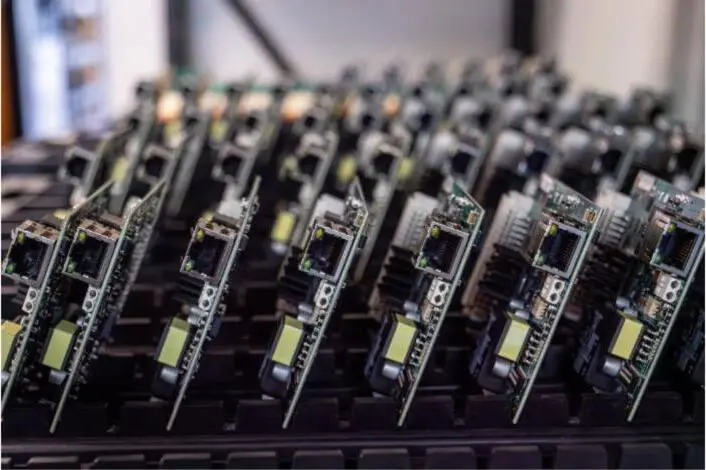
OEM-authorized repair captures a portion of the functional-device value identified earlier by returning assets to service rather than routing them to disposition.
Premier Logitech holds ASC status with more than 20 OEM brands, which supports warranty-compliant L1–L4 depot repair across a broad range of enterprise and consumer electronics. Its repair capacity supports high-volume programs, and its certified refurbishment and grading capabilities prepare devices for secondary market channels after repair.
For organizations managing large refresh cycles, integrating OEM-authorized repair into the disposition workflow reduces the volume of assets that require full ITAD processing. This structure lowers total program cost and increases net recovery value.
Five-Step Checklist for Selecting an ITAD Vendor
ITAD partner selection depends on capabilities across five core dimensions. This checklist supports consistent evaluation for enterprise and government programs.
- Certifications: Confirm R2v3 or e-Stewards certification, NIST SP 800-88 Rev. 2-aligned data sanitization, TAA compliance and CMMC-supporting documentation. Verify that certifications cover the specific facilities and activities in scope. R2v3 is a facility-level standard with no group certificates permitted for multi-site organizations. Premier Logitech meets these certification requirements.
- Downstream accountability: Require documented downstream vendor qualification. R2v3 Core Requirement 7 mandates that all downstream vendors handling focus materials meet equivalent environmental, health, safety and security standards. Request audit records and material flow documentation.
- Logistics scale: Assess carrier network depth, multi-state pickup capability and transportation management visibility. A national program requires a partner with infrastructure that consolidates assets from distributed locations without losing chain-of-custody integrity.
- Repair integration: Confirm OEM ASC authorizations relevant to the asset types in the program. Authorized repair status determines whether devices can return to OEM-compliant condition for resale or redeployment instead of moving directly to recycling.
- Reporting transparency: Require serial-number certificates of data destruction, chain-of-custody documentation at every handoff and disposition reporting that reconciles with finance and procurement systems. Disposition records should be reconciled with finance and procurement systems on a regular basis.
Conclusion: Turning Compliance E-Waste into Revenue
Revenue-positive ITAD is achievable for U.S. enterprises, OEMs and government agencies that apply a resale-first model with a certified, OEM-authorized partner. Six decision criteria shape outcomes: resale-first triage, volume consolidation, certification alignment, national logistics, OEM-authorized repair and transparent reporting.
The value of raw materials recoverable from U.S. e-waste exceeds $7 billion annually. Organizations that treat IT asset disposition as a value-recovery program capture a meaningful share of that figure.
Premier Logitech delivers end-to-end ITAD and reverse logistics services from its DFW hub and nearshore operations, with the certifications and authorizations outlined above. The program functions as a single national partner that replaces fragmented vendor relationships across repair, fulfillment and recycling.
Assess program revenue recovery potential with Premier Logitech.
Frequently Asked Questions
What is the difference between R2v3 and e-Stewards certification for corporate ITAD programs?
R2v3, administered by Sustainable Electronics Recycling International, and e-Stewards, managed by the Basel Action Network, both require NIST 800-88-aligned data sanitization, downstream vendor accountability and environmental management systems. The primary difference involves export policy. R2v3 permits export of hazardous e-waste to countries with legal frameworks for receiving it, provided documented compliance. e-Stewards prohibits hazardous e-waste exports to non-OECD developing countries and mandates GPS tracking for export shipments. For U.S. federal and enterprise programs, both certifications satisfy baseline compliance requirements. Organizations with strict downstream accountability requirements or Basel Convention obligations may prefer e-Stewards. R2v3 has broader facility adoption globally and often serves as the baseline for enterprise ITAD contracts.
How does NIST SP 800-88 Rev. 2 affect corporate device retirement in 2026?
NIST SP 800-88 Rev. 2 superseded Rev. 1 on September 26, 2025 and now serves as the current federal standard for media sanitization. It defines three tiers: Clear, Purge and Destroy. For most enterprise laptops and desktops with AES-256 encrypted drives, Purge-level cryptographic erasure satisfies the standard without physical destruction. For classified data or unverified SSD encryption, physical destruction remains required.
The Rev. 2 update delegates device-specific technical commands to IEEE 2883-2022, which addresses modern SSD and NVMe media that the older DoD 5220.22-M overwrite standard cannot reliably sanitize. Defense contractors subject to CMMC must implement NIST SP 800-171 Practice MP.L2-3.8.3, which references 800-88 for media sanitization before disposal. Serial-number documentation is required to demonstrate compliance at the device level.
At what asset volume does corporate e-waste pickup become free or revenue-positive?
No universal threshold exists because eligibility depends on asset mix, condition, geographic location and current secondary market demand. Programs become revenue-positive when the resale value of functional equipment exceeds combined logistics, processing and data sanitization costs.
Consolidated loads of standard business electronics such as laptops, servers, monitors, network gear and mobile devices in sufficient quantity to justify truck dispatch are the most common candidates for no-cost or revenue-positive pickup. Assets that are boxed, palletized and staged near a loading dock reduce labor costs and improve program economics. Specialty devices, CRT monitors and loose lithium batteries typically carry additional handling fees regardless of load size. Premier Logitech evaluates program economics based on asset inventory, condition and volume before structuring a disposition program.
How does OEM-authorized repair reduce total ITAD program costs?
OEM-authorized repair diverts devices from the disposition stream by returning them to a condition suitable for redeployment or secondary market resale. When an Authorized Service Center repairs a device to OEM specifications, it retains warranty eligibility and commands a higher resale value than a non-certified refurbished unit.
This approach reduces the volume of assets that require full ITAD processing and increases the per-unit recovery value of assets that enter the resale channel. For organizations managing large refresh cycles, integrating authorized repair into the lifecycle program lowers total disposition cost and extends the productive life of the asset base. Premier Logitech holds ASC status with more than 20 OEM brands, which covers a broad range of enterprise IT and consumer electronics categories.
What compliance documentation should enterprises require from an ITAD vendor?
Enterprises should require serial-number certificates of data destruction or sanitization for every device, specifying the sanitization method, unique device identifier and timestamp. Chain-of-custody documentation must cover every handoff from asset pickup through final disposition, including downstream vendor qualifications and audit records.
For government programs, TAA compliance documentation and CMMC-supporting records are required. Vendors should provide R2v3 or e-Stewards certification certificates that cover the specific facilities handling the program, not group or umbrella certifications. Disposition reports should be structured for reconciliation with the organization’s finance and procurement systems. Premier Logitech provides compliance reporting aligned to ISO, NIST, CMMC and SOC 2 frameworks as part of its standard program documentation.
