Key Takeaways for Cross-Dock Returns Programs
- Cross-dock returns processing keeps high-volume IT and electronics returns moving through inspection, classification and routing without long-term storage, which reduces holding costs and speeds value recovery.
- The workflow follows seven sequential stages: receipt, inspection, condition grading, data security screening, sortation, value recovery and outbound dispatch. Each stage supports same-day routing decisions.
- Organizations managing serialized assets, strict compliance requirements (NIST, CMMC, TAA) or large monthly return volumes gain the most benefit because the model removes storage delays and maintains chain-of-custody documentation.
- Effective programs rely on real-time WMS-to-ERP integration, defined data destruction protocols and a facility layout built for continuous inbound-to-outbound flow.
- Premier Logitech provides OEM authorizations, compliance certifications and depot capacity for compliant cross-dock returns at enterprise scale. Talk to a lifecycle expert to evaluate fit for the operation.
Seven-Stage Cross-Dock Returns Workflow
A structured cross-dock returns workflow moves assets through seven stages and replaces storage with rapid routing decisions. Each step narrows options and directs units toward the highest recovery outcome.
- Inbound receipt and manifest verification. Returns arrive at the cross-dock facility and match against RMA manifests or carrier documentation. Serialized IT assets such as laptops, routers and mobile devices are scanned and logged into the WMS or ERP at intake. Any discrepancy triggers immediate exception handling instead of delayed research.
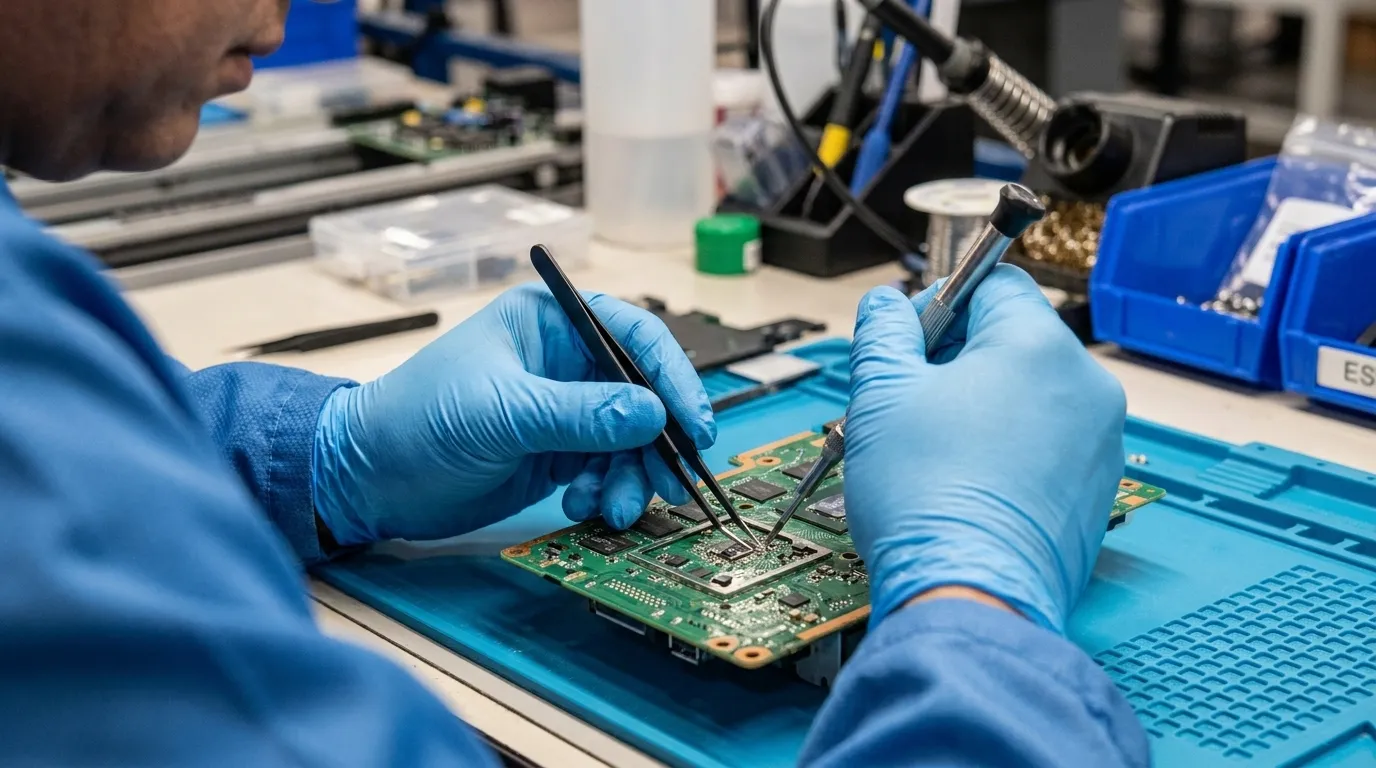
- Physical inspection and triage. Each unit receives a rapid physical assessment. Technicians check for cosmetic damage, missing components and visible functional failures. This stage separates units ready for redeployment from units that need deeper evaluation.
- Condition classification. Assets receive a grade based on a defined condition matrix that ranges from like-new to beyond economical repair. For telecom and IT hardware, criteria include screen integrity, battery health indicators, port functionality and firmware status. These grades drive every downstream routing decision.
- Data security screening. Data destruction protocols apply or receive verification before any unit advances. Government-adjacent and enterprise returns must align with NIST 800-88 standards at this step. Assets that cannot be wiped on-site are flagged for secure destruction instead of release into recovery channels.
- Routing decision and sortation. Condition grade and compliance status determine the lane for each unit. Typical lanes include direct redeployment, depot repair, certified refurbishment and grading, parts reclamation and responsible recycling. Returns cross docking depends on rapid sortation, so assets move to their lane the same day they receive classification.
- Value recovery processing. Units routed to repair enter depot queues for L1–L4 service. Units graded for secondary market channels move to cosmetic refurbishment and repackaging. Parts-reclamation units are disassembled for component harvesting. These paths run in parallel so high-condition and low-condition assets do not compete for the same resources.
- Outbound dispatch. Processed assets ship to their next destination, including redeployment inventory, OEM warranty return channels, secondary market buyers or certified recyclers. Outbound documentation closes the RMA loop and supports ISO, NIST and CMMC audit trails.
Operational Benefits of Cross-Dock Returns
- Reduced holding costs. Assets that bypass storage avoid warehousing fees and limit depreciation on the shelf.
- Faster asset recovery. Parallel processing lanes shorten the time between return receipt and value realization.
- Lower e-waste exposure. Accurate intake classification routes more units to repair and refurbishment instead of disposal.
- Compliance continuity. Data destruction and chain-of-custody documentation sit inside the workflow rather than as retroactive steps.
- Vendor consolidation. A single authorized partner handling all seven steps removes handoff gaps and clarifies accountability.
When Cross-Dock Returns Processing Fits the Operation
Stored returns processing works for low return volumes, narrow product mixes and flexible recovery timelines. Large OEMs, telecom providers and government-adjacent enterprises with device refresh cycles, warranty programs or end-of-lease returns face different conditions.
Cross-dock returns processing becomes the sound choice when monthly return volumes reach a level where storage costs and recovery delays create measurable financial drag. The model also fits when the product mix includes serialized assets with strict data security needs, when SLAs require rapid redeployment or replacement and when frameworks such as CMMC or TAA demand documented chain-of-custody at every stage.
Beyond volume and compliance factors, the structure of vendor relationships often signals readiness for cross-docking. Organizations that use separate providers for intake, repair, refurbishment and recycling are strong candidates for consolidation into a cross-dock model. Handoff points between vendors often create compliance gaps and recovery losses.
Key Implementation Requirements for Cross-Dock Programs
Enterprise-scale cross-dock returns programs depend on integration between the facility WMS and the client ERP or order management system. Real-time data exchange at intake, sortation and outbound dispatch gives operations teams clear visibility. That visibility supports exception queue management, asset status tracking and compliance reporting without manual reconciliation.
Data destruction protocols must be defined before program launch, not after the first returns arrive. This early definition matters because destruction methods such as overwrite, degauss or physical destruction vary by device type, storage media and compliance standard. Those choices drive the routing logic inside the WMS. WMS platforms designed for reverse logistics then automate sortation decisions based on those protocols and reduce technician judgment variability.
Facility layout also shapes throughput. Cross-dock facility design principles emphasize inbound-to-outbound flow with minimal lateral movement. That approach supports returns environments that handle mixed product types at high velocity.
Partner Selection Criteria for Cross-Dock Returns
Only a subset of reverse logistics providers can run a compliant cross-dock returns program for IT and electronics at enterprise scale. Evaluation should start with OEM Authorized Service Center status, which determines whether the partner can perform warranty-valid repairs without affecting manufacturer agreements. Compliance certifications such as TAA, NIST, CMMC, ISO 9001 and SOC 2 remain essential for government-adjacent programs.
Scalable depot capacity also plays a central role when return volumes spike during product refresh cycles or end-of-lease events. A partner with repair capacity in the tens of thousands of units per week and kitting capacity in the hundreds of thousands per month can absorb surges without stretching recovery timelines.
Premier Logitech holds ASC authorizations across multiple OEM brands and operates DFW facilities with nearshore capacity. The company supports TAA, NIST, CMMC, ISO, TAPA and SOC 2 compliance frameworks and functions as a single-vendor partner across the full returns lifecycle, from RMA intake through repair, refurbishment, grading and certified recycling.
Talk to a lifecycle expert at Premier Logitech to assess whether a cross-dock model aligns with program volume and compliance requirements.
Cross-Dock Returns Compared With Stored Returns Processing
Traditional returns processing sends inbound assets into storage first, then schedules triage and disposition as secondary steps. That sequence creates holding costs, delays condition classification and defers routing decisions while the asset continues to depreciate. Compliance documentation often appears after the fact, which increases audit risk for programs subject to NIST or CMMC requirements.
Cross-dock returns processing reverses that sequence. Triage, classification and routing occur at receipt. Storage does not appear as a workflow stage and instead becomes an exception the process aims to avoid. For high-volume IT and electronics programs, this difference often determines whether the returns operation functions as a cost center or a value recovery engine.
Frequently Asked Questions About Cross-Dock Returns
What is cross-dock returns processing?
Cross-dock returns processing is a logistics model in which returned assets are received, inspected, classified and routed to the next destination without long-term storage. The model compresses the time between return receipt and value recovery and maintains compliance documentation throughout the process.
How does cross-dock returns processing handle data security for IT assets?
Data destruction sits as a mandatory step before any asset moves to a recovery or resale channel. Depending on device type and applicable compliance standard, destruction methods include certified overwrite, degaussing or physical destruction. Chain-of-custody documentation supports NIST 800-88 and CMMC audit requirements.
What volume threshold justifies a cross-dock returns model?
Organizations with high monthly return volumes, especially those with serialized IT or telecom assets, active warranty programs or device refresh cycles, often see the strongest case for cross-docking. The model becomes compelling when storage costs, recovery delays or compliance gaps already appear as measurable issues.
Can cross-dock returns processing support OEM warranty compliance?
Cross-dock returns processing supports OEM warranty compliance when the processing partner holds Authorized Service Center status with the relevant OEM. ASC authorization allows the partner to perform warranty-valid repairs, use approved parts and return assets through OEM channels without affecting manufacturer agreements.
What systems need integration for a cross-dock returns program to work at scale?
The facility WMS must exchange data in real time with the client ERP or order management system. Key integration points include inbound receipt, condition classification, routing decisions, repair status and outbound dispatch. Real-time visibility at each stage supports exception management and compliance reporting.
How does single-vendor consolidation improve a cross-dock returns program?
Fragmented vendor relationships create handoff gaps where assets can be misrouted, documentation can break down and accountability becomes unclear. A single authorized partner that manages intake, repair, refurbishment, grading and recycling removes those gaps and provides a unified audit trail across the full returns lifecycle.
Premier Logitech delivers cross-dock returns processing for high-volume IT, telecom and electronics programs with OEM authorizations, compliance certifications and depot capacity to operate as a single lifecycle partner. Talk to a lifecycle expert to discuss a program built around specific volume, product mix and compliance requirements.
