
Last updated: July 29, 2026
Key Takeaways for 2026 ITAD Procurement
- Secure enterprise e-waste recycling at scale requires documented chain-of-custody, NIST SP 800-88 Rev. 2 compliant data sanitization and asset-level evidence at every location.
- Multi-site programs must maintain consistent serialized scanning, tamper-evident transport and 7–10 year audit-trail retention to satisfy regulators and auditors.
- 2026 compliance updates mandate NIST SP 800-88 Rev. 2, NAID AAA and R2v3 certifications. Any reference to Rev. 1 or multi-pass overwrite creates immediate compliance gaps.
- Value recovery and ESG reporting depend on asset-level reuse tracking and Scope-3 Category 12 documentation that a single certified partner can consolidate.
- Premier Logitech consolidates logistics, data destruction, repair and compliance reporting under one MSA. Talk to a lifecycle expert to begin a program assessment.
Multi-Site Chain-of-Custody Standards for Large Fleets
Chain-of-custody in IT asset disposition is only as strong as the weakest site. Regulators do not grade on average performance. Every location must meet the same standard and produce asset-level evidence.
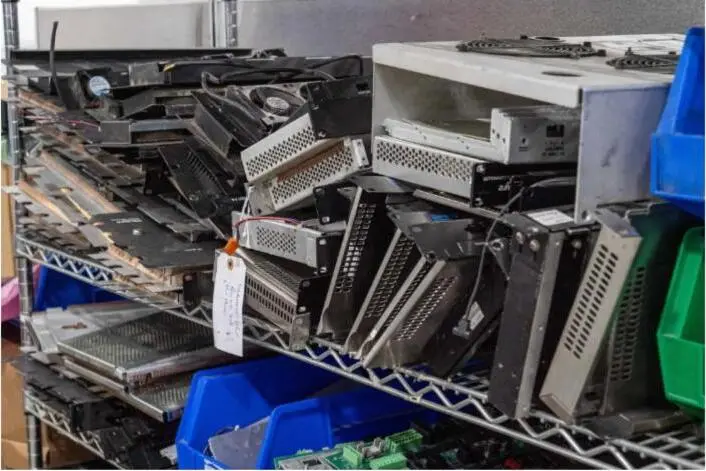
To prevent a single site from becoming a weak link, a defensible multi-site program applies the same controls at every pickup point.
- Serialized scanning of every asset by make, model and serial number at collection
- Tamper-evident packaging and vetted transport with GPS monitoring and signed transfer forms
- Timestamped manifests reconciled against site records upon arrival at the processing facility
- Audit-trail retention for 7–10 years to support regulatory audits and litigation defense
- A consolidated disposition report that preserves site-level traceability and enables centralized compliance review
The greatest data-security risk in ITAD occurs while equipment moves between decommissioning sites and processing facilities. Premier Logitech’s transportation management system spans more than 120 vetted North American LTL carriers and provides real-time visibility with documented handoffs at every transfer point across all 50 states.

2026 Data Sanitization and Recycling Compliance Updates
NIST SP 800-88 Revision 2 became effective September 26, 2025. The same day, Revision 1 was withdrawn and Rev. 2 became the current U.S. media sanitization standard. Procurement language and vendor statements of work that reference Rev. 1 now fall out of compliance.
Key changes that affect procurement and contract language include the following items.
- Multi-pass overwriting is retired. A single pass or device sanitize command now satisfies the Clear method.
- Cryptographic erase requirements expand. Rev. 2 requires 128-bit security strength, FIPS 140-3 alignment and a four-type key taxonomy with documented key-generation and escrow history on the Certificate of Sanitization.
- Purge takes priority over Clear. Purge should be used instead of Clear whenever assets leave organizational control.
- Physical destruction requires particle-size specifications. Specifications must align with IEEE 2883-2022 and NSA guidelines rather than generic shredding language.
- Degaussing is removed. Degaussing no longer appears as an approved Destroy technique.
- Scope expands to cloud and virtual storage. Rev. 2 redefines coverage from electronic media to Information Storage Media, explicitly including object storage and emerging storage types.
- Verification and Validation become separate decisions. Each decision requires explicit documentation on the redesigned Certificate of Sanitization.
Beyond NIST, two certifications now function as baseline requirements for enterprise vendor selection. NAID AAA certification requires unannounced audits of destruction processes, employee screening and serial-number chain-of-custody verification. R2v3 certification, recognized by the EPA and managed by SERI, mandates downstream due diligence audits, a formal Data Sanitization Plan and prioritization of device repair and reuse before material recovery.
CMMC 2.0 Level 2 and above requires defense contractors to implement NIST SP 800-171 Practice MP.L2-3.8.3 for media sanitization before disposal. Missing serial-number-level documentation creates contract risk and can support termination.
Value Recovery and ESG Reporting Expectations
Many data center assets destroyed by enterprises remain operational at the time of destruction. This pattern drives unnecessary destruction costs and lost resale value for large organizations. A mature ITAD program routes functional assets to refurbishment and resale before any destruction decision.
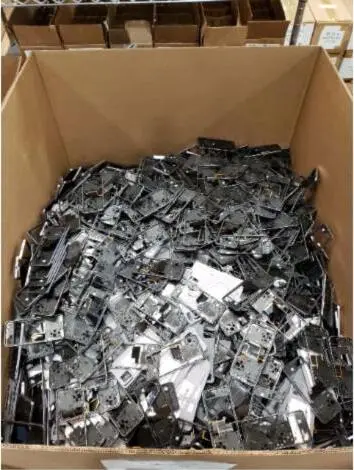
For ESG reporting under GHG Protocol Scope-3 Category 12, reuse rates translate into avoided emissions. The calculation multiplies the reuse rate by the weighted average embedded carbon per unit. Verbal claims of sending equipment to an ITAD vendor provide no credit. The calculation requires auditable asset-level records with vendor chain-of-custody documentation.

A complete enterprise e-waste reporting set should include the following elements.
- Total assets collected, by site and serial number
- Devices redeployed, repaired, refurbished, resold, donated or used for parts
- Assets recycled or destroyed, with certified destruction documentation
- Residual value recovered and landfill diversion rate
- Chain-of-custody completion rate and exceptions log
- Kilogram-CO₂e avoided emissions, mapped to per-unit embedded carbon factors
Premier Logitech produces asset-level disposition reports that support financial recovery tracking and Scope-3 Category 12 ESG disclosures.
Single-MSA Logistics and Vendor Consolidation Strategy
Fragmented vendor relationships across repair, recycling and transportation create compliance gaps, inconsistent chain-of-custody documentation and missed asset-recovery value. RCRA violations carry civil penalties of up to $93,058 per day per violation (as adjusted January 8, 2025). HIPAA violations for failure to document destruction of ePHI can also result in significant penalties. A single vendor gap in a multi-vendor chain can trigger these exposures.
Premier Logitech consolidates repair, recycling, transportation and compliance reporting under one MSA. The company holds TAA, NIST, CMMC, SOC 2, ISO 9001 and ISO 14001 compliance frameworks and operates as an authorized service center for more than 20 OEM brands. Large organizations gain a single point of accountability from device collection through certified destruction or remarketing.
Talk to a lifecycle expert to map current vendor relationships and identify consolidation opportunities.
Red Flags in Enterprise ITAD Vendor Proposals
Certain proposal details signal outdated practices, missing capabilities or documentation gaps. Proposals that contain any of the following items warrant immediate follow-up or disqualification.
- References to NIST SP 800-88 Rev. 1 or DoD 5220.22-M multi-pass overwrite as current standards, which indicates obsolete sanitization methods
- Only aggregate weight or lot-level reporting instead of serial-number-level documentation, which prevents asset-level audit trails
- Absence of NAID AAA or R2v3 certification, or certifications that cannot be verified through the issuing body
- No downstream audit documentation showing where materials go after the vendor facility, which obscures environmental and data risk
- Generic shredding language without particle-size specifications aligned to IEEE 2883-2022
- No ASC-authorized repair capability, which removes reuse-before-destruction options required under R2v3
- Chain-of-custody records that cover only the vendor facility and not transit from each collection site
- No Scope-3 Category 12 reporting output or reuse-rate tracking at the asset level, which blocks defensible ESG reporting
Eight-Question RFP Checklist for ITAD Vendors
Procurement teams can use the following questions to score any ITAD and e-waste recycling vendor. Each question maps to a verifiable compliance or operational requirement.
- Does the vendor hold current NAID AAA certification? Verification should occur directly with NAID. Unannounced audits and serial-number chain-of-custody are required.
- Is the vendor R2v3 certified through SERI? R2v3 requires a formal Data Sanitization Plan and downstream due diligence audits at all disposal facilities.
- Does vendor documentation reference NIST SP 800-88 Rev. 2 (2025)? Any reference to Rev. 1 or DoD 5220.22-M multi-pass overwrite indicates outdated practices.
- Can the vendor provide serialized, asset-level disposition reports for every site? Consolidated lot-level reporting remains insufficient for CMMC, HIPAA and FISMA audits.
- Does the vendor operate a nationwide TMS with documented chain-of-custody from each collection site through final disposition? Transit represents the highest-risk phase, so GPS tracking and signed manifests at every handoff are required.
- Does the vendor hold TAA compliance and CMMC alignment for government-adjacent programs? Missing these requirements disqualifies the vendor for federal and defense-contractor engagements.
- Does the vendor have ASC-authorized repair capability for major OEM brands? Reuse-before-destruction is required under R2v3 and maximizes asset recovery value.
- Can the vendor produce Scope-3 Category 12 ESG reporting at the asset level? Aggregate tonnage data does not support defensible avoided-emissions calculations under the GHG Protocol.
Next Steps for Procurement and Operations Leaders
Three connected actions prepare an organization to issue a credible RFP and select a compliant partner.
- Map current disposition flows. Identify every site generating retired IT assets, the vendors handling each location and the documentation each vendor produces. This map reveals gaps in serialized tracking or certification coverage that create immediate compliance risk.
- Audit existing vendor certifications. Compare current certifications against the disposition map. Verify NAID AAA and R2v3 status through the issuing bodies and confirm that NIST SP 800-88 Rev. 2 appears in current statements of work instead of Rev. 1.
- Consolidate under a single certified partner. Use the gap analysis and certification audit to select one partner. A single MSA covering logistics, data destruction, repair and ESG reporting removes inter-vendor custody gaps that create regulatory exposure.
Premier Logitech has delivered end-to-end IT lifecycle and ITAD services since 2007. Operations span three DFW facilities with a logistics network of more than 120 carriers and ASC relationships with more than 20 OEMs. The company supports TAA, NIST, CMMC, SOC 2, ISO 9001 and ISO 14001 compliance frameworks for Fortune 1000 and government-adjacent organizations nationwide.
Talk to a lifecycle expert to schedule a discovery call and receive a program assessment for current e-waste and ITAD operations.
Frequently Asked Questions
NIST SP 800-88 Rev. 1 vs. Rev. 2 in Vendor Contracts
NIST SP 800-88 Revision 2 was published in September 2025 and immediately withdrew Revision 1. Rev. 2 removes multi-pass overwriting as an approved sanitization method, expands cryptographic erase requirements with testable criteria including FIPS 140-3 alignment, adds particle-size specifications for physical destruction aligned to IEEE 2883-2022, removes degaussing as an approved Destroy technique and splits the prior Verify step into separate Verification and Validation decisions. Vendor contracts and statements of work that reference Rev. 1 or DoD 5220.22-M multi-pass overwrite fall out of alignment with current federal and industry benchmarks. Organizations subject to FISMA, CMMC, HIPAA or GLBA should update procurement language to reference Rev. 2 before the next audit cycle.
Required Certifications for Enterprise E-Waste and ITAD Vendors
Large U.S. organizations should require NAID AAA certification for data destruction, which involves unannounced audits, employee screening and serial-number chain-of-custody verification. R2v3 certification through SERI should be required for responsible recycling, which mandates downstream due diligence audits and a formal Data Sanitization Plan. For government-adjacent or defense programs, TAA compliance and CMMC alignment are essential. ISO 14001 for environmental management and SOC 2 for information security controls provide additional signals of operational maturity. All certifications should be verified directly through the issuing bodies rather than vendor self-attestation.
How Multi-Site Chain-of-Custody Functions at Scale
A compliant multi-site program assigns a unique identifier to every asset at the point of collection, by serial number, barcode or container ID, and maintains a documented record of every transfer from that point through final disposition. Each site receives its own intake manifest. Transportation requires tamper-evident packaging, vetted drivers and GPS monitoring with signed forms at every handoff. Upon arrival at the processing facility, received assets are reconciled against site manifests to confirm no unexplained gaps. The program closes with a consolidated disposition report that preserves site-level traceability and a Certificate of Data Destruction for every wiped or destroyed device. Audit-trail records should be retained for 7–10 years to support regulatory audits and litigation defense.
Premier Logitech Support for ESG and Scope-3 Category 12
Premier Logitech produces asset-level disposition reports that capture intake condition, outcome coding such as reuse, refurbishment, recycle or destruction and residual value recovered for every device processed. This data supports Scope-3 Category 12 avoided-emissions calculations under the GHG Protocol by documenting the reuse rate, defined as units remarketed or redeployed at functional value divided by total units received. That rate can be mapped to per-unit embedded carbon factors from manufacturer environmental product declarations or lifecycle-assessment databases. Aggregate tonnage reporting alone does not support defensible avoided-emissions claims. Asset-level records with vendor chain-of-custody documentation are required for calculations that withstand third-party audit.
Premier Logitech as a Single IT Lifecycle Partner
Premier Logitech operates as a single-source IT lifecycle partner covering procurement, configuration, depot repair at L1–L4 depth, reverse logistics, secure data destruction, responsible recycling and asset recovery under one MSA. The company holds ASC authorization for more than 20 OEM brands, which enables reuse-before-destruction workflows required under R2v3. Its transportation management system spans more than 120 vetted North American LTL carriers with real-time tracking and documented chain-of-custody from each collection site through final disposition. Compliance reporting covers TAA, NIST, CMMC, SOC 2, ISO 9001 and ISO 14001 frameworks and supports Fortune 1000 enterprise programs and government-adjacent engagements nationwide.
