
Last updated: August 28, 2026
Key Takeaways for Electronics Distributors
- Dynamic slotting and quarterly re-slotting help electronics distributors respond to shifting product demand and reduce obsolescence losses.
- AS/RS and AMR systems improve pick accuracy and lower reverse logistics costs when paired with clean WMS data and serialized inventory tracking.
- Serial number WMS tracking supports warranty validation, anti-counterfeit protection and accurate disposition decisions in forward and reverse operations.
- ESD-controlled zones, hybrid zone-batch picking and electronics-specific KPIs extend operational control beyond basic 5S practices for high-value inventory.
- Premier Logitech connects optimized forward operations with certified reverse logistics and repair services to maximize asset recovery; begin an end-to-end lifecycle assessment to evaluate current performance.
Dynamic Slotting in an Electronics Warehouse
Dynamic slotting is a WMS-supported method that changes product locations based on demand, velocity, seasonality or warehouse constraints. It requires clear rule design, labor planning and continuous KPI measurement to deliver net operational gains.
Static slotting assigns fixed locations at implementation and keeps them until a manual project occurs. Dynamic slotting recalculates placement as demand signals shift. That capability matters when a product’s velocity can fall from top tier to obsolete within a single product cycle.

Core slotting techniques deliver distinct operational benefits in electronics distribution environments. Each technique supports a different mix of pick speed, travel distance and inventory visibility.
Quarterly Re-Slotting for Fast-Obsolescing SKUs
Dynamic slotting pilots should establish baseline KPIs for at least two replenishment cycles before executing recommended moves during low-volume windows. That baseline confirms whether new slotting rules improve picks per hour, travel distance and accuracy.
For electronics distributors, a quarterly re-slotting cadence aligns with product launch cycles and demand seasonality. This cadence keeps velocity data fresh and prevents slow-moving SKUs from occupying golden-zone locations for extended periods.
AS/RS for High-Value Electronics Inventory
Automated storage and retrieval systems reduce human variability when handling high-value electronics. Goods-to-person AMR systems improve scan-confirmation accuracy and picks per labor hour. Payback periods shorten further when floor space freed from fixed conveyors converts to additional storage capacity.
AMRs raise picking accuracy above typical manual error rates, which lowers reverse logistics costs and reduces the share of returns that become distressed inventory. For a distributor managing GPU arrays, networking equipment or enterprise storage units, that accuracy improvement reduces warranty disputes and increases recovery values on returned units.

Discuss AS/RS integration with a returns grading workflow.
Serial Number WMS Tracking for Traceable Inventory
Automation systems deliver speed and accuracy gains when every unit is traceable at the serial level. Many businesses report inventory accuracy rates above 95% after implementing serial number tracking in their WMS. For electronics distributors, the operational case extends beyond accuracy.
Serial capture at every warehouse handoff supports warranty validation, anti-counterfeit protection and asset recovery decisions that would otherwise require manual investigation. Each scan links a specific unit to a location, handler and transaction.
Oracle WMS Cloud supports serial number tracking either end-to-end or outbound only, with the system validating serial numbers during shipping by confirming the correct quantity attached to inventory. The Company Parameter SERIAL_NUMBER_TRACKING_LEVEL supports three values: 0 (no tracking), 1 (packing through shipping) or 2 (end-to-end tracking at all inbound-to-outbound stages).
For returns and reverse logistics, verifying the inbound serial confirms whether the unit is in warranty, was sold to that customer or has been previously returned. That verification supports accurate disposition decisions before resale, repair or refurbishing.
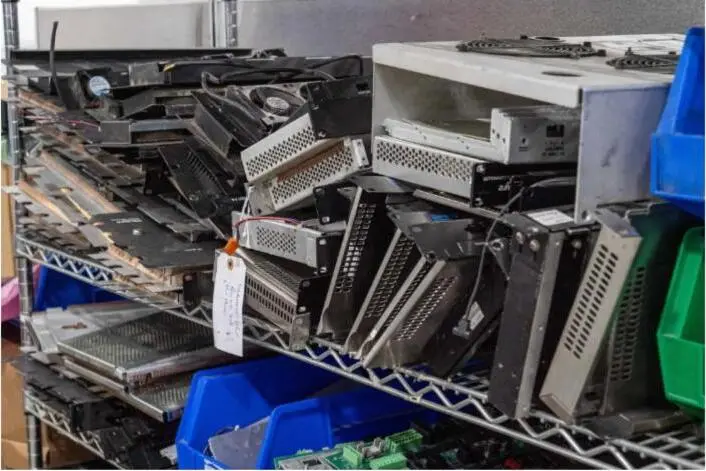
Hybrid Zone-Batch Picking for Electronics Orders
Many high-volume warehouse operations combine zone picking and batch picking into a hybrid zone-batch approach, routing each zone’s picker along an optimized path to maximize efficiency, reduce walking distance and improve fulfillment speed. This model suits electronics orders that mix small components with bulky systems.
Zone picking assigns workers to defined areas, which reduces travel but can create handoff complexity. Batch picking groups multiple orders into a single route, which reduces travel per order but requires strong WMS support. A hybrid model balances these tradeoffs for mixed-profile electronics inventory.
Climate-Controlled and ESD-Protected Storage Zones
Climate control and ESD protection reduce failure risk for sensitive electronics. Industry sources report significant ESD-related losses across the global electronics industry, with studies attributing a share of component failures in manufacturing to ESD. Many ESD events remain undetected at the manufacturing stage.
Field returns from latent ESD damage can cost electronics manufacturers more than preventing the original discharge during production. When a distributor ships a unit that later fails in the field due to latent ESD damage, the distributor absorbs reverse logistics cost, warranty processing and potential relationship damage. These downstream costs often exceed the investment required for proper ESD controls.
For a distributor holding high-value inventory, climate and ESD control become financial decisions, not only compliance requirements. Protected zones support higher recovery values and lower warranty exposure.
IEC 61340-5-1 does not mandate a specific RH range or continuous humidity monitoring for EPAs. ESD control items are qualified at low humidity, typically 12% ±3% RH, and humidity controls remain optional unless specified in the facility’s ESD control program plan. Maintaining higher relative humidity levels can reduce ESD risks compared with very dry conditions.
Launch-Aware Slotting Checklist for New SKUs
Product launches create temporary velocity spikes that static slot assignments cannot support. A launch-aware checklist prepares the warehouse for launch-day demand while preserving existing pick paths.
- Identify launch SKUs and projected velocity tier at least four weeks before go-live.
- Reserve golden-zone capacity proportional to forecasted launch volume.
- Configure WMS affinity rules to cluster launch SKUs with commonly co-ordered accessories.
- Set a re-slotting review trigger at 30 days post-launch to compare actual and projected velocity.
- Flag slow-moving launch inventory for liquidation or reverse logistics routing at 60 days.
- Document serial number ranges for launch units in the WMS to support warranty tracking from day one.
- Coordinate with the returns grading team on the expected return profile for the new product category.
Electronics-Specific KPIs Beyond 5S
5S establishes visual order, but electronics distributors need metrics that reflect obsolescence risk, ESD exposure and serial integrity. The following KPIs extend the measurement framework to match the financial reality of high-value, fast-obsolescing inventory.
- Serialized inventory accuracy: Target high live serial and location accuracy.
- Pick travel distance per assignment: Measure feet or meters per pick; reductions confirm slotting effectiveness.
- ESD incident rate: Track incidents per zone per quarter and benchmark against humidity logs.
- Obsolescence write-down rate: Inventory carrying costs including obsolescence represent a portion of average inventory value annually. This KPI measures progress against that baseline.
- Duplicate serial attempt rate: Use as a performance benchmark for serialization operations at scale. Rising rates signal receiving or returns fraud risk.
- Dock-to-disposition cycle time for returns: High-volume operations aim for short cycle times from dock to disposition decision.
Phased Roadmap: WMS Upgrades Before Automation
Capital investment in AS/RS or AMR fleets delivers stronger returns when data foundations are clean. A WMS-first sequence protects ROI by ensuring that automation inherits accurate slot assignments, serialized inventory records and validated pick paths. Poor data quality would otherwise scale at machine speed.
A practical three-phase sequence for large electronics distributors includes the following stages.
- Days 1–30: WMS configuration and serial data cleanup. Enable end-to-end serial tracking for high-value SKUs, establish baseline KPIs and configure dynamic slotting rules in the WMS before any physical moves occur.
- Days 31–60: Slotting execution and ESD zone commissioning. Execute the first re-slotting wave during low-volume windows, validate picks-per-hour improvement against baseline and certify ESD zones to IEC 61340-5-1.
- Days 61–90: Returns integration and automation readiness. Activate RMA serial validation workflows, connect grading dispositions to WMS inventory status and document integration points for AS/RS or AMR deployment in the next capital cycle.
AI-based slotting optimization typically achieves ROI within a defined period, with benefits compounding as the model learns and adapts to changing warehouse conditions. The 90-day WMS-first phase accelerates that timeline by removing data quality remediation work that would otherwise extend the payback period.
Map a phased roadmap to the current WMS environment.
How Premier Logitech Turns Forward Optimization into Recovered Value
Warehouse optimization creates the conditions for value recovery. Actual recovery requires a partner with authorization, capacity and compliance infrastructure to handle high-value electronics at scale. Premier Logitech operates as that end-to-end partner, connecting optimized forward distribution to a certified reverse logistics and repair network.
Premier Logitech holds Authorized Service Center status with multiple OEM brands, which supports warranty-compliant repair at L1 through L4 depth without voiding OEM agreements. That capability matters for distributors whose service contracts depend on maintaining authorized repair chains. The repair operation processes a high volume of units per week and provides throughput capacity to absorb return surges without creating disposition backlogs.
Compliance frameworks including NIST, SOC 2, ISO 9001/14001, TAA and CMMC govern every stage of the Premier Logitech lifecycle, from serial intake through secure data destruction. For distributors serving government or enterprise customers, that compliance posture reduces audit risk compared with fragmented vendor relationships across repair, refurbishment and recycling.
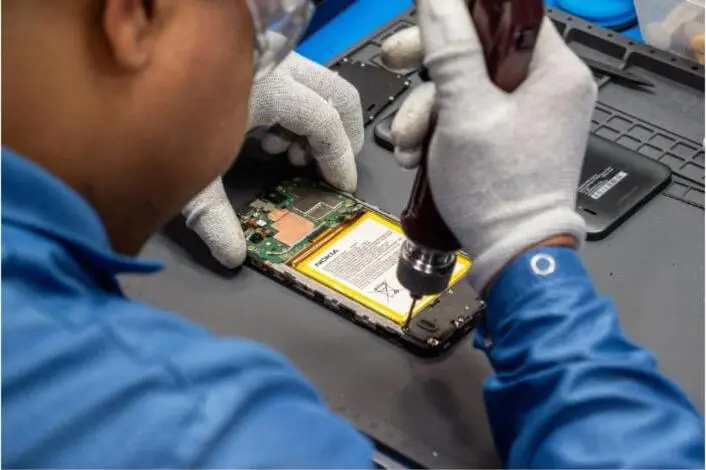
The forward-to-reverse handoff remains direct. Serialized inventory data captured in the WMS during forward distribution flows into Premier Logitech returns intake. At the dock, teams validate each unit’s warranty status, purchase history and quarantine flags before grading begins.
Graded units move to restock, cosmetic refurbishment, L1–L4 depot repair or responsible recycling based on condition and recovery economics. Full audit trails support warranty adjudication and asset recovery reporting.
Conclusion and Next Steps for Electronics Warehouses
Dynamic slotting, serial number WMS tracking, ESD-controlled storage and hybrid picking function as layers of a single optimization system. Each layer increases the recovery value of inventory that eventually flows into reverse logistics. The 90-day WMS-first roadmap provides a measurable starting point without requiring early capital commitments to automation.
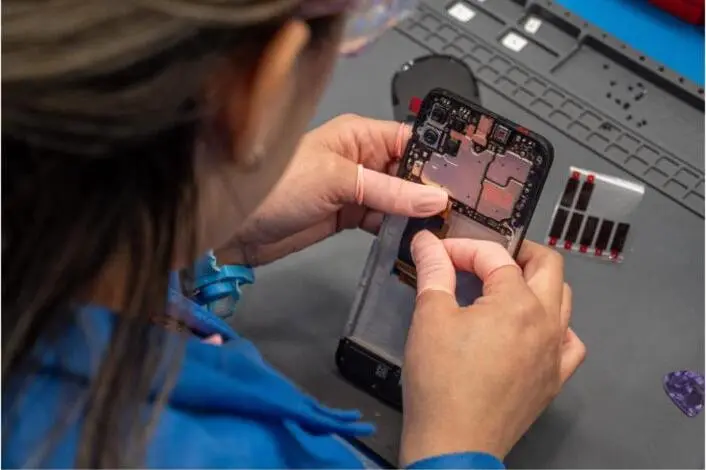
Premier Logitech supplies the end-to-end infrastructure to close the loop, from optimized forward distribution through ASC-authorized repair, certified refurbishment and compliant asset recovery. A single partner relationship reduces vendor fragmentation that often erodes recovery value at each handoff.
Schedule a customized warehouse optimization assessment.
Frequently Asked Questions
What is the difference between dynamic slotting and static slotting for electronics distributors?
Static slotting assigns fixed storage locations to SKUs at implementation and keeps them until a manual re-slotting project occurs. Dynamic slotting uses WMS rules to reassign locations based on demand velocity, seasonality, affinity patterns and warehouse constraints.
In electronics distribution, a SKU’s velocity can shift from top tier to near zero within a single product generation. Static slotting then creates picker inefficiency and accelerates obsolescence losses by keeping slow-moving inventory in premium pick positions. Dynamic slotting reallocates those positions to current high-velocity SKUs and flags declining inventory for liquidation or reverse logistics routing before carrying costs compound.
How does serial number WMS tracking support OEM warranty compliance and asset recovery?
End-to-end serial tracking captures a unique identifier for each unit at receiving, put-away, picking, packing and shipping. This process creates a timestamped chain of custody that documents every handler and location.
This chain of custody provides the evidence required to support or deny warranty claims and prevents counterfeit or previously returned units from re-entering inventory. For asset recovery, serial-level traceability allows grading and repair teams to confirm warranty eligibility and repair authorization status before committing labor to a unit.
What compliance certifications should a reverse logistics partner hold for high-value electronics?
Distributors serving enterprise and government customers should require partners to hold NIST and SOC 2 certifications for data security and handling, ISO 9001 for quality management, ISO 14001 for environmental management and TAA compliance for trade-compliant product handling. CMMC certification applies to partners handling controlled unclassified information in defense supply chains.
Premier Logitech maintains these frameworks, along with TAPA certification and a CAGE Code for pre-vetted federal government engagement. Authorized Service Center status with OEM brands is a separate but equally important credential. That status determines whether repair work preserves or voids the original warranty, which directly affects the resale value of refurbished units.
How does Premier Logitech integrate with an existing WMS for returns processing?
Premier Logitech operates as both a single-source lifecycle partner and a modular services provider. For distributors with existing WMS infrastructure, the integration point is the serial number and RMA data that flows from the forward WMS into Premier Logitech returns intake.
Serial records captured during forward distribution are validated at the returns dock, which supports immediate warranty status checks and disposition routing without re-keying data. For distributors seeking broader integration, Premier Logitech lifecycle services span receiving, exchange, staging, returns and retirement under a unified visibility layer that provides real-time inventory tracking across the full product lifecycle.
What is a realistic timeline for seeing measurable ROI from warehouse optimization in electronics distribution?
The 90-day WMS-first roadmap described in this article is structured to produce measurable baseline improvements within the first quarter. Key metrics include picks per hour, travel distance per pick and serialized inventory accuracy, all achieved before capital investment in automation.
Slotting software implementations that incorporate AI-driven optimization typically reach full ROI within a defined period as the model adapts to actual demand patterns. ESD zone commissioning produces immediate risk reduction in warranty exposure, while the financial impact of reduced latent failures appears over a longer period as field return rates decline.
The most significant compounding benefit comes from connecting forward optimization to reverse logistics. When serialized inventory data flows cleanly into returns grading, disposition cycle times shorten and recovery values increase, which turns the reverse channel from a cost center into a measurable contribution to margin.
