Last updated: August 23, 2026
Key Takeaways for Enterprise IT Asset Recovery
- IT asset recovery through reverse logistics converts disposal costs into measurable financial returns through residual value, avoided fees, component harvesting and certified data sanitization.
- Single-vendor consolidation removes fragmented relationships, contract overhead and chain-of-custody gaps that increase risk and operational complexity.
- Scalable depot repair and real-time asset tracking reduce return bottlenecks, depreciation losses and compliance exposure while improving supply-chain visibility.
- Certified compliance with NIST SP 800-88 Rev. 2, CMMC and related frameworks limits breach costs and regulatory penalties during the 2026–2027 federal transition period.
- Premier Logitech delivers end-to-end IT asset recovery programs that increase financial return, and enterprises can benchmark current programs with a lifecycle specialist.
Consolidating Fragmented Vendor Relationships into One Lifecycle Partner
Large enterprises often manage separate vendors for repair, fulfillment, recycling and transportation. Each relationship introduces contract overhead, inconsistent SLAs and gaps in chain-of-custody documentation. When an asset moves between vendors, accountability weakens and audit trails become difficult to reconstruct.
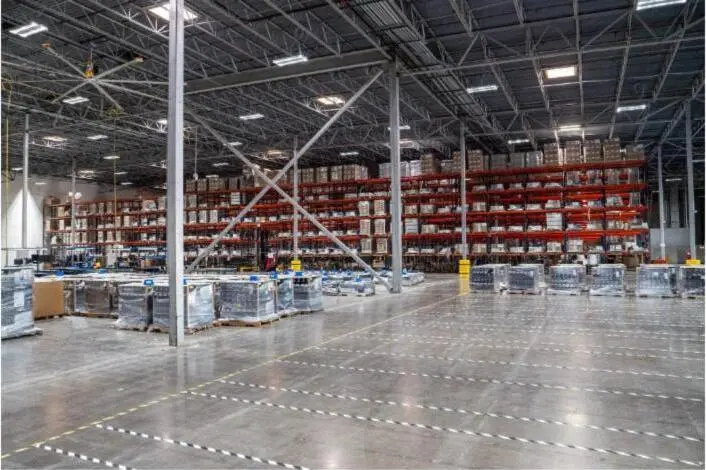
A single integrated lifecycle partner closes those handoff gaps. Premier Logitech operates as a single-source partner across sourcing, configuration, depot repair, reverse logistics and recycling. The company runs three DFW facilities and nearshore operations in Laredo and Nuevo Laredo that support national programs from a centralized logistics hub, which reduces transit complexity and vendor management overhead.
Operations leaders evaluating consolidation partners should confirm that the vendor holds authorizations across the full service spectrum, not just one or two functions. A single point of contact should govern program performance and reporting.
Eliminating Returns and Repair Bottlenecks with Scalable Depot Capacity
Returns backlogs create cascading costs. Assets sitting in staging areas depreciate, customers wait on replacements and repair queues grow faster than capacity can absorb. Organizations without a scalable repair partner absorb those costs through extended downtime and lost residual value.
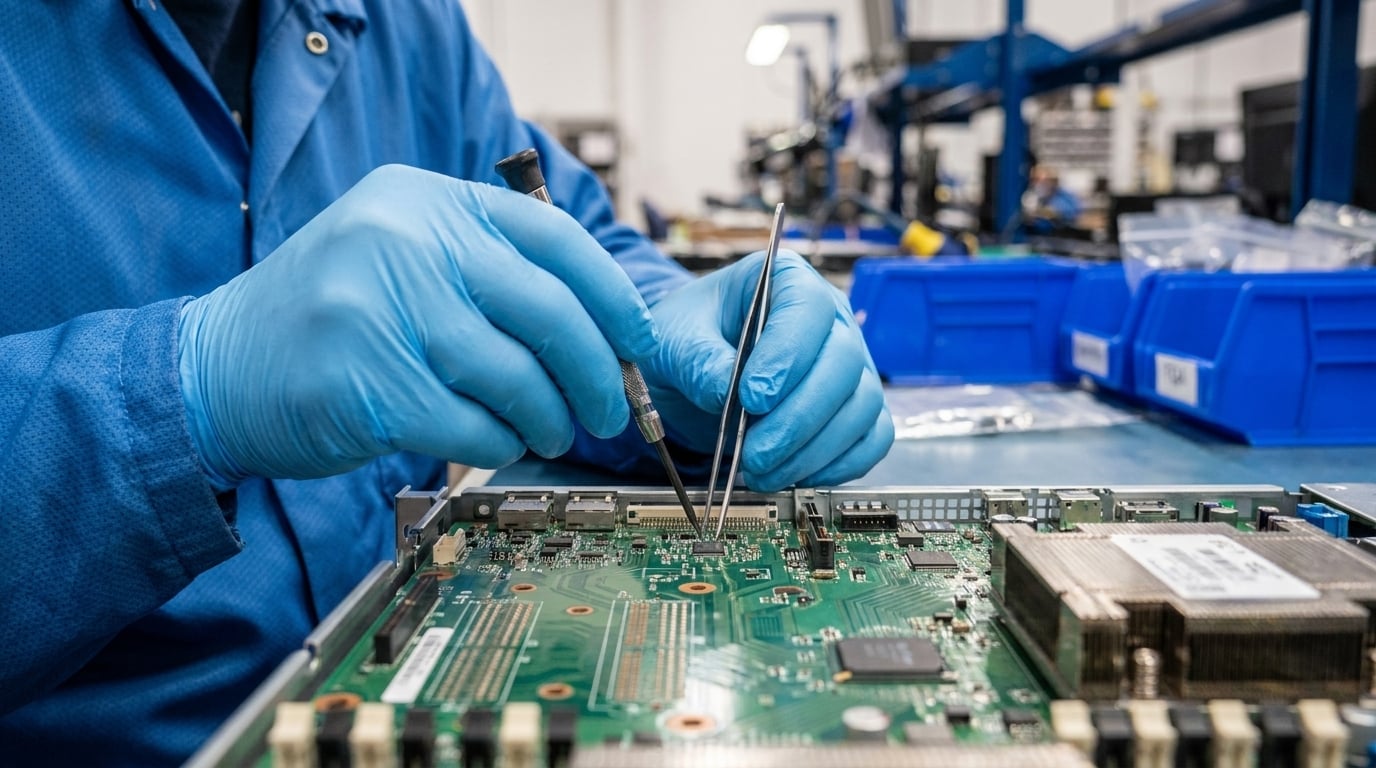
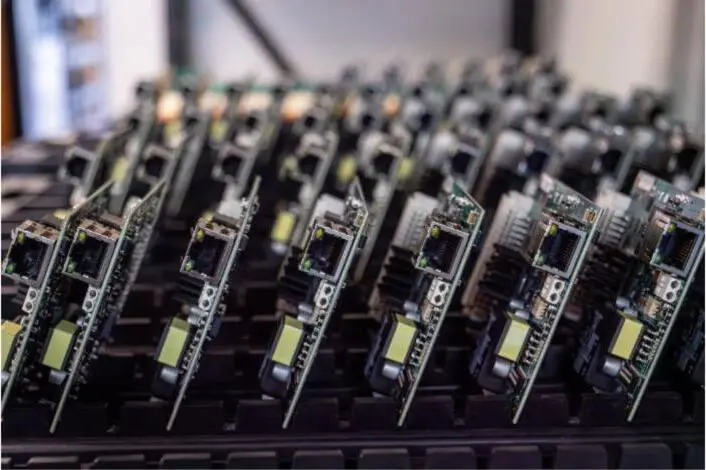
Premier Logitech’s depot repair capability spans Level 1 through Level 4 repairs. The team supports component-level diagnostics and board repair alongside cosmetic refurbishment and functional testing. The operation processes more than 40,000 repairs per week, which provides the throughput needed to absorb high-volume return events without queue buildup. Rapid exchange and next-day replacement programs reduce end-user downtime for enterprise and government clients.
Evaluation criteria for repair partners include repair authorization depth by level, weekly throughput capacity and whether the partner holds Authorized Service Center status with the OEM brands in the installed base.
Restoring Supply-Chain Visibility with Real-Time Tracking
Real-time inventory data supports accurate forecasting, bottleneck identification and audit-ready records for compliance frameworks. Blind spots in the reverse logistics flow often lead to lost assets, inaccurate financial reporting and missed recovery windows.
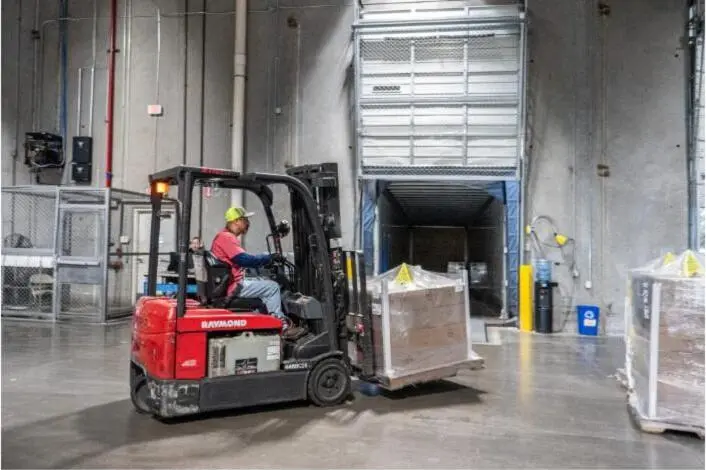
Premier Logitech’s Transportation Management System and inventory traceability platform provide asset-level visibility from intake through final disposition. Device tagging, serialized scanning and lifecycle analytics give operations leaders data to time recovery decisions and demonstrate chain-of-custody to auditors.
Partners should be assessed on whether tracking systems integrate with the enterprise ERP or ITSM environment. Reporting should be available at the device level rather than only at the batch level.
Reducing Compliance and Data-Security Risk with Certified Workflows
Data breaches cost an average of several million dollars per incident, as shown in the ROI Model table below, and stolen devices remain a notable source of data loss for many organizations. For government contractors, the stakes increase further. Failure to sanitize media containing Federal Contract Information or Controlled Unclassified Information creates risks of contract termination and monetary penalties under FAR 52.204-21 and CMMC 2.0.
NIST SP 800-88 Rev. 2, released September 2025, mandates program-level compliance documentation and validation systems and replaces DoD 5220.22-M with IEEE 2883:2022 as the primary reference standard while expanding coverage from 12 to 47 storage device types. Because federal agencies have only until March 2027 to achieve full compliance, ITAD vendors face immediate pressure to update workflows and documentation during 2026 contract renewals. Agencies cannot wait until the deadline to select compliant partners.
Premier Logitech supports TAA, NIST SP 800-88, CMMC, SOC 2, TAPA and ISO frameworks. The company holds CAGE Code 4WAJ9, which identifies it as a pre-vetted partner for U.S. federal procurement. Certified data destruction, device-level certificates of sanitization and chain-of-custody documentation form standard components of its disposition workflow.
When selecting a compliant partner, enterprises should confirm that sanitization methods match media type. NIST 800-88 notes that overwrite methods are unreliable for SSDs and flash-based media because of wear-leveling. Certificates should be issued at the device level, not the batch level.
Handling High Return Volumes with a Repair and Refurbishment Network
Seasonal return spikes, product recalls and large-scale refresh cycles can overwhelm repair operations that lack flexible capacity. Organizations without a high-volume partner absorb the cost of delayed processing through monthly asset depreciation and storage fees.
IT assets lose value during processing delays, so throughput speed becomes a direct financial variable. Premier Logitech’s network supports kitting and refurbishment at a scale of 500,000 units per month and holds Authorized Service Center status with more than 20 OEM brands. That authorization depth ensures repair work meets OEM warranty standards instead of voiding coverage.
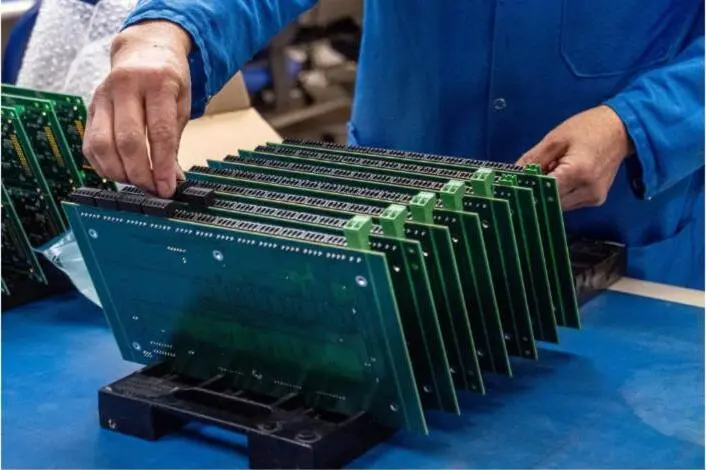
High-volume programs should be evaluated on whether the partner can absorb surge volumes without extending turnaround times. ASC authorizations should cover the specific OEM brands in the enterprise fleet.
Capturing Missed Residual Value with Asset Recovery and Remarketing
Timing drives the most common source of missed value in IT asset programs. Enterprise equipment retains substantial value in the first two years, and value then declines with age and processing delays.
Remarketing programs can offset 40% to 60% of total disposition costs compared with recycling-only programs. Premier Logitech follows a value-first hierarchy of redeployment, resale, component harvesting and responsible recycling to increase financial return at each stage. Timely intake processing limits monthly depreciation losses and positions assets for the highest available recovery tier.
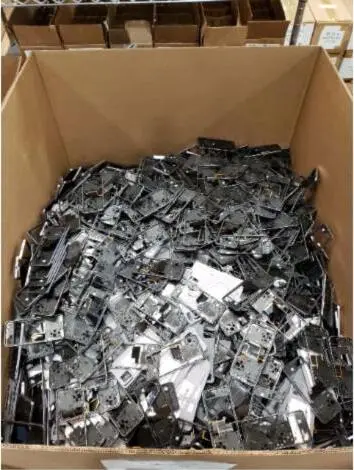
Remarketing partners should be assessed on grading methodology, secondary market channel access and whether they provide transparent per-asset recovery reporting instead of only aggregate estimates.
ROI Model for IT Asset Recovery Programs
A straightforward net-savings equation for IT asset recovery programs is:
Net Savings = (Residual Value Recovered + Avoided Disposal Costs + Avoided Storage Fees + Risk Mitigation Value) − (Reverse Logistics Program Costs)
The table below highlights that residual value recovery and avoided breach costs represent the largest financial variables in this equation. Timing also matters, because processing delays can erode 30 to 60 percent of potential recovery through depreciation. All figures are drawn from cited 2026 benchmarks and are illustrative, and actual results vary by asset class, age and program design.
| Cost/Recovery Category | Illustrative Input | Basis |
|---|---|---|
| Residual value recovered (2–3-year-old laptops) | typically 30-60% of original cost per unit, varying by brand tier and condition | Edify Club, 2025 |
| Residual value recovered (tier-1 servers, 1U/2U) | varies by age and condition | Industry analysis |
| Disposition cost offset via remarketing vs. recycle-only | 40%–60% of total disposition cost | Disposition Compliance, March 2026 |
| Monthly value loss during processing delays | varies but delays can significantly erode value | Industry benchmarks |
| Avoided breach cost (data sanitization failure) | $4.99M average per incident in 2026 | IBM, 2026 |
Well-developed ITAD programs can achieve the 40 to 60 percent offset described above through remarketing. The largest variable in the equation is asset age at intake. Two to three-year-old IT assets generate roughly three times higher recovery rates than assets held beyond five years.
Benefits and Challenges of Reverse Logistics for IT Assets
The primary benefits of a structured IT asset recovery program include:
- Recovery of residual asset value through resale and remarketing before depreciation eliminates it
- Avoided disposal, storage and extended security update costs from aging assets
- Reduced e-waste and alignment with ESG and circular economy commitments
- Strengthened compliance posture under NIST SP 800-88 Rev. 2, CMMC, SOC 2 and TAA
- Improved supply-chain visibility and audit-ready chain-of-custody documentation
The primary challenges organizations encounter include:
- Maintaining device-level chain-of-custody across multiple transfer points and vendors
- Matching sanitization methods to media type, particularly for SSDs and NVMe drives where overwrite methods are unreliable under NIST SP 800-88 Rev. 2
- Processing assets quickly enough to capture value before monthly depreciation erodes recovery potential
- Scaling repair and refurbishment capacity to absorb high-volume return events without queue delays
- Navigating the 18-month federal transition period to NIST SP 800-88 Rev. 2 compliance ending March 2027
Decision-Making Checklist for Selecting an IT Asset Recovery Partner
Operations and supply chain leaders evaluating reverse logistics partners can use the following criteria:
- Does the partner provide end-to-end services, including repair, refurbishment, remarketing, recycling and transportation, under a single agreement?
- Does the partner hold Authorized Service Center status with the OEM brands in the installed base?
- Are data sanitization methods matched to media type and documented at the device level per NIST SP 800-88 Rev. 2?
- Does the partner support TAA, CMMC, SOC 2 and relevant federal compliance frameworks?
- Is real-time asset tracking and lifecycle analytics available with ERP or ITSM integration?
- Can the partner demonstrate throughput capacity sufficient to absorb peak return volumes?
- Does the partner follow a value-first disposition hierarchy of redeployment, resale, harvesting and recycling with transparent per-asset recovery reporting?
- Does the partner hold a federal CAGE Code or equivalent pre-vetting for government procurement?
Frequently Asked Questions
What stages of the IT asset lifecycle does Premier Logitech support?
Premier Logitech supports the full technology lifecycle from sourcing and procurement through configuration, fulfillment, warehousing, depot repair, reverse logistics and responsible recycling. Clients can engage the company as a single end-to-end partner or select individual services, such as depot repair, transportation or returns processing, on a standalone basis.
What compliance frameworks does Premier Logitech support for IT asset recovery?
Premier Logitech supports TAA, TAPA, ISO 9001 and 14001, NIST SP 800-88, CMMC and SOC 2. The company holds CAGE Code 4WAJ9, which identifies it as a pre-vetted partner for U.S. federal government procurement. Data sanitization workflows are matched to media type and documented at the device level to satisfy audit requirements under NIST SP 800-88 Rev. 2, which took effect in September 2025.
How does Premier Logitech handle high return volumes during peak periods?
Premier Logitech’s depot repair and refurbishment operations are designed to absorb high-volume return events. The company processes more than 40,000 repairs per week across Level 1 through Level 4 repair capabilities and supports kitting and refurbishment at significant monthly scale. Rapid exchange and next-day replacement programs are available for enterprise and government clients that require minimal end-user downtime.
How does asset age affect recovery value, and how should organizations plan refresh cycles?
Asset age represents the single largest variable in recovery value. Enterprise equipment retains the highest residual value in the first two to three years of use. After that point, value declines at a rate of several percentage points per month, and assets held beyond five years typically recover only a fraction of what earlier processing would have yielded. Organizations that align refresh cycles with this depreciation curve and engage a recovery partner promptly at end-of-use consistently capture higher returns than those that delay disposition.
What does the transition to NIST SP 800-88 Rev. 2 mean for enterprise IT asset programs in 2026?
The updated standard, detailed in the compliance section above, shifts the compliance model from technique-by-technique guidance to program-level documentation and validation. It requires ongoing statistical sampling, operator certification and quarterly vendor assessments, with federal agencies facing a March 2027 compliance deadline. Enterprise programs that contract with government agencies or handle Controlled Unclassified Information should confirm that ITAD partners have updated workflows and documentation before 2026 contract renewals.
Can Premier Logitech support multi-site enterprise programs across the United States?
Premier Logitech operates three facilities in the Dallas-Fort Worth area with nearshore operations in Laredo and Nuevo Laredo, Mexico, and a logistics network spanning more than 120 vetted North American LTL carriers. This footprint supports national programs with consistent service levels across multiple client sites, including white glove delivery, intermodal logistics and international shipping where required.
What is the value-first disposition hierarchy, and how does it affect financial outcomes?
The value-first hierarchy prioritizes internal redeployment first, followed by resale and remarketing, component harvesting and responsible recycling. Each tier recovers progressively less value than the one above it, so the financial outcome of a disposition program depends heavily on how many assets qualify for the higher tiers and how quickly teams process them. Premier Logitech applies this hierarchy across recovery programs, with grading and refurbishment workflows designed to increase the number of assets that reach resale or redeployment instead of recycling.
