Last updated: August 17, 2026
Key Takeaways for Tech and Electronics Shippers
- Managed transportation services consolidate carrier selection, routing, compliance, visibility and reverse logistics under one contractual partner, which removes fragmented handoffs that create delays and accountability gaps.
- Tech and electronics supply chains require seven specialized capabilities: chain-of-custody documentation, climate control, white-glove handling, serialized asset tracking, reverse-logistics integration, compliance frameworks and control-tower visibility.
- Fragmented forward and reverse flows, lack of serialized visibility, compliance exposure, returns bottlenecks and vendor sprawl create financial, operational and regulatory risks for OEMs, telecoms and enterprises that manage high-value serialized devices.
- Premier Logitech differentiates itself from Ryder, GXO, DHL and C.H. Robinson by combining ASC-authorized repair, TAA/CMMC/NIST/SOC 2 certifications and a TMS built for serialized assets within a single accountable relationship.
- Organizations that plan to consolidate vendors without losing specialized capabilities can talk to a Premier Logitech lifecycle expert about a 90-day managed transportation program for nationwide tech supply chains.
The Problem: Fragmented Forward and Reverse Flows
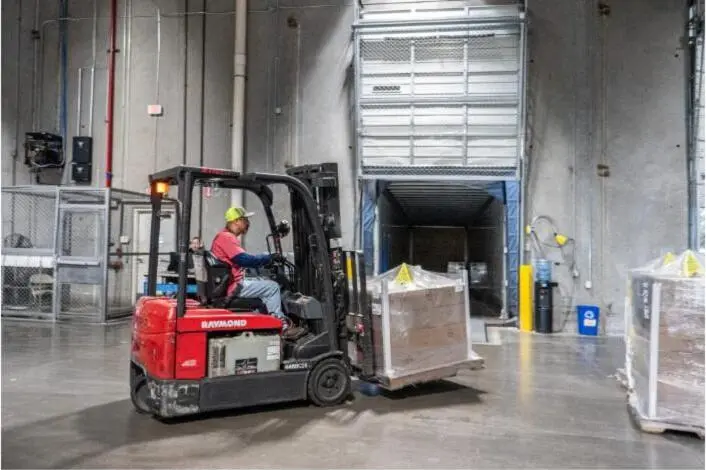
Fragmented handovers between warehousing, linehaul and last-mile operations running on different systems increase delays, reduce accountability and create partial visibility. When forward deployment and returns run through separate vendors, no single party owns the outcome.
An integrated managed transportation model places both flows under one operating plan. Carrier selection, routing, returns intake and repair disposition share a common data layer, which removes the reconciliation overhead that slows multi-vendor programs.
Evaluation considerations for this pain point:
- Does the provider manage both outbound and inbound flows under a single SLA?
- Are returns routed directly to repair or grading facilities without a separate handoff?
- Is there one escalation contact for forward and reverse exceptions?
The Problem: Lack of Serialized Asset Visibility
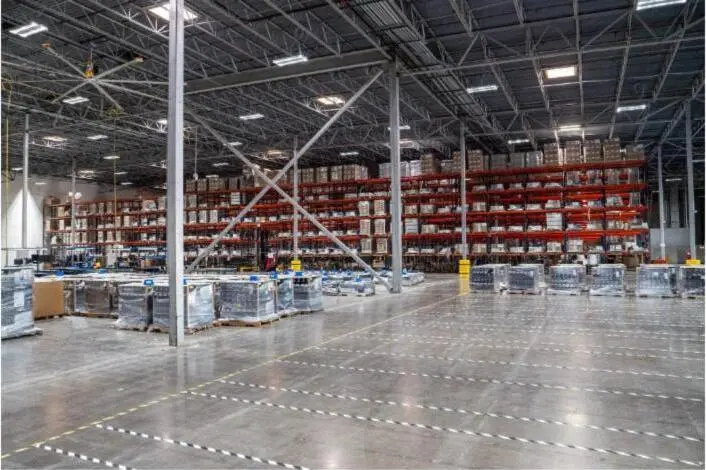
Fragmented supply chain technology environments with ERP, TMS and WMS on different data models cause delayed, duplicated or suboptimal decisions. For high-value serialized devices such as smartphones, networking hardware and medical-grade tablets, a visibility gap also creates financial and compliance exposure.
A control-tower approach normalizes data from all carrier and warehouse systems into a single operational layer. Directors of Logistics gain shipment-level drill-down, lane-level KPIs and automated exception alerts instead of delayed status emails from individual providers.
Evaluation considerations:
- Does the TMS track by serial number, IMEI or asset tag, not just shipment ID?
- Are exception alerts automated, or does visibility depend on manual reporting?
- Can the platform integrate with the organization’s existing ERP or WMS?
Talk to a lifecycle expert about serialized visibility for nationwide tech transportation.
The Problem: Compliance Exposure (TAA, CMMC, NIST)
The U.S. Department of Defense’s final CMMC Program rule (32 CFR Part 170) was issued on October 15, 2024, tying contract eligibility to demonstrated cybersecurity maturity, with audit and certification requirements that extend through the defense industrial base via contractual flow-downs.
Nearly 10% of all data breaches originate from lost or stolen devices, which makes chain-of-custody documentation during transit a direct compliance obligation. FMCSA’s 2026 Motus registration system supports profile management and updates for carriers and brokers, and that change adds a carrier-vetting layer that managed programs must monitor continuously.
An integrated partner with government-grade certifications such as TAA, CMMC, NIST SP 800-53 and SOC 2 reduces exposure by embedding compliance into the transportation workflow instead of treating it as a post-audit activity.
Evaluation considerations:
- Does the provider hold current CMMC, NIST and SOC 2 certifications that an auditor can verify?
- Are carriers in the network vetted against FMCSA SAFER for active authority and bond status?
- Is chain-of-custody documentation serialized and retained in a format acceptable for government audits?
The Problem: Returns Bottlenecks and Lost Asset Recovery
The global reverse logistics market was estimated at USD 823.21 billion in 2024 and is projected to reach USD 3,183.94 billion by 2033, growing at a CAGR of 17.4% from 2025 to 2033, driven in part by the repairable-returns segment as sustainability goals favor repair over replacement. Despite that scale, most organizations still treat returns as a cost center rather than a recovery channel.
Returned inventory loses value while it sits, especially in electronics, which makes rapid disposition decisions critical for asset recovery. Slow triage, manual grading and disconnected repair routing compound the loss.
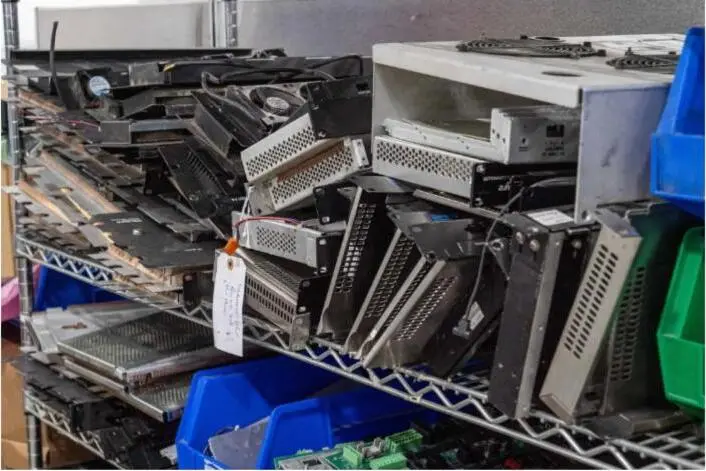
Integrated reverse-logistics programs that include ASC-authorized depot repair across Level 1 through Level 4 allow returned devices to move from intake to refurbishment or redeployment without leaving the managed program. That continuity reduces dwell time and preserves resale value.
Evaluation considerations:
- Does the provider hold ASC authorization from the OEMs whose devices appear in the returns stream?
- Are triage, grading and repair performed within the same managed program or handed off to a separate vendor?
- Is there a rapid-exchange or next-day replacement capability for high-priority device failures?
The Problem: Vendor Consolidation Without Capability Loss
The consolidation risk remains clear. Replacing five vendors with one generalist 3PL often removes specialized capabilities such as ASC-authorized repair, government-grade compliance or climate-controlled white-glove handling. A single partner that natively holds those capabilities removes that trade-off.
Evaluation considerations:
- Does the provider offer repair, compliance, white-glove handling and control-tower visibility as native capabilities, not subcontracted add-ons?
- Is there a modular engagement model that supports phased consolidation without disrupting active programs?
- Does the provider hold OEM authorizations that would otherwise require a separate ASC relationship?
Provider Comparison: Ryder, GXO, DHL, C.H. Robinson and Premier Logitech
This comparison evaluates five managed transportation providers against the specialized capabilities that tech supply chains require, including ASC-authorized repair integration, government-grade compliance certifications and serialized asset tracking within a single accountable relationship.
Ryder and GXO operate broad 3PL networks with warehousing and transportation execution at scale. Both serve electronics clients but are not widely recognized for ASC-authorized repair integration or government-specific compliance certifications such as CMMC. Their strength lies in asset-heavy execution across general freight.
DHL brings global reach and temperature-controlled capabilities. Its device lifecycle solutions address circular economy goals and its leadership has publicly stated that managing the total life of a product, not just first delivery, is the strategic priority. DHL’s scale, however, can limit the high-touch serialized-asset focus that OEM and telecom programs require at the program level.
C.H. Robinson is a leading freight brokerage with strong TMS capabilities and a large carrier network. Its model is primarily brokerage oriented, which means repair integration, ASC authorization and government compliance certifications sit outside its core service scope.
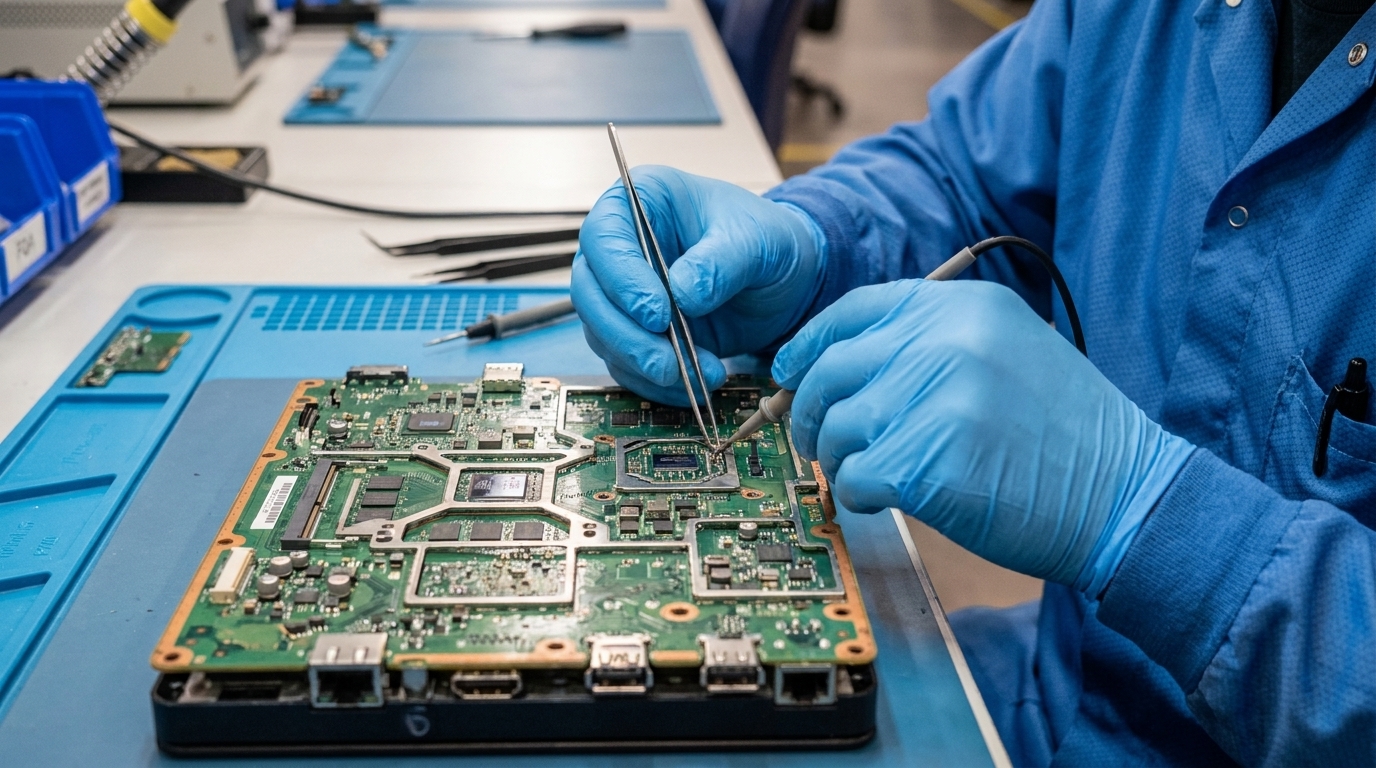
Premier Logitech operates as an integrated managed transportation and lifecycle partner purpose built for tech and electronics supply chains. The company holds ASC authorization for multiple OEM brands, which supports warranty-compliant repair without a third-party handoff. It operates a vetted LTL carrier network across North America and maintains TAA, NIST, CMMC and SOC 2 certifications, which embeds government-grade compliance into the transportation workflow instead of treating it as a separate audit activity. Reverse logistics, including Level 1 through Level 4 depot repair, grading, refurbishment and secure data destruction, is a native capability, not a referral, so returned devices move from intake to disposition without leaving the managed program. That combination of transportation, compliance and repair under one accountable relationship creates a structural differentiator for OEMs, telecoms and enterprises that manage serialized assets at national scale.
TMS and Control-Tower Capabilities for Serialized Tech
The provider differences outlined above depend in part on TMS architecture and whether the platform was built for serialized tech assets or adapted from general freight operations. A clear view of control-tower TMS capabilities explains why this factor matters for consolidation decisions.
A Transportation Management System (TMS) is software that plans, executes and improves freight movement by integrating carrier data, routing logic, shipment tracking and freight audit into a single platform. In a control-tower deployment, the TMS ingests data from all carriers, warehouses and ERP systems to deliver real-time visibility and automated exception management across the full network.
A 4PL control tower integrates WMS, TMS, ERP and carrier systems into a unified data platform, which replaces delayed reports from individual 3PL providers with real-time operational visibility for executives. A genuine 4PL is not a 3PL with added dashboards, and adding services to an asset-owning 3PL does not create the structural neutrality required for true 4PL status.
Ryder and GXO offer proprietary visibility portals tied to their own assets. DHL provides multimodal tracking with global carrier integration. C.H. Robinson’s Navisphere platform is a recognized TMS with broad carrier connectivity. Premier Logitech’s TMS layer is configured for serialized tech assets, connecting carrier tracking, repair status and lifecycle analytics in one view that covers both forward deployment and returns within the same dashboard.
90-Day Implementation Checklist for Managed Transportation
A Director of Reverse Logistics can use the following sequence to justify and roll out a consolidated managed transportation program.
- Days 1–15: Audit current state. Map all active transportation vendors, carrier contracts, reverse-logistics handoffs and compliance certifications. Identify gaps in serialized visibility and ASC coverage.
- Days 16–30: Define requirements. Document volume by lane, device type, return category and compliance obligation. Establish KPIs for dwell time, chain-of-custody accuracy and asset recovery rate.
- Days 31–45: Issue provider scorecard. Evaluate candidates against the seven tech-specific requirements listed above. Verify ASC authorizations, compliance certifications and TMS integration capability directly, not through marketing materials.
- Days 46–60: Negotiate and contract. Consolidate vendor agreements into a single managed program contract. Define SLAs for forward and reverse flows, exception escalation paths and compliance reporting cadence.
- Days 61–75: Integrate systems. Connect the provider’s TMS to internal ERP and WMS. Establish serialized asset tracking from order creation through disposition. Confirm data retention formats meet audit requirements.
- Days 76–90: Pilot and validate. Run a defined lane or product category through the consolidated program. Measure against baseline KPIs. Confirm chain-of-custody documentation, repair routing and compliance reporting function as specified before full rollout.
Decision Framework: Choosing a Managed Transportation Partner
The following criteria support structured evaluation of managed transportation partners for tech and electronics supply chains.
- End-to-end lifecycle scope: Does the partner manage transportation, repair, refurbishment and disposition, or only freight movement?
- Verifiable compliance: Are TAA, CMMC, NIST and SOC 2 certifications current and auditable, and can the partner provide documentation on request?
- ASC authorization breadth: Does the partner hold OEM authorizations that cover the brands in the active device portfolio?
- Carrier network quality: Are carriers continuously vetted for active FMCSA authority and bond status?
- Serialized visibility: Does the TMS track by serial number or IMEI, not just shipment or pallet ID?
- White-glove and climate-control capability: Are air-ride, climate-controlled and inside-delivery services available as standard options, not premium add-ons?
- Single point of accountability: Is there one escalation contact and one SLA that govern both forward and reverse flows?
- Modular engagement: Can the program start with a defined scope and expand without a full reprocurement?
Conclusion: Moving to an Integrated Transportation Model
Fragmented transportation and reverse logistics create compliance risk, lost asset value and operational drag for OEMs, telecoms and large enterprises that manage serialized tech at national scale. Eighty-six percent of organizations expect logistics outsourcing budgets to increase further after rises observed in 2025, in part because the cost of managing complexity across multiple providers keeps compounding.
An integrated managed transportation model that combines carrier management, serialized visibility, white-glove handling, government-grade compliance and ASC-authorized repair under a single accountable relationship addresses the pain points outlined above without forcing organizations to sacrifice specialized capabilities for consolidation.
Premier Logitech delivers that model. Founded in 2007, the company serves OEMs, telecoms and enterprises across the full technology lifecycle from sourcing and configuration through transportation, depot repair and responsible recycling. With ASC authorization for multiple OEM brands, a vetted North American LTL carrier network, TAA/CMMC/NIST/SOC 2 certifications and a TMS built for serialized assets, Premier Logitech closes the gaps that generic 3PLs leave open.
Frequently Asked Questions
What is the difference between managed transportation services and standard 3PL freight brokerage?
Standard 3PL freight brokerage focuses on carrier sourcing and load execution for individual shipments. Managed transportation services cover the full transportation program, including network design, carrier vetting and management, TMS integration, freight audit, compliance documentation and reverse-logistics coordination. For tech and electronics supply chains, that distinction matters because serialized asset tracking, chain-of-custody requirements and ASC-authorized repair integration sit outside the scope of most freight brokerage relationships. A managed transportation partner owns the outcome across the entire program, not just individual loads.
How does Premier Logitech handle compliance requirements for government and defense supply chains?
Premier Logitech maintains current certifications across TAA, CMMC, NIST, SOC 2 and ISO quality frameworks. The company holds a CAGE Code (4WAJ9) as a pre-vetted partner for U.S. federal government programs. Chain-of-custody documentation is serialized and retained in audit-ready formats. Carriers in the network are vetted against FMCSA SAFER for active operating authority and current bond status. For defense industrial base clients, the company’s CMMC alignment extends through transportation and reverse-logistics workflows, not only depot operations.
Can Premier Logitech integrate reverse logistics and depot repair within the same managed transportation program?
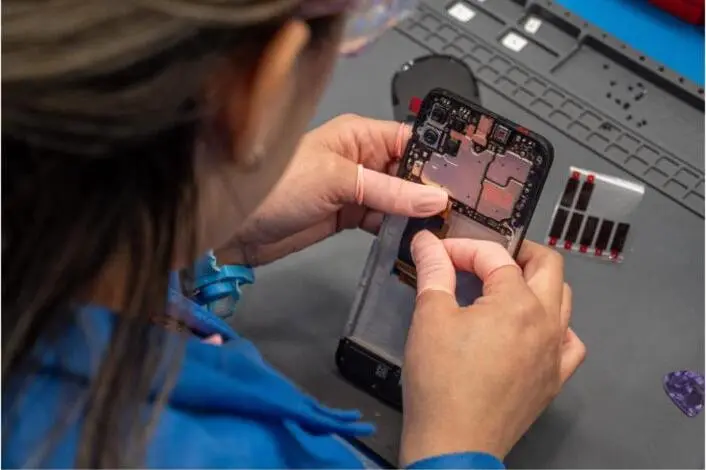
Premier Logitech’s reverse logistics capabilities, including RMA management, Level 1 through Level 4 depot repair, cosmetic refurbishment, grading, secure data destruction and responsible recycling, operate within the same managed program as forward transportation. Returned devices move from carrier pickup through triage, repair and disposition without leaving the program or requiring a separate vendor handoff. ASC authorization for more than 20 OEM brands means warranty-compliant repair is available for a broad device portfolio without engagement of a third-party service center.
What serialized tracking capabilities does Premier Logitech’s TMS provide?
Premier Logitech’s Transportation Management System tracks assets by serial number, IMEI and asset tag, not only by shipment or pallet ID. The platform integrates with carrier tracking, warehouse management and lifecycle analytics to provide a unified view of each device from order creation through final disposition. Exception alerts are automated, and the system supports integration with client ERP and WMS environments. Directors of Logistics and Reverse Logistics gain shipment-level drill-down and lane-level KPI reporting within a single dashboard that covers both forward and reverse flows.
How does Premier Logitech support organizations that want to consolidate vendors without losing specialized capabilities?
Premier Logitech operates as both a single-source lifecycle partner and a modular services provider. Organizations can consolidate transportation, repair, compliance and reverse logistics into one relationship without losing specialized capabilities such as ASC-authorized repair, government-grade certifications and white-glove handling that generic 3PLs cannot provide. The modular engagement model supports phased consolidation, so a program can begin with transportation management and expand to include depot repair, configuration or ITAD as operational requirements evolve. One contract, one SLA and one escalation contact govern the full scope.
