Key Takeaways
- Mobile reverse logistics compliance spans five regulatory domains: data privacy, environmental, transportation, OEM authorization and framework certification. Each domain aligns with specific device handoffs.
- A compliant program follows a seven-stage chain-of-custody model from collection through final disposition. Every stage needs a named owner and a retained record.
- Lithium-ion batteries are excluded from the DOT reverse logistics exception and must follow full 49 CFR §173.185 requirements, including special packaging and ground-only routing for damaged, defective or recalled units.
- NIST SP 800-88 requires per-device sanitization records with verification results. The standard expects device-level tracking that supports audit review.
- Premier Logitech delivers end-to-end compliance through OEM ASC authorizations, TAA, TAPA, ISO, NIST, CMMC and SOC 2 certifications and NIST SP 800-88-aligned data destruction. Map compliance obligations by handoff with Premier Logitech.
Seven-Stage Model for Mobile Reverse Logistics Compliance
A compliant mobile device reverse logistics program follows seven stages. Each stage has a defined compliance owner, a primary regulatory obligation and a required record.
- Collection. Owner: Program manager. Obligation: Intake documentation, IMEI or serial capture and chain-of-custody log initiation. Record: Intake form with asset identifiers and condition notes.
- Triage. Owner: Depot operations lead. Obligation: Device condition assessment, battery damage identification and routing decision. Record: Triage report with routing disposition and battery condition flag.
- Transport. Owner: Logistics partner or EHS lead. Obligation: DOT hazmat compliance under 49 CFR §173.185. DDR batteries require separate packaging and ground-only routing. Record: Shipping papers, hazmat certification and chain-of-custody transfer document.
- Repair and Refurbishment. Owner: OEM Authorized Service Center (ASC). Obligation: OEM-approved repair procedures, warranty documentation and parts traceability. Record: Work order, OEM repair certification and parts log.
- Data Sanitization. Owner: Certified sanitization technician. Obligation: NIST SP 800-88-aligned Clear, Purge or Destroy method with verification. Record: Per-device sanitization certificate with serial number, method, technician, date and verification result.
- Resale, Reuse or Recycling. Owner: Asset recovery or recycling program manager. Obligation: R2v3 or e-Stewards downstream vendor attestation and RCRA universal waste compliance for battery disposition under 40 CFR Part 273. Record: Downstream vendor attestation, recycling manifest and certificate of recycling.
- Final Disposition. Owner: Compliance officer. Obligation: Confirm all records are complete, retained and audit-ready and confirm state e-waste and battery disposal requirements are met. Record: Closed chain-of-custody file with all stage records attached.
This seven-stage model anchors every section that follows. Each regulatory domain maps to one or more of these stages.
Identify compliance gaps at each handoff with Premier Logitech.
Lithium-Ion Battery Shipping and DOT Transport Rules
Transport is the third stage in the seven-stage model and carries heavy regulatory requirements. The DOT reverse logistics exception under 49 CFR §173.157 allows certain limited-quantity hazardous materials to return by highway under streamlined requirements, including alternative marking and reduced training. The exception applies only to ground transport and excludes air, rail and vessel shipments. Hazardous waste and materials covered by a DOT Special Permit are ineligible.
Lithium batteries, including those in consumer electronics, fall outside the reverse logistics exception. They must ship under the full requirements of 49 CFR §173.185, which governs lithium cells and batteries and requires nonmetallic inner packaging that fully encloses each battery and separates it from conductive materials.
Damaged, defective or recalled batteries carry additional requirements under 49 CFR §173.185(f). Each battery must be individually packaged in nonconductive inner packaging and surrounded by noncombustible, nonconductive, thermally insulating cushioning. The inner packaging must sit inside rigid outer packaging rated to contain a thermal event. The outer package must display “Damaged/defective lithium ion battery” in characters at least 12 mm high. DDR lithium batteries are forbidden from air transport with no exception and no permit available.
The EPA confirms that DDR batteries may not travel by air and must follow DOT packaging requirements at 49 CFR §173.185(f). Common failures include routing a DDR battery as a standard return, using undersized markings, using conductive inner packaging and attempting air transport. Hazmat violations can bring civil penalties and, in serious cases, criminal exposure, with the shipper carrying that liability.
Premier Logitech embeds these battery shipping and handling requirements into reverse logistics operations. The program includes compliant packaging protocols, ground-only routing for DDR batteries and chain-of-custody documentation from pickup through disposition.
Build a compliant battery handling workflow with Premier Logitech.
Data Sanitization and Chain of Custody
NIST SP 800-88 is the recognized standard for media sanitization. It defines three outcome categories: Clear, Purge and Destroy. Clear protects against simple, noninvasive recovery. Purge makes recovery infeasible even with laboratory techniques while preserving the medium for reuse. Destroy renders recovery infeasible and makes the media unusable. NIST SP 800-88 requires verification for each technique within the Clear and Purge categories, except degaussing.
A compliant sanitization record must be device specific. Per-device records must include the device serial number, the sanitization method, the technician, the completion date and any verification test results. A defensible audit trail ties the record to the exact asset identity, including asset tag, manufacturer, model, serial number and storage type. Each device requires individual tracking records that can support audit review.
Sanitization records support downstream certification audits. R2v3 requires documented data sanitization for facilities certified to Appendix B. This requirement includes a Data Security Plan, sanitization records and an internal data security and sanitization audit process. Facilities that perform only physical destruction or outsource to a qualified data sanitization vendor are exempt from Appendix B. e-Stewards requires documented data destruction through mandatory NAID AAA certification, including certificates of destruction and audit reports. A certificate of destruction supports compliance only when it connects an identifiable asset to a defined method, a verification result and a controlled chain of custody.
NIST SP 800-88 Rev. 2, published September 26, 2025, is the current framework for media sanitization and supersedes legacy DoD 5220.22-M multi-pass overwriting. DoD 5220.22-M specified a fixed overwrite pattern developed for magnetic media and does not account for flash storage architecture. For SSDs and NVMe devices, flash storage uses wear leveling, remapped blocks and overprovisioned areas, so a normal file overwrite may not reach every physical cell that previously held data. NIST SP 800-88 addresses this by tying method selection to media type and data sensitivity and by linking verification requirements to the outcome category.
Premier Logitech provides secure data destruction and compliance reporting aligned with NIST SP 800-88. The team issues per-device sanitization certificates that support internal audits and downstream certification requirements.
OEM ASC Authorization and Warranty Compliance
An Authorized Service Center is a repair facility that an OEM has certified to perform repairs using approved parts, tools and procedures. ASC status is granted by the OEM and is specific to device lines and repair types. Under the Magnuson-Moss Warranty Act, repairs performed outside an authorized network do not automatically void an OEM warranty. A manufacturer may deny coverage only for a defect it can demonstrate was caused by the unauthorized repair or part.
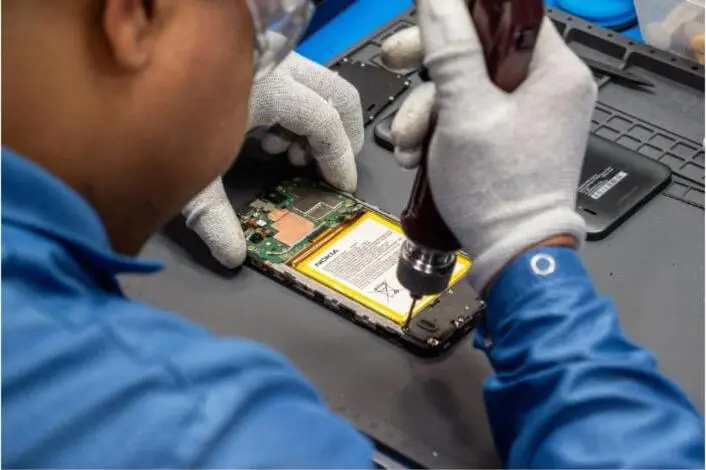
For carriers, OEMs and enterprises managing high return volumes, unauthorized repair providers create significant compliance risk. Voided warranty coverage for specific defects eliminates the OEM obligation on affected devices, and loss of ASC status removes the enterprise from the OEM authorized channel. Together, these outcomes create downstream liability that is difficult to reverse.
Premier Logitech holds ASC authorization for more than 20 OEM brands. This authorization functions as a compliance control. It helps preserve warranty requirements, supports OEM standards for repair quality and maintains a documented chain of custody from return to repaired device.
Protect warranty compliance across the device portfolio with Premier Logitech ASC capabilities.
Framework and Certification Map for Mobile Reverse Logistics
Different buyer types rely on different certification frameworks. Each framework supports a specific compliance function within the seven-stage model.
ISO 9001 is the quality management framework. It supports documented, repeatable processes, corrective action, auditability and continuous improvement in a reverse logistics operation. It applies to buyers that require operational consistency and process control.
ISO 14001 is the environmental management framework. It supports controlled environmental impacts and legal compliance across collection, transport, repair and disposition. The framework also requires objectives, training, operational controls and continual improvement. R2v3 requires certified facilities to hold or conform to an environmental management system aligned with ISO 14001 or RIOS, so ISO 14001 often becomes part of the operational baseline for ITAD programs.
TAA (Trade Agreements Act) applies to government programs. The Trade Agreements Act applies to TAA-covered federal acquisitions above certain dollar thresholds. Products and services under these contracts must originate from the United States or a designated country. Designated countries include WTO GPA countries, FTA countries, least developed countries and Caribbean Basin countries. TAA compliance is a threshold requirement for federal acquisitions at or above the WTO GPA threshold of $174,000 for supplies and services as of 2026 and for all GSA Multiple Award Schedule contracts.
CMMC (Cybersecurity Maturity Model Certification) applies to defense-related work. It establishes cybersecurity practice requirements for contractors handling controlled unclassified information. CMMC applies to Department of Defense supply chain participants that process, store or transmit Federal Contract Information or Controlled Unclassified Information on contractor systems in performance of a DoD contract.
SOC 2 applies to service organizations that handle sensitive data. It evaluates controls related to security, availability, processing integrity, confidentiality and privacy. Enterprise buyers with data governance requirements use SOC 2 as a vendor qualification standard.
R2v3 and e-Stewards apply to downstream recycling and responsible disposition. Both frameworks require documented data destruction, downstream vendor management and environmental controls. R2v3 focuses on reuse, recovery and process-specific controls and requires downstream due diligence through two tiers or until the first R2v3-certified vendor. e-Stewards applies more restrictive downstream and export controls and mandates NAID AAA certification for data destruction.
Premier Logitech holds TAA, TAPA, ISO, NIST, CMMC and SOC 2 certifications and operates under CAGE Code 4WAJ9. These credentials position the company as a pre-vetted, high-security partner for U.S. federal government and enterprise programs.
Align program requirements with the right certification mix through Premier Logitech.
State-Level E-Waste and Battery Requirements
A national mobile reverse logistics program must account for state-level rules for device and battery disposition. State requirements vary and continue to expand.
Key categories include producer responsibility laws, battery stewardship programs, landfill bans and take-back mandates. At least 23 states plus the District of Columbia have an express landfill or disposal ban on electronic devices, and an additional 25 states plus D.C. have some form of e-waste legislation.
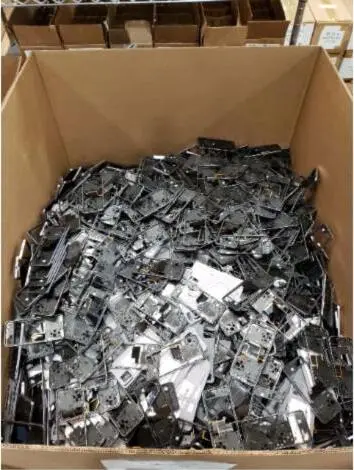
Several states impose significant obligations on mobile device programs. California Title 22 regulations apply stricter standards for metals commonly present in lithium-ion batteries, so batteries that qualify as universal waste in other states may require management as fully regulated hazardous waste in California. California SB 1215, effective January 1, 2026, applies a 1.5 percent covered battery-embedded waste recycling fee at the point of sale for products with non-user-removable batteries. New York has refused covered electronic equipment at solid waste facilities, hazardous waste facilities, landfills and waste-to-energy plants since January 15, 2015. Washington bans rechargeable batteries from landfill and operates a mandatory retailer collection program.
State battery stewardship laws continue to grow. Wisconsin, Kentucky and Oregon each enacted battery extended producer responsibility laws in April 2026. Maine approved a battery take-back bill in April 2026 that will extend to embedded-battery devices such as mobile phones starting in 2030. Colorado signed SB 26-003 into law on June 3, 2026, establishing an EV battery extended producer responsibility law with specific mineral recovery rate targets. DLA Piper advises companies to evaluate producer status across the full national footprint rather than reacting to each state deadline in isolation.
Premier Logitech compliance reporting and responsible recycling programs help clients track and meet these varying state requirements. Devices and batteries route through compliant disposition pathways in each jurisdiction.
Five R’s of Reverse Logistics for Mobile Devices
The five R’s of reverse logistics describe the primary disposition paths for returned mobile devices and align with the seven-stage model.
- Returns. The physical intake of devices from end users or retail locations back into the supply chain.
- Reselling. Grading and remarketing functional or refurbished devices through secondary market channels.
- Repair. Restoring devices to working condition through depot repair, including OEM-authorized service.
- Refurbishing. Cosmetic and functional restoration of devices to a defined condition grade for resale or redeployment.
- Recycling. Responsible disposition of end-of-life devices and batteries through certified recycling channels in compliance with RCRA and state e-waste laws.
Why Reverse Logistics Is Challenging for Mobile Devices
Mobile devices introduce compliance challenges that general reverse logistics programs often do not address. The primary challenges include:
- Battery shipping regulations that classify lithium-ion batteries as DOT hazmat materials
- Data security risks tied to personal data stored on IMEI- and serial-tracked devices
- OEM warranty constraints that concentrate repair activity within authorized service centers
- State-level compliance variations across e-waste and battery stewardship laws
- High return volumes that strain documentation and chain-of-custody processes
Each challenge maps to a specific handoff in the seven-stage compliance workflow described earlier.
Conclusion and Next Steps
Mobile reverse logistics compliance functions as a chain of custody. Every handoff, including collection, triage, transport, repair, sanitization and disposition, carries a distinct regulatory obligation and requires a named owner and a retained record.
The five regulatory domains that govern mobile device reverse logistics are DOT battery shipping under 49 CFR §173.185, EPA and RCRA universal waste under 40 CFR Part 273, NIST SP 800-88 data sanitization, OEM ASC authorization and framework certifications such as ISO 9001 and ISO 14001, TAA, CMMC, SOC 2, R2v3 and e-Stewards.
Operations and compliance leaders can start by mapping the current workflow against the seven-stage model. Next, identify which handoffs lack a named owner or retained record. Then gather the required documentation for each stage and evaluate partners whose certifications satisfy each regulatory domain.
Premier Logitech delivers end-to-end mobile reverse logistics compliance through ASC authorizations for more than 20 OEM brands, TAA, TAPA, ISO, NIST, CMMC and SOC 2 certifications, NIST SP 800-88-aligned secure data destruction and compliance reporting that supports audits across all five regulatory domains. Premier Logitech operates under CAGE Code 4WAJ9 as a pre-vetted partner for government and enterprise programs.
Build an audit-ready mobile reverse logistics compliance program with Premier Logitech.
Frequently Asked Questions
How Does the DOT Reverse Logistics Exception Relate to Lithium Batteries?
The DOT reverse logistics exception under 49 CFR §173.157 allows certain limited-quantity hazardous materials to move by highway without full hazmat documentation. Lithium batteries are explicitly excluded from this exception because of their hazard profile. Any shipment of lithium-ion batteries, whether standalone or contained in mobile devices, must comply with the full requirements of 49 CFR §173.185, including nonmetallic inner packaging, proper labeling and shipping papers. Damaged, defective or recalled batteries carry additional requirements under 49 CFR §173.185(f), including individual nonconductive packaging, noncombustible cushioning, Packing Group I outer packaging, required markings at least 12 mm high and a prohibition on air transport.
What Records Support a NIST SP 800-88-Compliant Sanitization Program?
A compliant sanitization program relies on per-device records. Each record should include the device asset tag, manufacturer, model and serial number, the sanitization outcome category, the method and tool used, the tool version, the operator and verifier identities and the date and time. The record should also capture exception handling, including failed commands, damaged media and rerouting decisions, along with custody evidence from pickup through processing. A certificate of destruction or sanitization supports compliance when it connects an identifiable asset to a defined method, a verification result and a controlled chain of custody.
How Do State E-Waste and Battery Laws Shape National Programs?
State laws vary and expand on different timelines. As noted earlier, 23 states plus the District of Columbia ban electronics from landfills, and many states restrict or ban batteries from landfill disposal. Several states, including Wisconsin, Kentucky, Oregon, Maine and Colorado, enacted new battery stewardship or extended producer responsibility laws in 2026. A national program benefits from a state-by-state compliance matrix that tracks producer responsibility obligations, battery stewardship participation, landfill bans and take-back mandates.
Why Does OEM ASC Authorization Matter for Compliance?
OEM ASC authorization functions as a compliance safeguard with legal and financial impact. Under Magnuson-Moss, repairs outside an authorized network do not automatically void an OEM warranty, but manufacturers can deny coverage for defects they can link to unauthorized work. For enterprises with large return volumes, that risk affects warranty-backed inventory and secondary market activity. ASC authorization also ensures that repair documentation meets OEM standards, which supports chain-of-custody integrity from return through redeployment.
Which Certification Frameworks Align With Common Buyer Types?
Framework requirements depend on buyer type and program context. Government and defense programs require TAA compliance as a threshold condition and CMMC for work involving controlled unclassified information. Enterprise buyers with data governance requirements typically require SOC 2 as a vendor qualification standard. Programs with downstream recycling or disposition obligations rely on R2v3 or e-Stewards certification from recycling partners, with e-Stewards applying more restrictive downstream controls. ISO 9001 supports documented, auditable operational processes. ISO 14001 supports environmental management and serves as a baseline for many R2v3-certified facilities. Most enterprise and government programs combine several of these frameworks.
