Key Takeaways for Returns SLAs
- A returns management SLA is a contract that sets measurable standards for every stage of reverse logistics, from RMA through reporting.
- Core SLA elements include same-day RMA issuance, serialized scan capture at receipt, dock-to-stock and grading accuracy targets, and automatic refund or exchange triggers.
- Data security compliance is mandatory. SLAs should reference NIST SP 800-88 and require certificates of sanitization for every serialized asset.
- Enforceable SLAs define reporting cadences, tiered service credits, remediation plans, and termination rights, while keeping SLAs distinct from KPIs.
- Premier Logitech delivers ASC authorization, L1-L4 depot repair, government-grade certifications and rapid exchange programs that support strict returns management SLA benchmarks. Get started with a Premier Logitech SLA review.
RMA Generation Standards
RMA issuance is the first measurable gate in any returns program. Delays at this stage cascade through every downstream step, compress inspection windows and push resolution timelines past acceptable thresholds.
For IT and electronics programs, the SLA should specify same-day or immediate RMA issuance after approval. The agreement should also define required intake data fields, such as serial number, IMEI, device model and condition code. Clear intake data allows downstream triage and grading to start without manual re-keying.
Premier Logitech RMA intake infrastructure supports serialized capture at receipt, which enables traceability from the moment a device enters the reverse logistics stream. That capability supports warranty claim validation and downstream asset recovery decisions.
Dock-to-Stock and Triage Time
Receipt-to-scan time determines how quickly a returned device enters the disposition workflow. A defined standard from receipt to disposition sets the operational benchmark for high-volume electronics returns. Serialized scan capture at receipt is required for regulated and serialized products.
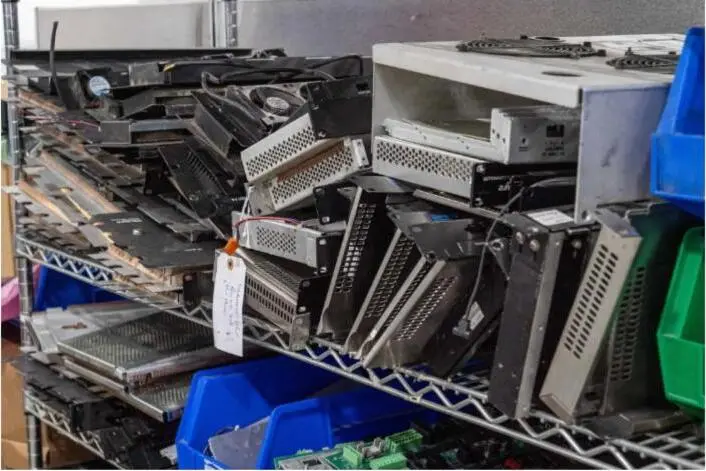
Warehouse receipt and grading are the two stages that most often exceed SLA targets in instrumented return pipelines. This pattern often stems from unlogged dock time rather than carrier delays, because devices sit on the dock without a scan and the delay never appears in tracking data. An enforceable SLA closes that gap by requiring a timestamped scan within a defined window of the last carrier scan, which makes dock time visible and measurable.
Operational visibility tools such as real-time inventory tracking, TMS integration and lifecycle analytics provide stage-level data that highlights bottlenecks before they become SLA breaches.
Inspection and Grading Accuracy Targets
Condition assessment accuracy directly determines asset recovery value. Manual grading workflows can produce variable accuracy in condition classification. AI-driven grading systems can support higher accuracy and consistency. The SLA should define the minimum acceptable grading accuracy rate and the exception protocol for disputed grades.
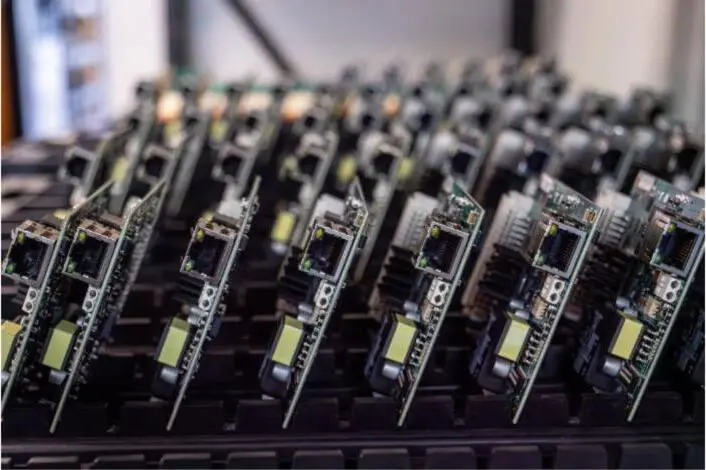
For IT and electronics programs, grading should align with secondary market condition codes, typically A, B, C and scrap, with documented criteria for each grade. Authorized repair network status matters because an ASC-authorized partner can perform OEM-validated assessments that support warranty claims and certified refurbishment programs.
Premier Logitech holds ASC status with more than 20 OEM brands and operates L1 through L4 depot repair capabilities. These capabilities support grading decisions that are defensible to OEM partners and secondary market buyers.
Need support defining grading standards and inspection protocols for a returns SLA? Connect with a lifecycle expert to review program requirements.
Refund and Exchange Resolution Triggers
Resolution timing starts at completion of inspection. Best-practice SLAs specify same-day to two-day resolution issuance after grading, with automatic refund or exchange triggers tied to the inspection outcome rather than a manual approval queue.
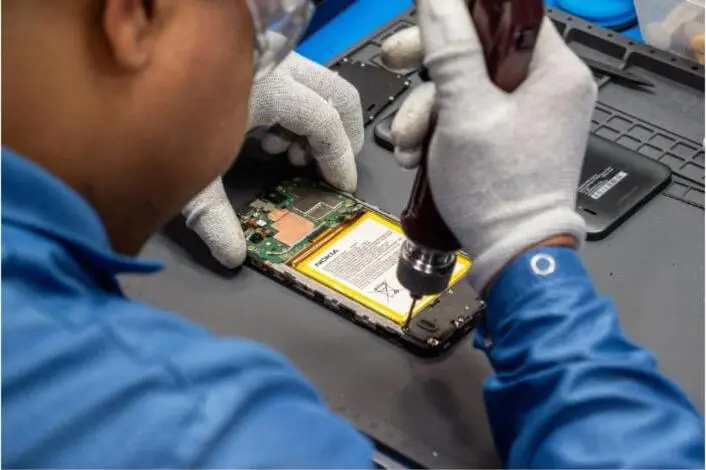
For enterprise IT programs, rapid exchange often matters more than a refund. An SLA that defines exchange ship-out timing, including next-day replacement for priority device categories, protects end-user productivity and reduces the cost of device downtime. Premier Logitech supports rapid exchange and next-day replacement programs for high-volume enterprise clients.
Data Security and Compliance Requirements
Data security is a core SLA component for IT and electronics returns. Every returned device that held enterprise or government data must be sanitized to a defined standard before reuse, resale or recycling. The SLA should name the applicable standard, with NIST SP 800-88 as the baseline for federal and enterprise programs, and require certificates of destruction or sanitization for each serialized asset.
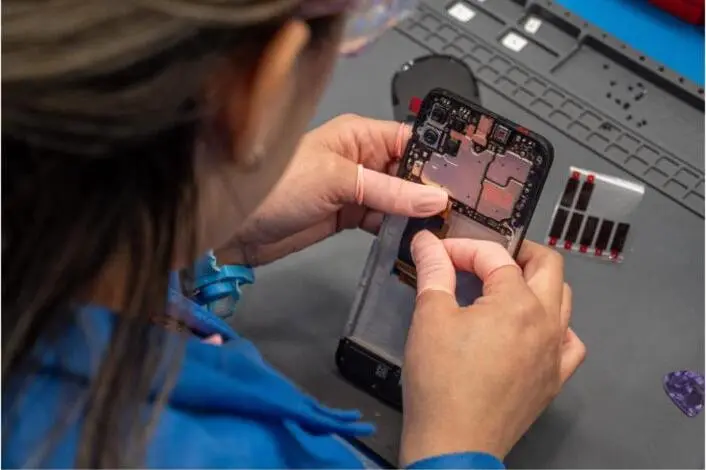
For programs subject to CMMC or government contracting requirements, the SLA should also reference TAA compliance for any replacement hardware and SOC 2 Type II certification for provider data handling practices. Premier Logitech holds TAA, NIST, CMMC and SOC 2 certifications and carries CAGE Code 4WAJ9 as a pre-vetted federal partner.
Reporting Cadence and Contract Remedies
A returns management SLA needs a reporting and remedies framework to function in practice. Every enforceable SLA includes six core clauses: service scope, performance standards, measurement methodology, service credits and remedies, exclusions and force majeure, and escalation and governance.
Reporting cadence should be weekly for high-volume programs and monthly at minimum for standard programs. Stage-level medians with 75th- or 90th-percentile figures identify bottlenecks more reliably than a single blended average.
Remedies should include tiered service credits for individual breaches, mandatory remediation plans when failures become chronic and termination rights after repeated breaches. This escalation from financial penalties to operational intervention to contract exit turns precise remedy language into a contract risk management tool, not just a performance incentive.
SLA and KPI Roles in Returns Management
SLAs and KPIs serve distinct functions in 3PL contract governance. An SLA is the contractually agreed target a provider must meet. A KPI is the measurement used to assess whether that target is being met.
SLAs set the minimum acceptable service level, while KPIs track performance and improvement over time. The distinction matters because violating an SLA triggers a contractual remedy, while missing a KPI target triggers an operational review to identify the root cause. Both are necessary. Neither replaces the other.
The 7 R’s Framework for Tech Asset Returns
The seven R’s of reverse logistics describe how goods move back into the supply chain and how businesses recover value and extend product lifecycles. Applied to technology assets, each R maps to a specific operational and contractual requirement, and together they form a complete disposition framework that a returns management SLA should address.
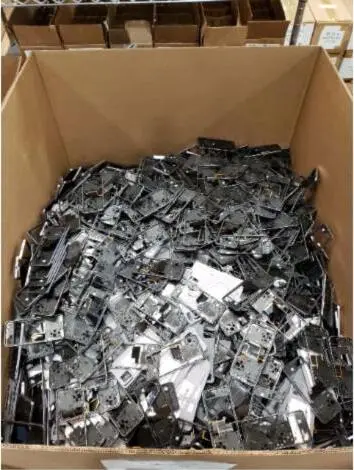
- Returns: The physical and administrative process of accepting devices back from end users or channel partners, including RMA generation, carrier coordination and receipt logging.
- Recalls: Coordinated retrieval of specific device populations due to safety, firmware or compliance issues, which requires serialized tracking and documented chain of custody.
- Repairs: L1 through L4 depot repair that restores devices to functional condition, supported by OEM-authorized service center status for warranty-valid repairs.
- Repackaging: Cosmetic refurbishment and reboxing that meet secondary market condition standards and preserve resale value for A- and B-grade devices.
- Recycling: Responsible e-waste disposition for end-of-life devices that cannot be refurbished or resold, with compliance documentation under applicable environmental frameworks.
- Reselling: Remarketing of graded and refurbished devices through secondary market channels to recover asset value and offset reverse logistics costs.
- Replacement: Rapid exchange programs that ship a replacement device to the end user before or concurrent with the return, which minimizes downtime for enterprise and government programs.
Returns Management SLA Template Structure
The following template outlines key sections for a returns management SLA. Parties should populate bracketed fields with program-specific values before execution and align each section with the seven R’s where relevant.
- Service Scope: Define in-scope device categories, return channels such as consumer, B2B and government, geographic coverage and explicit out-of-scope exclusions such as physical damage caused by the customer.
- Performance Standards: Specify measurable targets for RMA issuance time, dock-to-scan time, grading accuracy rate, inspection-to-resolution time and data sanitization documentation turnaround.
- Measurement and Reporting Methodology: Name the data source, such as WMS, TMS or a returns platform, reporting cadence such as weekly or monthly, and calculation method using median and p75 or p90 percentile per stage.
- Service Credits and Remedies: Define credit percentages per breach, monthly credit caps, aggregation rules for multiple breaches, mandatory remediation plan triggers and termination rights for chronic failure, such as a defined number of breaches within a rolling period.
- Exclusions and Force Majeure: List carrier-caused delays outside provider control, client-caused intake errors, planned maintenance windows and natural disaster provisions.
- Escalation and Governance: Name the operational owner, executive sponsor and legal contact for each party. Define escalation tiers, including operational, executive and legal, and review cadence, such as monthly for high-volume programs and quarterly for standard programs.
- Compliance Language: Reference applicable standards such as NIST SP 800-88, TAA, CMMC and SOC 2, and require certificates of sanitization or destruction for each serialized asset processed under the agreement.
Review this template with a Premier Logitech specialist to adapt it for an active 3PL contract or upcoming negotiation.
3PL Evaluation Checklist for Returns Programs
The following checklist highlights eight criteria that cover operational capabilities, compliance posture and contractual flexibility. These questions help distinguish high-performance providers from commodity warehouses when selecting or auditing a returns management partner for IT and electronics programs.
- Does the provider hold ASC authorization with OEM brands in the program device portfolio?
- Can the provider demonstrate serialized scan capture at receipt and stage-level reporting against defined SLA targets?
- Does the provider hold NIST, CMMC, SOC 2 and TAA certifications that match program compliance requirements?
- What is the provider documented repair capacity, and can it scale to meet peak return volumes without SLA degradation?
- Does the provider offer rapid exchange or next-day replacement programs for priority device categories?
- What remedies does the provider accept in the SLA, including service credits, remediation plans and termination rights?
- Does the provider operate nearshore or domestic facilities that reduce transit time and customs risk for cross-border programs?
- Can the provider support secondary market remarketing and asset recovery reporting that quantifies net recovery value?
Conclusion: Building Durable Returns SLAs
A returns management SLA forms the operational and legal foundation of any high-performance reverse logistics program. Measurable standards across RMA generation, triage, inspection, resolution, data security and reporting, backed by enforceable remedies and clear escalation paths, protect margins, compliance posture and asset recovery value.
U.S. retailers are projected to process roughly $849.9 billion in returns in 2025, with electronics reverse logistics and restocking costs running $35-55 per item. At that scale, SLA gaps translate directly into margin erosion and compliance exposure.
Premier Logitech ASC authorization, depot repair capabilities and government-grade certifications support returns programs that require both scale and compliance. A DFW-plus-nearshore operational footprint provides flexibility for domestic and cross-border workflows.
Get started with a Premier Logitech SLA review for an IT or electronics program.
Frequently Asked Questions
What should a returns management SLA include for IT and electronics programs?
A returns management SLA for IT and electronics programs should cover six core areas. It should define service scope with explicit in-scope and out-of-scope items, measurable performance standards for each processing stage, a reporting methodology that specifies data sources and calculation methods, service credits and remedies for missed targets, exclusions and force majeure provisions and escalation and governance contacts. For IT and electronics, the SLA should also include data security compliance language referencing NIST SP 800-88 or equivalent standards, serialized asset tracking requirements and grading accuracy minimums tied to secondary market condition codes.
How does Premier Logitech support returns management SLA compliance?
Premier Logitech supports SLA compliance through serialized scan capture at receipt, stage-level operational visibility tools, L1 through L4 depot repair capabilities and ASC authorization with more than 20 OEM brands. The company holds TAA, NIST, CMMC and SOC 2 certifications, which support data security and compliance requirements for enterprise and government programs. DFW-based facilities and nearshore operations in Laredo and Nuevo Laredo provide geographic flexibility for programs that require domestic processing or cost-competitive cross-border workflows. Premier Logitech also supports rapid exchange and next-day replacement programs for clients that treat resolution speed as a contractual commitment.
What is the difference between an SLA and a KPI in reverse logistics?
An SLA is a contractual commitment that defines the minimum acceptable performance level and the remedies that apply if that level is not met. A KPI is a measurement tool that tracks whether the SLA target is being achieved and identifies trends over time. In a returns management context, an SLA might require that all devices be scanned within a defined window of warehouse receipt. The corresponding KPI would track the percentage of devices meeting that target each week, along with median and 90th-percentile scan times that surface bottlenecks. Both are necessary. The SLA creates accountability, and the KPI provides operational data to manage against it.
How do the 7 R’s of reverse logistics apply to technology asset programs?
The 7 R’s, which are Returns, Recalls, Repairs, Repackaging, Recycling, Reselling and Replacement, map directly to disposition decisions for every device that enters a reverse logistics program. Returns covers intake and RMA processing. Recalls require serialized tracking and documented chain of custody for coordinated device retrievals. Repairs restore devices to functional condition through depot repair. Repackaging prepares refurbished devices for secondary market channels. Recycling handles end-of-life devices that cannot be recovered economically. Reselling recovers asset value through remarketing. Replacement supports rapid exchange programs that minimize end-user downtime. A well-structured returns management SLA should address each pathway with defined processing standards and disposition timelines.
What compliance certifications should a returns management partner hold for government and enterprise programs?
For government and enterprise IT programs, a returns management partner should hold Trade Agreements Act compliance for any hardware sourced or processed under the agreement, NIST SP 800-88 certification or equivalent for media sanitization, CMMC certification for programs subject to Department of Defense supply chain requirements and SOC 2 Type II certification for data handling practices. ISO 9001 and ISO 14001 certifications support quality management and environmental compliance for recycling and e-waste programs. Partners with a CAGE Code are pre-vetted for federal contracting, which simplifies procurement for public sector programs. Premier Logitech holds the full set of certifications outlined above, including CAGE Code 4WAJ9 for federal contracting.
