Key Takeaways
- Reverse logistics inspection and grading follows a structured five-step workflow that converts returns into auditable, disposition-ready inventory while maximizing recovery value.
- Standardized A–D grading criteria combined with OEM ASC authorization protect warranty eligibility and support higher-value resale channels for IT and telecom assets.
- Automation through computer vision, diagnostic scripts and real-time WMS integration improves throughput, consistency and fraud detection in high-volume return programs.
- Compliance with NIST SP 800-88, R2v3, CMMC and SOC 2 requires per-device sanitization certificates and documented chain-of-custody throughout the inspection process.
- Premier Logitech delivers scalable, compliant inspection and grading at enterprise level — see how this infrastructure applies to a specific program.
Five Stages of Reverse Logistics Inspection
A repeatable five-step workflow converts unstructured returns into auditable, disposition-ready inventory. Each stage builds on the last, and skipping any step compounds downstream errors.
- Receipt and reconciliation. Every inbound unit is reconciled against the shipping manifest at the item level, with serial numbers and asset tags matched to open RMA records. Staff flag discrepancies before any physical work begins. Timestamped intake photos document condition upon arrival.
- Quarantine and initial check. Units enter a dedicated staging zone pending inspection. Cloud account verification confirms removal of Activation Lock, Apple ID, Microsoft account sign-in and MDM enrollment. This step prevents sanitization from being implied by return rather than documented as a separate event. IMEI and serial numbers are cross-checked against carrier restriction and reported-loss databases.
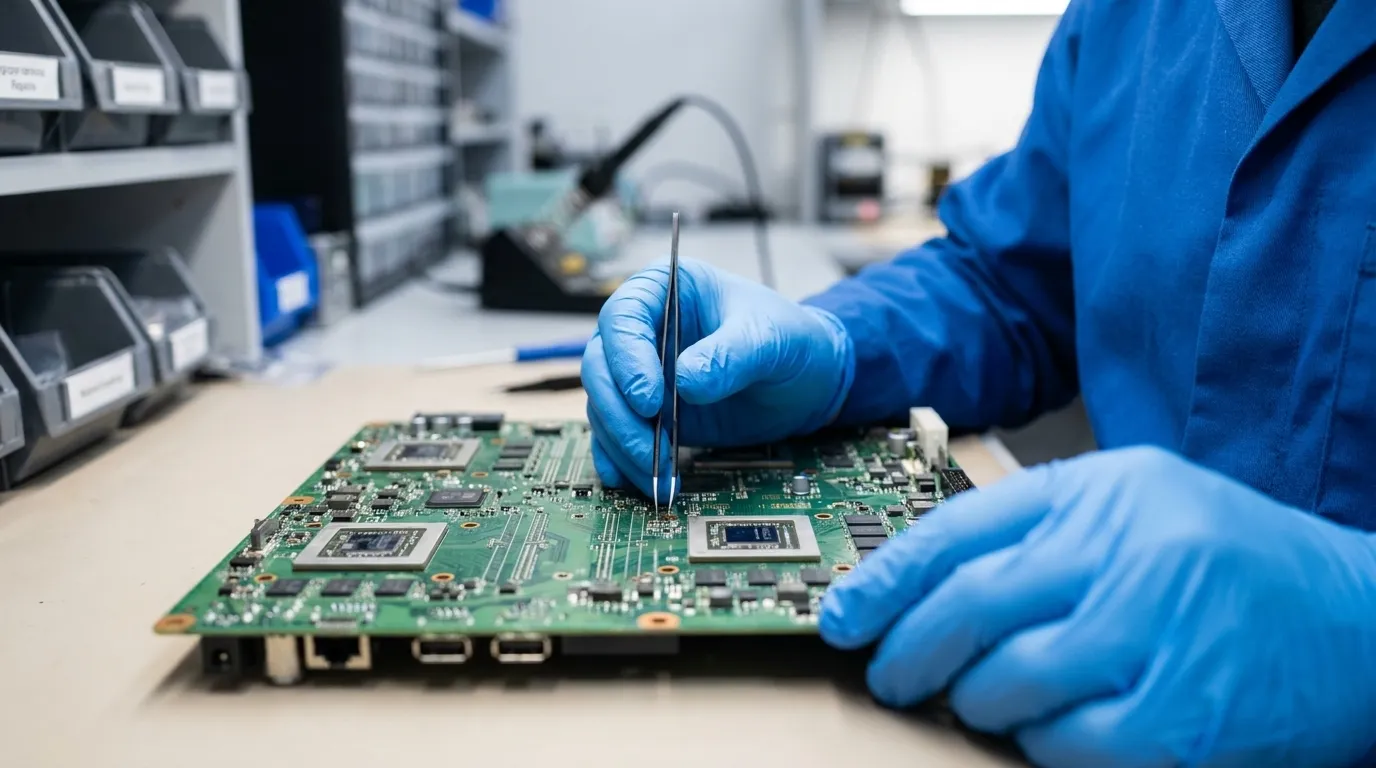
- Physical and functional testing. Inspectors stress-test hardware across CPU, RAM, storage S.M.A.R.T. data, display quality, ports, battery health and wireless connectivity. Data sanitization follows NIST SP 800-88 standards, with an erasure certificate issued per device.
- Grading assignment. Each unit receives an A–D grade based on the cosmetic and functional findings from Step 3. A strong grading framework requires explicit definitions for each grade covering cosmetic condition, functional testing requirements, required accessories, data-wiping status and issues that block resale. Photo evidence is captured for any unit graded B or lower.
- Disposition routing. Grade assignments trigger automated routing rules. Grade A and B units move to remarketing or certified refurbished channels. Grade C units enter the repair line. Grade D units route to parts harvesting or certified recycling. A complete inspection report, grading certificate and sanitization documentation package accompanies each unit because each disposition path carries different audit requirements for procurement or compliance review.
Current Reverse Logistics Challenges in IT and Telecom
Four systemic problems erode recovery value and increase handling costs across IT and telecom return programs.
- Fragmented visibility. When customer service, warehousing, refurbishment and resale functions operate with incompatible data structures and lack common identifiers, staff cannot access return reasons or prior disposition decisions needed for accurate grading. Integration of grading outcomes directly with WMS, TMS and ERP systems mitigates this gap.
- Inconsistent grading. Without standardized and documented grading criteria, different warehouse workers inspecting the same returned item reach inconsistent conclusions. Mitigation requires unambiguous grade definitions, photo examples for each tier and inter-rater reliability checks.
- Data-security risks. Devices that bypass documented sanitization before resale create regulatory exposure under frameworks including NIST SP 800-88 and R2v3 Appendix B Section 12. Serialized chain-of-custody documentation and per-device erasure certificates close this gap.
- OEM warranty compliance gaps. Insufficient provenance checks create legal and customer service issues for organizations handling telecom and IT returns. Authorized Service Center (ASC) status with specific OEM brands is the structural mitigation for warranty compliance gaps.
Device-Specific Grading and OEM Warranty Requirements
Applying these mitigation strategies requires understanding how grading criteria vary by device category. Device category determines which grading criteria carry the most weight and which disposition paths remain open under OEM authorization requirements.
- Laptops. Inspection covers screen integrity, keyboard and trackpad function, port condition, battery health and storage S.M.A.R.T. status. OEM ASC authorization governs which component replacements preserve warranty coverage and which require OEM-sourced parts.
- Smartphones. IMEI verification, activation lock clearance and carrier restriction checks are mandatory before any grade is assigned.
- Network equipment. Completeness affects valuation. Functional testing must confirm port throughput and firmware integrity. OEM ASC status determines whether firmware reloads and component swaps preserve warranty eligibility.
Maintaining ASC authorization requires adherence to OEM-specified repair procedures, use of approved parts and documentation of every repair action. Programs that route warranty-eligible devices through non-authorized repair channels void coverage and reduce resale value.
2026 Automation and AI-Triage Practices for Returns
Automation addresses the two core constraints of manual inspection: throughput and consistency.
- Computer-vision cosmetic grading. Computer vision at intake captures multi-angle images of returned items, compares them against SKU-level product data and historical outcomes, and outputs a standardized condition grade, a confidence score and a fraud flag for inconsistencies such as wrong item or missing accessories. AI models detect scratches, dents and screen anomalies to standardize cosmetic grading and reduce human variability.
- Automated diagnostic scripts. Diagnostic software automates hardware and software checks, reporting pass or fail results for components and battery health during grading of returned devices. Results feed directly into the WMS grading record and remove manual data entry and related transcription errors.
- Real-time WMS and RMS integration for dynamic routing. A rules-based disposition engine that ties decisions to condition grades, product category, inventory levels and repair-versus-resale cost calculations removes variability from manual judgment calls. Integration with downstream resale and financial systems closes the feedback loop and supports continuous improvement of grading thresholds.
- Fraud detection. AI systems detect return fraud by analyzing customer return patterns combined with visual discrepancies such as fake serial number stickers or missing internal components. RFID and barcode scan-based tracking links each device to its inspection record across the full workflow.
Explore how automated triage fits an existing returns workflow.
How Premier Logitech Delivers Scalable Inspection and Grading
Premier Logitech operates the infrastructure that the five-step workflow above requires at enterprise scale.
- OEM Authorized Service Center authorizations. ASC status across multiple OEM brands keeps warranty-eligible repairs within authorized channels and preserves device value and OEM compliance for IT, telecom and consumer electronics programs.
- DFW facilities with nearshore support. Operations across Dallas-Fort Worth facilities, with nearshore capacity in Laredo and Nuevo Laredo, provide geographic flexibility and cost-competitive processing for high-volume return programs.
- L1–L4 depot repair. Repair capability spans board-level diagnostics through full system builds and supports in-warranty and out-of-warranty claim processing, cosmetic refurbishment and rapid exchange programs.
- Certified data destruction and compliance reporting. Secure data destruction follows NIST SP 800-88, with per-device erasure certificates and compliance reporting under TAA, NIST, CMMC and SOC 2 frameworks.
- End-to-end lifecycle integration. Premier Logitech connects returns intake, grading, repair, certified refurbishment, remarketing and responsible recycling under a single program and replaces fragmented vendor relationships with one accountable partner.
Frequently Asked Questions
How does reverse logistics inspection differ from standard returns processing?
Standard returns processing confirms that a product was received. Reverse logistics inspection evaluates cosmetic and functional condition against defined criteria, assigns a grade, documents data sanitization and routes the unit to the disposition path, such as resale, repair, parts harvest or recycling, that recovers the most value. Without the inspection and grading step, organizations cannot make defensible disposition decisions or produce the audit trail that compliance frameworks require.
Which grading criteria apply to IT and telecom devices?
IT and telecom grading evaluates cosmetic condition such as scratches, dents, cracked screens and missing components. It also evaluates functional performance such as power-on, display, ports, wireless radios and battery health. Grading includes data sanitization status, with an erasure certificate tied to serial number and standard applied, and provenance, including IMEI or serial verification, carrier restriction status and activation lock clearance. Network equipment grading also accounts for completeness, including chassis rails, power supplies and licenses, because missing components affect resale value independently of physical condition.
How does OEM Authorized Service Center status affect grading and repair?
ASC authorization from a specific OEM defines which repair procedures, parts and technician qualifications preserve warranty coverage on returned devices. A repair performed outside an authorized channel, even a functionally identical repair, can void the manufacturer warranty and reduce the device resale grade and market value. Organizations processing warranty-eligible returns must route those devices through an ASC-authorized partner to maintain the warranty status that supports a Grade A or B disposition.
Which compliance frameworks govern data sanitization during inspection?
NIST SP 800-88 is the primary standard for IT asset data sanitization and defines three methods: Clear for internal reuse, Purge for external resale and Destroy for irrecoverable media. R2v3, the responsible recycling standard maintained by Sustainable Electronics Recycling International, requires documented chain-of-custody and downstream tracking. Government and enterprise programs may also require compliance with CMMC, SOC 2 and TAA. Each framework requires a per-device sanitization certificate that identifies the serial number, standard applied and responsible technician.
When does outsourcing inspection and grading make sense?
Outsourcing becomes operationally justified when return volumes exceed internal inspection capacity. It also becomes justified when OEM warranty compliance requires ASC authorization the organization does not hold, when data-security frameworks require certified sanitization and audit documentation, or when inconsistent internal grading produces buyer disputes and reduced resale recovery. A single partner with end-to-end capability, including intake, grading, repair, refurbishment and recycling, removes the handoff gaps that fragment accountability across multiple vendors.
Conclusion: Turning Returns into Documented Recovery Value
Consistent reverse logistics inspection and grading converts returned IT and telecom assets into measurable recovery value. A repeatable five-step workflow, anchored by clear A–D grading criteria and integrated with WMS and compliance documentation, reduces handling costs, protects OEM warranty eligibility and produces the audit trail that enterprise and government programs require.
Premier Logitech operates this workflow at scale with OEM ASC authorizations, DFW facilities, L1–L4 depot repair, certified data destruction and compliance reporting that meets government and enterprise requirements. The infrastructure is in place and can align to specific program needs.
