Key Takeaways for Reverse Logistics Returns
- Reverse logistics returns providers manage warranty claims, RMA processing, end-of-lease recovery and secure IT asset disposition for enterprise tech and government programs.
- Fragmented vendor relationships create compliance exposure, data-security risk and operational bottlenecks that compound at scale.
- Key evaluation criteria include TAA compliance, CMMC and NIST alignment, SOC 2 certification, OEM ASC authorization and L1–L4 repair depth.
- Single-source providers such as Premier Logitech consolidate repair, refurbishment, grading, secure data destruction and recycling under one compliance-ready program.
- Talk to a lifecycle expert at Premier Logitech to consolidate a reverse logistics program under one compliance-ready partner.
Four Core Types of Returns in Reverse Logistics
Enterprise tech returns fall into four primary categories, and each category carries distinct handling, compliance and disposition requirements.
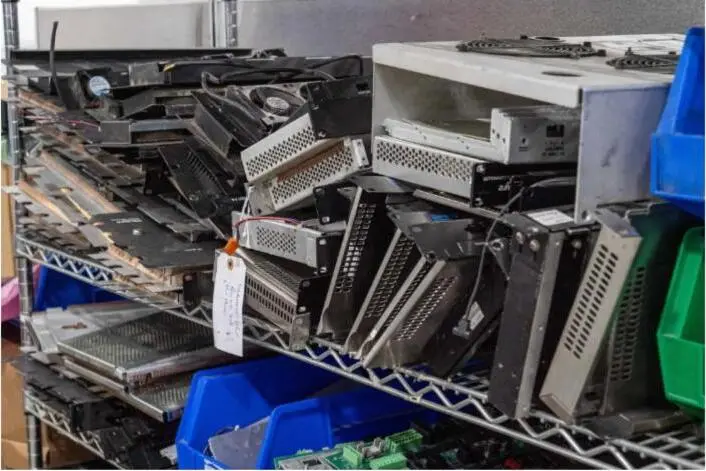
- Warranty returns: Devices returned within the manufacturer warranty period that require triage, repair or replacement under OEM authorization.
- RMA (return merchandise authorization) returns: Structured returns initiated by enterprise customers for defective, damaged or nonconforming units.
- End-of-lease returns: Assets recovered at contract expiration that require grading, refurbishment and redeployment or remarketing.
- IT asset recovery: Decommissioned devices that require secure data destruction, compliance documentation and responsible disposition.
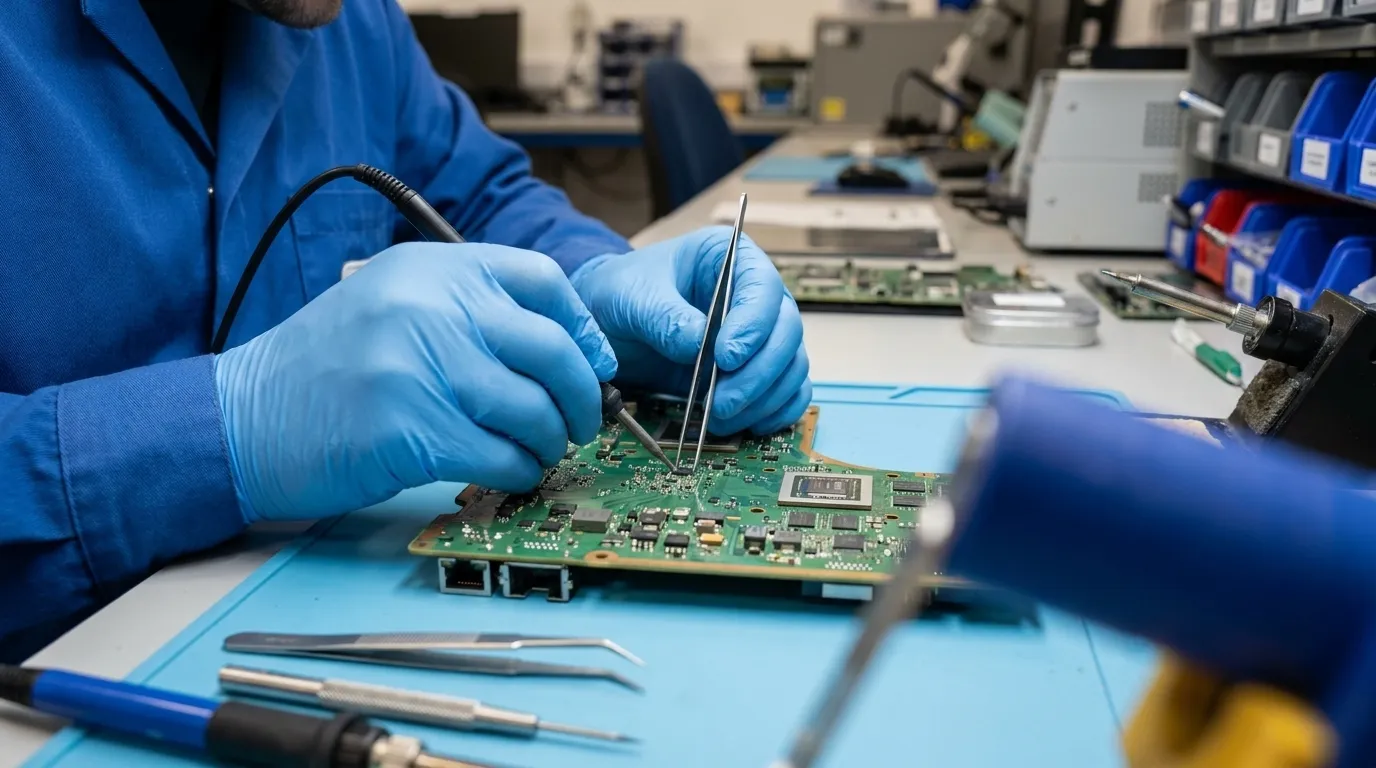
Providers capable of handling all four return types under one roof include Premier Logitech, which offers RMA intake, depot repair at Levels 1 through 4, cosmetic refurbishment, grading, secure data destruction and compliance reporting. Software-centric platforms focus primarily on retail return routing and lack the repair depth or OEM authorization required for enterprise tech. National 3PLs offer warehousing and transportation but generally do not perform component-level repair or maintain OEM Authorized Service Center status.
Operational Disadvantages in Reverse Logistics Programs
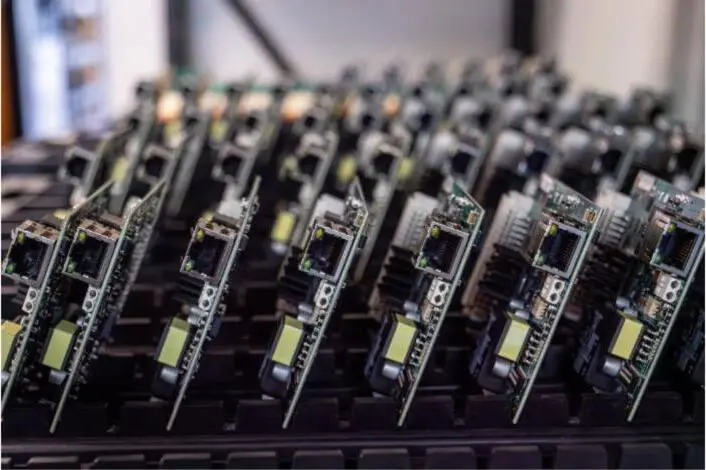
Fragmented vendor relationships create the most common operational risk in enterprise reverse logistics. When repair, refurbishment, transportation and disposition sit with multiple providers, each handoff introduces delay, data-security exposure and accountability gaps.
Data-security risk intensifies when devices containing sensitive information pass through multiple facilities without unified chain-of-custody documentation. Government and enterprise programs subject to NIST, CMMC or SOC 2 requirements cannot rely on informal data-wipe practices across a fragmented network.
Beyond security concerns, fragmentation also limits asset recovery value. Providers without certified grading and secondary-market channels leave recovered devices with fewer disposition paths, which increases e-waste and reduces return on decommissioned inventory.
A single-source model addresses these disadvantages. Premier Logitech uses a consolidated program that eliminates inter-vendor handoffs and maintains a unified compliance record across every asset.
This consolidated structure also prepares the ground for clear evaluation criteria. Understanding which capabilities matter most helps teams compare providers on more than price or basic service menus.
Compliance and Repair Depth as Comparison Criteria
Compliance and repair depth are the two dimensions that most sharply separate enterprise-grade providers from retail-focused platforms and general 3PLs.
Key attributes to evaluate when selecting a reverse logistics returns provider include:
- TAA compliance: Required for federal procurement and government-adjacent programs and confirms that products and services meet Trade Agreements Act sourcing standards.
- CMMC and NIST alignment: Mandatory for defense contractors and agencies that handle controlled unclassified information.
- SOC 2 certification: Demonstrates audited controls over data security, availability and confidentiality.
- OEM ASC authorization: Grants the provider legal authority to perform warranty repairs under OEM terms and preserves warranty validity for end customers.
- Repair tier depth (L1–L4): Ranges from basic diagnostics and part swaps at Level 1 to board-level and component repair at Level 4.
- Weekly repair capacity: High-volume programs require a partner with demonstrated throughput at scale.
- Real-time asset visibility: Inventory tracking and lifecycle analytics reduce shrinkage and support SLA reporting.
Premier Logitech holds OEM ASC authorizations, operates at high repair volume across its DFW facilities and maintains TAA, TAPA, ISO, NIST, CMMC and SOC 2 compliance frameworks. Software-centric return platforms do not perform physical repair. General 3PLs may offer some depot services but rarely hold ASC status across multiple OEM brands or maintain the government-grade compliance stack required for public-sector programs.
Talk to a lifecycle expert to assess whether the current provider meets enterprise compliance and repair-depth requirements.
Matching Reverse Logistics Providers to Business Types
Provider selection criteria shift based on industry, return volume and regulatory environment.
OEMs need a partner with ASC authorization for their specific brands, L1–L4 repair capability and certified refurbishment for secondary-market redeployment. Premier Logitech holds authorizations across multiple OEM brands and supports in-warranty and out-of-warranty claim processing, cosmetic refurbishment and parts reclamation. General 3PLs lack deep OEM authorization, and software platforms do not perform repair.
Telecom carriers that manage high-volume device returns such as smartphones, tablets, routers and wearables need rapid exchange programs, SIM and IMEI management, grading for resale and secure data destruction at scale. Premier Logitech supports rapid exchange and next-day replacement programs, SIM and IMEI pairing and certified data wipe with compliance documentation. Regional depots may handle volume but typically lack the compliance certifications and OEM relationships required by major carriers.

Government agencies and public-sector organizations face the most stringent requirements, including TAA-compliant sourcing, CMMC and NIST alignment, SOC 2 audited controls and a CAGE Code for federal procurement eligibility. Premier Logitech carries CAGE Code 4WAJ9, which confirms pre-vetted status as a high-security federal partner. Retail-focused return platforms and most regional depots do not meet this compliance threshold.
How Premier Logitech Resolves Common Concerns
Operations leaders evaluating a provider change often focus on three concerns, which include vendor fragmentation risk, data-security exposure and uncertainty about refurbishment quality.
Vendor fragmentation: Premier Logitech operates as a single-source lifecycle partner that covers sourcing, repair, refurbishment, fulfillment, transportation and recycling under one contract and one point of contact. Clients that replace fragmented multivendor arrangements gain unified SLA accountability and simplified compliance reporting.
Data-security exposure: Every device processed through Premier Logitech facilities follows documented chain-of-custody procedures. Teams perform secure data destruction to NIST standards, and compliance reporting remains available for audit. SOC 2 certification provides independent verification of data-handling controls.
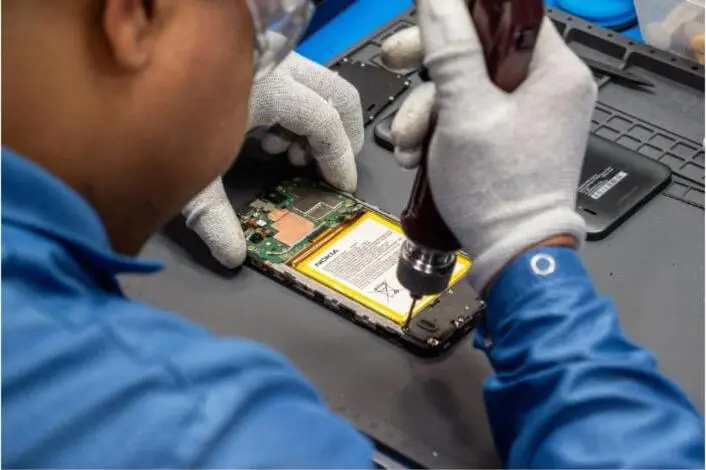
Refurbishment quality and secondary-market value: Premier Logitech performs cosmetic refurbishment and certified grading, which enables recovered devices to reenter secondary-market channels at maximum recoverable value. Parts reclamation and harvesting extend value recovery to components that cannot be refurbished at the device level.
Talk to a lifecycle expert to review how Premier Logitech’s end-to-end model compares to the current vendor stack.
Conclusion: Framework for Selecting a Reverse Logistics Partner
Selecting a reverse logistics returns provider for enterprise tech and government programs requires close review of compliance certifications, OEM authorization depth, repair tier capability and the provider’s ability to consolidate services under a single program. Retail-focused software platforms and general 3PLs serve different markets and do not meet the repair, compliance or lifecycle requirements of OEMs, telecom carriers or public-sector agencies.
Premier Logitech operates as a single-source, ASC-authorized, government-grade partner with the compliance stack, repair capacity and lifecycle breadth to support high-volume enterprise and public-sector programs nationwide. The evaluation framework centers on compliance certifications, OEM authorization count, repair tier depth, throughput capacity and single-vendor consolidation capability.
Talk to a lifecycle expert and request a customized assessment of Premier Logitech’s reverse logistics returns services for the program.
Frequently Asked Questions
What certifications should a reverse logistics returns provider hold for government and enterprise programs?
Government and enterprise programs require providers to demonstrate Trade Agreements Act compliance for sourcing, CMMC and NIST alignment for handling controlled information and SOC 2 certification for audited data-security controls. ISO quality frameworks and TAPA certification further validate operational and physical security standards. Providers without this compliance stack create regulatory exposure for agencies and enterprises that operate under federal or defense-adjacent contracts. Premier Logitech maintains the compliance frameworks described above and holds CAGE Code 4WAJ9 for federal procurement eligibility.
What is the difference between L1 and L4 depot repair in reverse logistics?
Depot repair tiers describe the depth of technical intervention a provider can perform on returned devices. Level 1 covers basic diagnostics, software resets and simple part swaps. Level 2 adds module-level replacement. Level 3 involves subassembly repair and more complex component work. Level 4 reaches board-level and component-level repair, including BGA reballing and PCBA rework. Providers limited to Level 1 or Level 2 must return complex failures to the OEM or a third party, which adds time and cost. Premier Logitech performs Level 1 through Level 4 repair in-house and reduces handoffs while supporting warranty claim resolution across a wide range of failure types.
Why does OEM Authorized Service Center status matter when selecting a reverse logistics partner?
OEM Authorized Service Center authorization grants a provider the legal right to perform warranty repairs under the manufacturer’s terms by using approved parts and processes. Without ASC status, a provider that performs repairs on in-warranty devices may void the warranty and create liability for the enterprise or carrier. ASC authorization also ensures access to OEM parts, technical documentation and repair standards that unauthorized shops cannot access. Premier Logitech holds ASC status for more than 20 OEM brands, which covers a broad range of IT, telecom and consumer electronics product lines.
How does single-vendor consolidation reduce risk in enterprise reverse logistics?
Multivendor reverse logistics programs create accountability gaps at every handoff point between repair, refurbishment, transportation and disposition providers. Each transition introduces potential for data-security exposure, asset shrinkage and SLA disputes. A single-vendor model places all services under one contract, one chain-of-custody record and one point of accountability. Compliance documentation remains unified rather than assembled from multiple providers. Premier Logitech supports full lifecycle consolidation from RMA intake through secure data destruction and recycling, as well as modular engagement for organizations that need specific services without a full program transition.
What types of organizations benefit most from enterprise reverse logistics services?
Organizations that manage high return volumes, operate under regulatory compliance requirements or need to recover value from decommissioned assets benefit most from enterprise-grade reverse logistics. This group includes IT OEMs that process warranty claims across large installed bases, telecom carriers that manage device trade-in and upgrade programs and government agencies that retire IT assets under NIST and CMMC data-destruction requirements. Education institutions and large enterprises that run device-as-a-service or end-of-lease programs also require the repair depth, compliance documentation and refurbishment capability that enterprise reverse logistics providers deliver.
