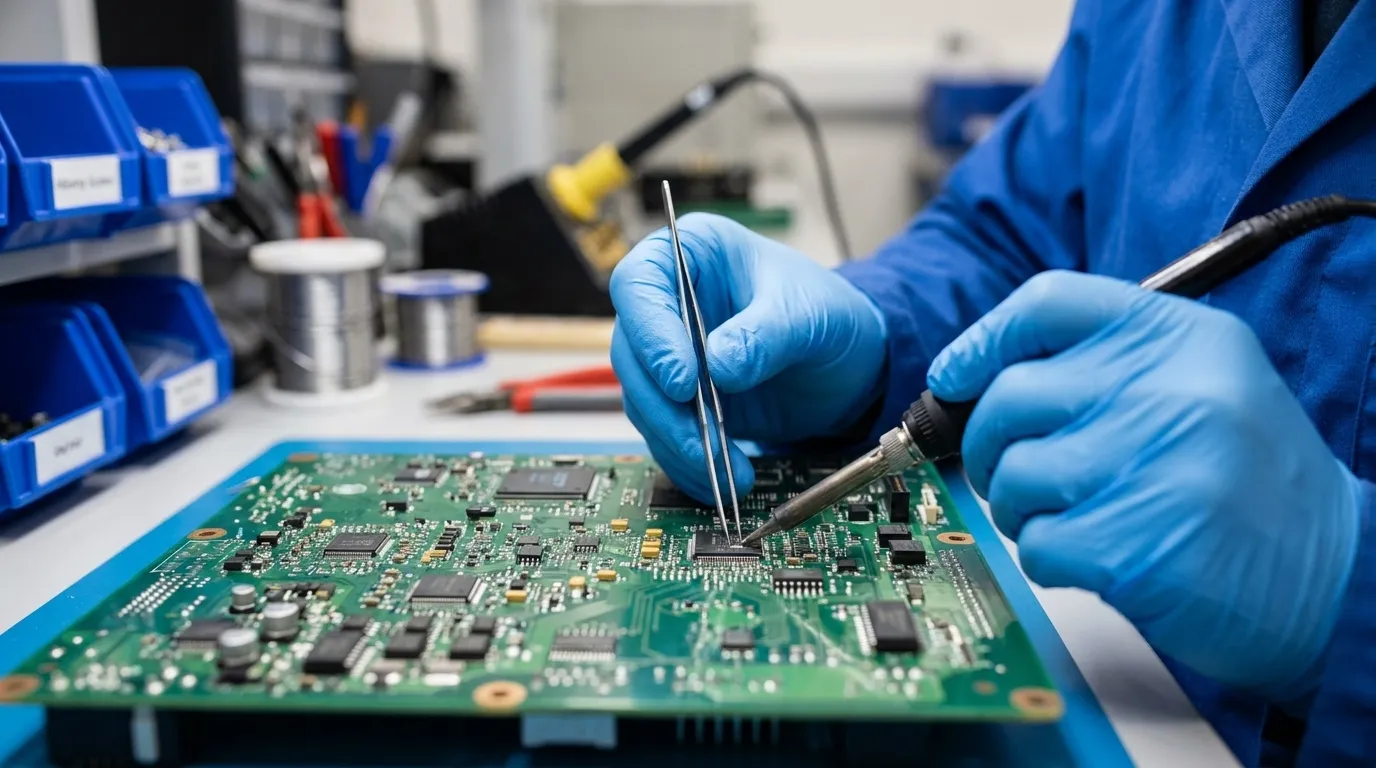
Key RMA Software Capabilities for Large Programs
- RMA management software centralizes authorization, tracking, repair and disposition workflows for high-volume reverse logistics operations.
- Enterprise RMA programs manage three return types: advance exchange, standard return and credit, each with distinct rules and paths.
- Automated workflows and real-time tracking cut manual work, enforce policy consistency and surface status across intake, repair and disposition.
- Depot repair tiers (L1–L4), warranty rules engines, ERP/CRM integrations and compliance audit trails support scale while meeting regulatory and OEM requirements.
- Premier Logitech runs these RMA software capabilities in live operations at scale, and teams can connect with a lifecycle specialist to align features with program goals.
The Three RMA Types and Shared Portal Capabilities
Enterprise RMA programs typically operate across three distinct return types, and each type follows different authorization logic and disposition paths.
- Advance exchange RMA: A replacement unit ships before the defective unit returns. Telecom and field service programs use this model when downtime affects revenue.
- Standard return RMA: The defective unit is received, inspected and then repaired or replaced. OEM warranty programs and depot repair operations rely on this structure.
- Credit RMA: The returned unit is evaluated for resale, refurbishment or recycling, and a credit is issued based on condition grade. Asset recovery and secondary market programs use this model.
Shared RMA portal capabilities support all three types with customer-facing return request submission, real-time status tracking, automated label generation, repair status notifications and disposition reporting.
Enterprise portals extend these basics with role-based access, multi-site visibility and integration with ERP and CRM systems so that every RMA type flows through a single, consistent platform.
Automated RMA Workflows Across Return Types
Automated RMA workflows replace manual authorization steps with rules that apply consistently across advance exchange, standard return and credit programs.
Manual RMA authorization slows processing and creates uneven policy enforcement across sites. Automated workflows apply predefined rules at each stage of the return lifecycle and keep decisions aligned with program design.
Core automated workflow capabilities follow the sequence of a typical RMA:
- RMA request intake with configurable eligibility validation at the point of submission
- A policy rules engine that applies warranty terms, return windows and product-specific conditions to each request
- Automated authorization or escalation routing based on claim type and customer profile
- Prepaid label generation that triggers immediately on approval
- Inbound shipment tracking that links carrier data to the open RMA record
- Disposition routing that follows inspection results and program rules
For high-volume operations, this automation reduces manual touchpoints per return and enforces consistent policy application across all sites and repair tiers. The result is faster authorization cycles and fewer exceptions that require human intervention.
Real-Time Tracking and Notifications Across the RMA Journey
Automation handles authorization decisions, and real-time tracking then maintains visibility from shipment through final disposition.
Visibility gaps between return authorization and final disposition create operational friction and slow response to issues. Real-time tracking closes those gaps by surfacing unit status at every lifecycle stage: intake, transit, inspection, repair and outbound shipment.
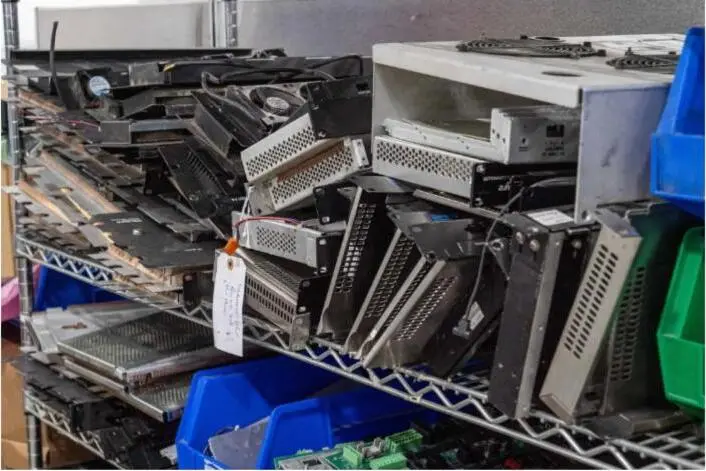
Effective tracking systems provide connected updates instead of isolated events.
- Inbound shipment tracking links to the RMA record from label generation forward so teams see movement before arrival.
- Receiving confirmation records timestamp and condition flags as soon as units reach the facility.
- Repair stage updates follow units through depot workflow queues and show current work status.
- Automated alerts notify operations, warranty and customer service teams when status changes affect commitments.
- Customer self-service portal access allows status checks without agent involvement, which reduces support volume.
For multi-site operations, tracking must aggregate data across all locations into a single view. Consolidated tracking supports accurate inventory control and reduces escalations tied to missing or delayed units.
Repair and Depot Workflows by Level (L1–L4)
Depot repair workflows sit at the center of most enterprise RMA programs, and software must reflect the repair tier structure that governs work and location.
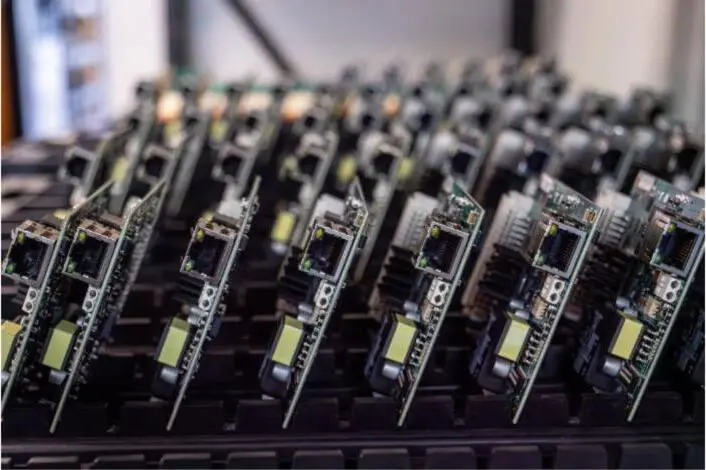
- Level 1 (L1): Basic diagnostics, software reloads, cosmetic inspection and pass-or-fail triage. Units that pass return to service or stock.
- Level 2 (L2): Component-level testing, firmware updates and minor hardware replacement using approved parts.
- Level 3 (L3): Board-level repair, subassembly replacement and functional testing against OEM specifications.
- Level 4 (L4): Full depot repair including BGA rework, PCBA-level diagnostics and engineering-level fault analysis.
RMA software routes each unit to the correct tier based on fault code, warranty status and OEM authorization level. This routing links directly to the RMA type, since advance exchange units often move to higher repair tiers while standard returns may resolve at L1 or L2.
Sorting and grading workflows assign condition grades that determine whether a unit is repaired, refurbished for secondary markets, harvested for parts or recycled. Rapid exchange programs also depend on software that manages replacement inventory pools alongside repair queues so that advance exchange commitments stay on track without draining available stock.
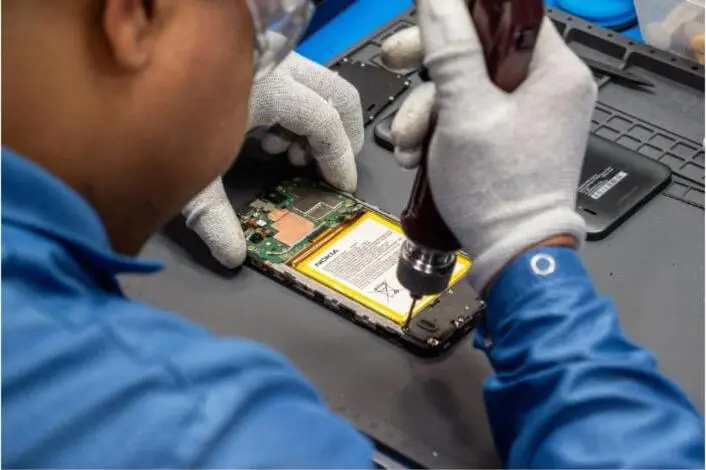
Warranty Rules and Inventory Disposition Decisions
A warranty rules engine applies eligibility logic automatically at the point of RMA authorization and ties directly into repair tier routing.
Rules can be configured by product line, serial number range, purchase date, failure code, geography and customer tier. This configuration blocks out-of-warranty claims from entering the repair queue and ensures in-warranty units receive the correct service level.
Disposition routing logic then determines what happens to a unit after inspection based on condition grade and repair feasibility. Units that pass inspection return to stock as serviceable. Units that require work advance to the appropriate depot repair level. Units that fail repair but retain resale value are graded and routed to secondary market refurbishment. Components from unrepairable units are harvested for parts reclamation. Units with no recovery value route to certified recycling and e-waste disposal.
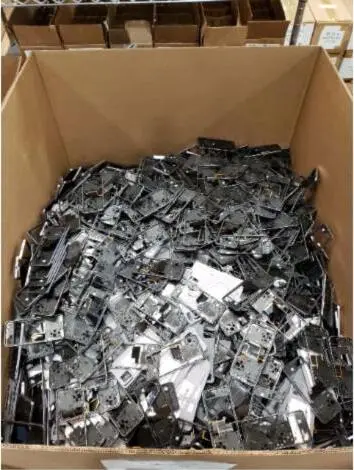
Automated disposition routing reduces manual triage time and improves asset recovery value by steering units with resale potential away from recycling. For OEMs with ASC authorization requirements, the rules engine also enforces which repair tiers are permitted under each authorization agreement.
The result is faster claim resolution and higher first-pass accuracy on warranty eligibility decisions.
ERP, CRM and Inventory System Integrations
Integrated RMA software prevents data silos and keeps reporting aligned with real operational activity.
RMA software that operates apart from enterprise systems fragments data and weakens control. Integration with ERP, CRM and inventory management platforms forms a baseline requirement for enterprise deployments.
Key integration capabilities support financial, customer and inventory accuracy.
- Bidirectional ERP sync for inventory adjustments, purchase order generation and financial posting on disposition outcomes
- CRM integration that links RMA records to customer accounts and service history
- Warehouse management system integration for real-time inventory location and quantity updates
- API connectivity to OEM warranty portals for claim submission and status retrieval
- EDI support for high-volume B2B return programs with retail or carrier partners
With these integrations in place, operations teams work from a single source of record that reflects actual inventory positions, claim statuses and financial outcomes in real time.
Compliance Requirements and Audit Trail Features
Compliance features in RMA software protect programs that operate under government and regulated industry standards.
Government agencies and regulated industries require RMA software to maintain complete, tamper-evident records of every action taken on a returned asset. Relevant frameworks include TAA for trade-compliant sourcing and handling, NIST 800-series standards for data security during device processing, CMMC for defense contractor supply chains and SOC 2 for service organizations that handle sensitive customer data.
Audit trail capabilities support these frameworks with detailed records.
- Timestamped records of every status change, authorization decision and disposition action
- Chain-of-custody documentation from intake through final disposition
- Secure data destruction certificates for devices processed under NIST or CMMC requirements
- Compliance reporting exports formatted for agency or auditor review
- Role-based access controls with login and action logs
For government programs, the inability to produce a complete audit trail on demand disqualifies a provider. Software must generate these records automatically as part of normal processing rather than through manual reporting work.
How Premier Logitech Runs Enterprise RMA Programs
Premier Logitech has delivered end-to-end lifecycle and reverse logistics services since 2007 and operates as a single-source partner for complex RMA environments.
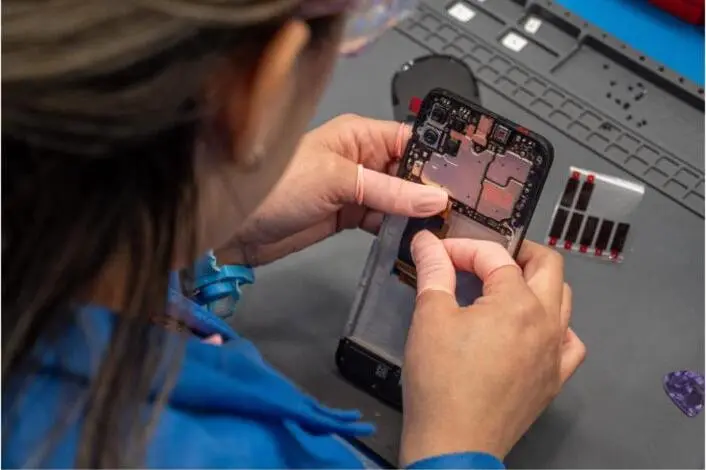
The company supports OEMs, telecom providers and government agencies that need RMA management software features translated into daily operations at scale.
Premier Logitech’s operational capabilities align directly with the software features described above.
- ASC authorization for multiple OEM brands, which enables L1–L4 depot repair under manufacturer-approved processes
- Repair capacity that supports high weekly volumes across multiple facilities with nearshore operations
- Real-time tracking and lifecycle analytics through an integrated TMS and inventory management platform
- Certified compliance posture covering TAA, TAPA, ISO 9001/14001, NIST, CMMC and SOC 2
- CAGE Code that supports pre-vetted eligibility for federal government programs
- Rapid exchange and advance replacement programs with managed replacement inventory pools
- Certified refurbishment, grading and secondary market remarketing that increase asset recovery value
- Secure data destruction and responsible recycling under ISO and NIST standards
Clients can engage Premier Logitech for full lifecycle program management or select individual services such as RMA management, depot repair or transportation on a standalone basis. This modular model allows operations teams to consolidate fragmented vendor relationships while keeping existing program structures intact.
Frequently Asked Questions
What separates core and advanced RMA management software features?
Core features cover return authorization, status tracking, label generation and simple disposition routing. Advanced features add a warranty rules engine, multi-tier depot repair workflow management, ERP and CRM integration, automated disposition logic, compliance audit trails and analytics dashboards. Enterprise programs that manage high return volumes or operate under regulatory requirements rely on advanced capabilities to maintain accuracy and control at scale.
How does a warranty rules engine reduce RMA processing costs?
A warranty rules engine applies eligibility criteria automatically at the point of authorization. It prevents out-of-warranty claims from entering the repair queue without manual review, enforces product-specific service terms and routes in-warranty units to the correct repair tier. The result is faster claim resolution and higher first-pass accuracy on eligibility decisions.
What compliance requirements affect RMA programs that serve government agencies?
Government RMA programs typically require TAA-compliant handling, NIST-aligned data security procedures for devices that contain sensitive data, CMMC compliance for defense contractor supply chains and complete chain-of-custody documentation. Software must generate tamper-evident audit trails automatically and support secure data destruction certification. Service providers also maintain relevant certifications and, for federal programs, a CAGE Code for pre-vetted eligibility.
Why does depot repair level matter for RMA software configuration?
Each depot repair level from L1 through L4 involves different technician qualifications, tooling, parts authorization and OEM compliance requirements. RMA software routes units to the correct tier based on fault code, warranty status and ASC authorization scope. Routing a unit to an unauthorized repair tier can void OEM warranty coverage and create compliance exposure. Proper configuration ensures every unit receives the appropriate level of service under the correct authorization.
Can one RMA platform manage both in-warranty and out-of-warranty claims?
Enterprise RMA platforms handle both claim types within a single workflow by applying the warranty rules engine at intake. In-warranty claims route under OEM-approved processes with associated cost recovery. Out-of-warranty claims route to fee-based repair, refurbishment or disposition programs. Keeping both claim types in one system maintains a complete asset history and simplifies reporting across the full return population.
Next Steps for Enterprise RMA Programs
RMA management software features deliver full value when a partner brings the repair capacity, OEM authorizations, compliance posture and integration infrastructure needed for large programs. Premier Logitech combines these capabilities under a single lifecycle partnership that spans return authorization, depot repair, refurbishment, remarketing and certified recycling.
