Key Takeaways
- Generic e-commerce return tools miss requirements for regulated, high-volume environments, which creates compliance gaps and lost asset value.
- Enterprise RMA platforms must support serialized tracking, bi-directional ERP integration, depot repair workflows and compliance reporting aligned to TAA, NIST, CMMC, SOC 2 and ISO.
- Service scope shapes outcomes because single-source lifecycle partners remove fragmented vendor relationships and reduce handoff risk across repair, refurbishment and recycling.
- Technical depth, scalability, real-time visibility and network coverage support national programs without regional gaps or manual reconciliation costs.
- Premier Logitech consolidates all seven evaluation dimensions into one engagement; map your vendor footprint with a lifecycle expert to identify consolidation opportunities.
RMA Management Software for Regulated, High-Volume Programs
RMA management software authorizes, tracks and resolves product returns across the full repair and disposition lifecycle. High-volume, regulated operations require capabilities that extend far beyond issuing return labels.
Core capabilities required for enterprise and government environments include:
- Serialized asset tracking with immutable audit trails
- Bi-directional ERP, WMS and CRM integration via versioned APIs
- Depot repair workflow management from intake through disposition
- Compliance reporting aligned to TAA, NIST, CMMC, SOC 2 and ISO frameworks
- Warranty entitlement validation at device scan
- Real-time inventory visibility by SKU, condition and location
- Automated credit, replacement and customer notification triggers
1. Service Scope Across the Full Asset Lifecycle
Service scope defines whether the platform operates as software only or as part of an end-to-end service program. A software-only vendor forces separate relationships for depot repair, refurbishment, recycling and fulfillment, which increases handoff risk and dilutes accountability.
Premier Logitech operates as a single-source lifecycle partner. Services span sourcing, configuration, warehousing, depot repair, refurbishment, grading, asset recovery and responsible recycling. Clients can engage the full program or select individual services on a modular basis, while still working through one operational point of contact.
2. Technical Capabilities for Integrated RMA Operations
Technical capabilities determine how efficiently an RMA platform executes at scale. At high volumes, RMA platforms must automate data exchange with upstream systems to eliminate manual reconciliation. Without API integration, high-volume depot repair operations incur hidden costs including headcount time spent on status chasing, process latency from manual reconciliation and decisions based on stale data.
Required technical capabilities for enterprise RMA management software include:
- Real-time status endpoints queryable by serial number, RMA or order ID
- New RMA creation directly from ERP, CRM or warranty systems via API trigger
- Serialized repair tracking with structured JSON data exchange and bi-directional ERP connectivity
- Barcode scanning integrated with WMS to identify items, pull order history and update inventory status
- Work-in-progress integration to create and manage repair work orders with job tracking and cost management
- Component-level return handling for kit items without requiring full product return
- Electronic signature controls for RMA cancellations and credit note approvals in regulated environments
Premier Logitech’s platform connects to customer ERP and lifecycle systems of record, supports serialized tracking across all repair levels and maintains live inventory visibility across its facilities and nearshore operations.
3. Quality and Compliance in Regulated Environments
Quality and compliance determine whether an RMA platform can support regulated programs without audit risk. Compliance is the dimension where generic tools fail most visibly. U.S. government and regulated manufacturing programs require adherence to multiple frameworks, each governing data security, sourcing or process documentation.
The following frameworks apply:
- TAA (Trade Agreements Act): Requires trade-compliant product sourcing and documentation for federal procurement. Premier Logitech maintains TAA-compliant sourcing across its procurement and reverse logistics operations.
- NIST SP 800-171: CMMC Level 2 requires all 110 controls in NIST SP 800-171 for contractors handling Controlled Unclassified Information. RMA platforms used in defense supply chains must preserve audit evidence aligned to these controls.
- CMMC 2.0: Requirements are contractually enforced through the DFARS Final Rule effective November 2025, which means defense contractors must produce formal compliance documentation. This documentation includes a System Security Plan, a Plan of Action and Milestones and a Supplier Performance Risk System score submitted to the DoD portal.
- SOC 2: SOC 2 control families do not map neatly onto NIST SP 800-171 control numbers, so platforms not built for CMMC may generate incorrect evidence formats or miss required controls.
- ISO 9001/14001: Quality and environmental management standards that govern repair process consistency and responsible recycling.
ASC authorization adds a warranty compliance layer. OEM warranty obligations require repairs performed by authorized service centers using approved parts and documented processes. Premier Logitech holds ASC authorizations for more than 20 OEM brands, which satisfies warranty requirements that non-authorized vendors cannot meet.
4. Scalability and Flexibility for Changing Programs
Scalability and flexibility determine whether an RMA program can grow and adapt without constant renegotiation. Enterprise programs change over time, so a platform and service partner must support modular entry points and full-program engagement under a stable commercial framework.
Premier Logitech supports modular entry and full-program models. A carrier or OEM can engage for RMA management and depot repair alone, then expand into configuration, fulfillment or transportation as program needs grow. Nearshore operations in Mexico provide cost-competitive capacity for labor-intensive refurbishment and grading work, which reduces per-unit processing costs while preserving compliance and quality oversight.
Top-performing warranty operations achieve high automation rates and high claims approval rates, compared with low automation and lower approval rates in manual or legacy operations. Scalability depends on automation depth, not headcount.
5. Visibility and Data for Continuous Improvement
Visibility and data quality determine how effectively leaders manage RMA performance. Real-time visibility functions as an operational requirement, not a feature. A mature traceability program requires data standardization and interoperability across PLM, ERP, MES and QMS systems, with a single source of truth that automatically logs every action to create an immutable, timestamped audit trail.
Premier Logitech’s Transportation Management System provides real-time shipment tracking across its network of more than 120 North American LTL carriers. Lifecycle analytics surface repair yield, disposition rates and asset recovery value at the program level, which gives operations leaders the data needed for continuous improvement reviews and SLA reporting.
6. Network Coverage for National Return Programs
Network coverage determines whether a platform can serve a national program without regional gaps. Network depth also influences transit times, freight cost and the consistency of service levels.
Evaluation criteria include:
- Number and breadth of OEM ASC authorizations, which define which brands and product lines the network can support under warranty
- Carrier network coverage for inbound and outbound logistics, which affects transit reliability and cost
- Facility footprint relative to the buyer’s return origin geography, which shapes cycle times and freight spend
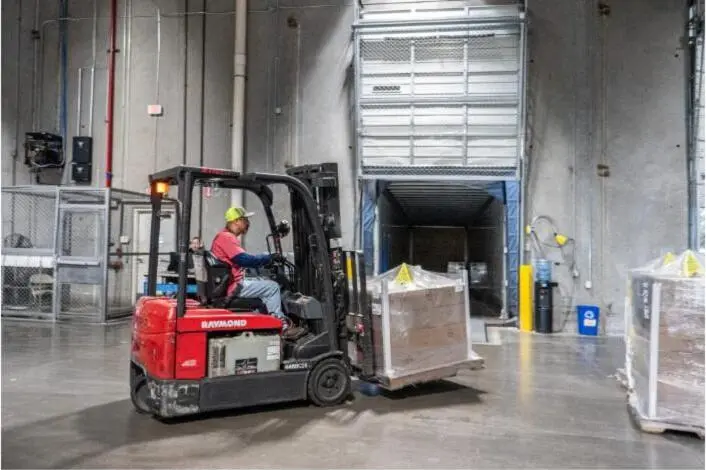
Premier Logitech operates through a network of vetted North American LTL carriers and uses DFW facilities near one of the country’s largest logistics hubs. This footprint supports inbound returns from across the continental United States while maintaining consistent service levels.
7. Total Cost and Value Across the Program
Total cost and value reflect how the seven dimensions translate into financial outcomes. Vendor consolidation is the primary lever for reducing total program cost because fragmented relationships across repair, fulfillment and recycling vendors create redundant overhead, inconsistent SLAs and limited negotiating leverage.
Labor represents a major component of total warranty claims processing cost, which highlights the economic value of streamlined, network-enabled repair and adjudication workflows. Consolidating those workflows under a single platform and service partner reduces coordination overhead and improves asset recovery rates through consistent grading and remarketing programs.
Premier Logitech’s asset recovery and remarketing programs recover value from refurbished inventory through secondary market channels, which reduces net return cost and extends product lifecycle value.
What Are the Three Types of RMA?
Enterprise RMA programs typically operate across three distinct return categories, each with different handling requirements.
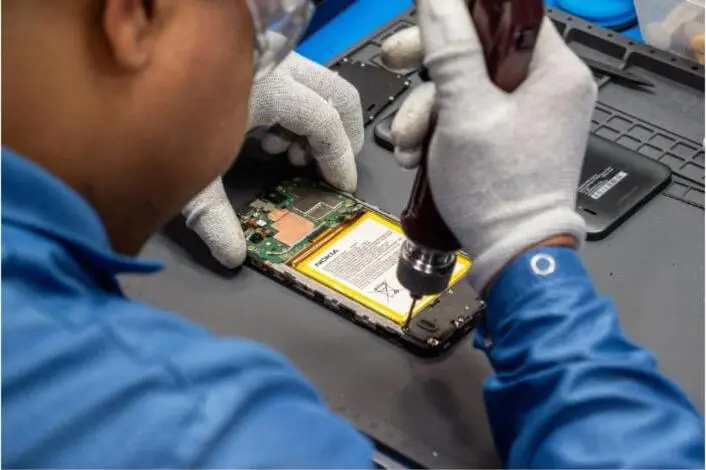
- Repair RMA: The defective unit is returned, repaired and returned to the customer or redeployed. This primary depot repair flow requires serialized tracking, work order management and warranty entitlement validation at intake.
- Replacement RMA: The defective unit is returned and a replacement unit is shipped, either cross-shipped or after receipt. Premier Logitech supports replacement programs for high-priority accounts.
- Credit RMA: The defective unit is returned and the customer receives a credit rather than a repaired or replacement unit. This flow requires accounts receivable integration, automated credit note generation and audit trail documentation for regulated environments.
High-volume programs often run all three types concurrently. The RMA management software must route each return type through the correct workflow automatically based on warranty status, product condition and customer entitlement rules.
RMA Management Software for Government
Government programs impose requirements that commercial RMA platforms rarely address. Public-sector evaluation focuses on security, sourcing, documentation and vendor eligibility.
Key criteria include:
- CAGE Code eligibility: Premier Logitech holds CAGE Code 4WAJ9, which identifies the company as a pre-vetted partner for U.S. federal government programs.
- TAA-compliant sourcing: All replacement parts and refurbished units used in government programs must meet Trade Agreements Act requirements. Premier Logitech maintains trade-compliant sourcing documentation across its supply chain.
- CMMC alignment: CMMC Level 1 covers 17 basic cybersecurity practices for contractors handling Federal Contract Information, while Level 2 requires the full NIST SP 800-171 control set described earlier. RMA platforms processing government device returns must preserve audit evidence aligned to the applicable level.
- Secure data destruction: Government device returns require documented, certified data destruction before refurbishment or disposition. Premier Logitech provides secure data wipe and destruction with compliance reporting.
- TAPA and SOC 2 certifications: Physical security and information security certifications required for handling sensitive government assets.
Implementation Roadmap for Large Organizations
A structured implementation reduces integration risk and accelerates time to operational value. The following checklist covers the critical phases.
- Discovery: Document current return volumes, vendor relationships, compliance requirements and ERP systems of record. Identify gaps between current capabilities and regulatory obligations.
- ERP integration: Map API endpoints for RMA creation, status queries and disposition triggers. Confirm bi-directional data flow with inventory, accounts receivable and warranty systems.
- Pilot scope: Select a single product line or return category to validate workflows, SLA performance and compliance reporting before full program rollout.
- SLA definition: Establish intake-to-disposition cycle time targets, first-pass yield benchmarks and escalation paths for out-of-SLA events.
- Compliance validation: Confirm audit trail completeness, data security controls and reporting outputs against applicable frameworks before processing regulated returns.
- Continuous improvement: Schedule regular program reviews using lifecycle analytics to track repair yield, asset recovery rates and vendor consolidation progress against baseline metrics.
Conclusion: Applying the Seven-Dimension RMA Framework
The seven-dimension framework of service scope, technical capabilities, quality and compliance, scalability, visibility, network coverage and total cost filters out generic tools and highlights platforms built for regulated, high-volume environments. Each dimension contributes a distinct requirement, from API depth and ASC authorization to TMS visibility and asset recovery economics.
Premier Logitech addresses all seven dimensions through a single engagement that combines end-to-end lifecycle services, multiple OEM ASC authorizations, TAA/NIST/CMMC/SOC 2/ISO compliance, nearshore scalability, real-time TMS visibility, a carrier network and consolidated asset recovery economics. Founded in 2007, the company has served OEMs, telecom carriers and government agencies managing complex technology asset lifecycles.
Frequently Asked Questions
What compliance certifications should RMA management software support for government programs?
Government programs in the United States typically require Trade Agreements Act compliance for sourcing, NIST SP 800-171 controls for handling Controlled Unclassified Information, CMMC alignment for defense contractors, SOC 2 for information security and ISO 9001 for quality management. Secure data destruction with documented compliance reporting is also required before any government device is refurbished or disposed of. A CAGE Code registration confirms that the service provider has been pre-vetted for federal engagement. Premier Logitech holds CAGE Code 4WAJ9 and maintains certifications across TAA, TAPA, ISO, NIST, CMMC and SOC 2 frameworks.
How does ASC authorization affect RMA management for OEM warranty programs?
OEM warranty obligations require that repairs be performed by authorized service centers using approved parts, documented processes and brand-defined quality checks. A repair performed outside an authorized network voids the warranty and creates liability for the operator. ASC authorization also means the service center has access to OEM diagnostic tools, firmware and parts that non-authorized vendors cannot obtain. Premier Logitech holds ASC authorizations for multiple OEM brands, covering a broad range of IT, telecom and consumer electronics product lines. This authorization network forms a structural barrier that competitors without equivalent authorizations cannot replicate.
What are the three types of RMA and how should enterprise software handle each?
The three types are repair RMA, replacement RMA and credit RMA. A repair RMA routes the defective unit through depot repair and returns it to the customer or redeployment pool. A replacement RMA ships a substitute unit, either cross-shipped or after receipt of the defective unit. A credit RMA processes the return and issues a credit to the customer’s account. Enterprise RMA management software must route each type automatically based on warranty entitlement, product condition and customer-specific rules. Manual routing at high volumes creates errors, delays and compliance gaps. The platform must also maintain separate audit trails for each return type to satisfy regulatory reporting requirements.
What integration depth is required for depot repair operations at scale?
High-volume depot repair requires bi-directional API connectivity with ERP, WMS, CRM and warranty systems. The platform must expose real-time status endpoints queryable by serial number, RMA or order ID, support new RMA creation triggered directly from upstream systems and maintain live inventory visibility by SKU, condition and location. Barcode scanning integrated with the WMS eliminates manual data entry at intake. Work-in-progress integration tracks repair job costs and labor. Accounts receivable integration automates credit note generation. Without these integrations, operations incur hidden costs in manual reconciliation, status chasing and decisions based on stale data.
Can a single vendor realistically manage the full RMA and lifecycle program for a large OEM or telecom carrier?
A single vendor can manage the full program when it holds the necessary ASC authorizations, compliance certifications, facility capacity and carrier network to support the program’s volume and geographic footprint. The operational advantage of single-vendor consolidation is accountability through one SLA, one point of contact and one data stream covering intake through disposition. Fragmented vendor relationships create handoff risk, inconsistent quality standards and limited visibility across the full return lifecycle. Premier Logitech operates as both a full-program lifecycle partner and a modular services provider, which allows organizations to consolidate incrementally or engage the complete platform from the outset.
