Key Takeaways for Multi-Site Technology Rollouts
- Technology deployment logistics services cover the full lifecycle from procurement and staging through white-glove installation, hypercare and reverse logistics for multi-site rollouts.
- A five-stage framework of procurement, site survey, staging and kitting, deployment execution and hypercare with reverse logistics reduces fragmentation and compliance risk compared with fragmented vendor engagements.
- Key capabilities to review include compliance certifications, ASC authorizations, real-time TMS visibility and scalable logistics infrastructure across North America.
- White-glove deployment combined with dedicated kitting facilities and a broad carrier network supports efficient, compliant installations while limiting operational disruption at each site.
- Explore how a single-source partner can reduce fragmentation risk across a deployment program and support secure asset recovery.
What Is Technology Deployment?
Technology deployment is the structured process of distributing, installing and activating hardware and software assets across an organization’s operating locations. It includes physical logistics, device configuration, site readiness and end-user enablement. In enterprise and government contexts, deployment also carries compliance obligations tied to data security, trade regulations and asset traceability.
What Are the 4 Stages of Technology Deployment?
Large-scale IT deployments are commonly organized into four sequential stages: planning and assessment, preparation and staging, deployment execution and post-deployment support. The planning stage defines milestones, identifies technical constraints and aligns stakeholders. Preparation covers device imaging, labeling, kitting and logistics coordination. Execution delivers and installs assets at each site. Post-deployment support addresses user onboarding, application migration and issue resolution. Full-lifecycle providers extend this four-stage model by separating procurement as a distinct first stage and splitting post-deployment into hypercare and reverse logistics, creating the five-stage framework detailed below.
The Five-Stage Technology Deployment Framework
Enterprise and government programs benefit from a five-stage framework that adds procurement and reverse logistics as discrete, managed phases. The five stages are procurement and sourcing, site survey and readiness, technology staging and kitting, white-glove deployment and hypercare with reverse logistics. Each stage carries specific compliance requirements, performance metrics and handoff criteria. Fragmenting these stages across multiple vendors introduces visibility gaps, accountability gaps and schedule risk.
Stage 1: Procurement and Sourcing
Procurement sets the compliance baseline for the entire program because hardware sourced outside trade-compliant channels creates downstream risk for government and regulated enterprise programs. To address this risk, Premier Logitech sources hardware under Trade Agreements Act (TAA) requirements and maintains TAPA-certified handling protocols. This single-source approach consolidates vendor relationships at the procurement stage, reducing supplier complexity while aggregating purchasing leverage. The combination of open-market and channel distribution capabilities supports both standard and expedited sourcing scenarios without compromising compliance documentation.
Stage 2: Site Survey and Readiness
Site surveys confirm network configuration requirements, cabling needs, access windows and SLA parameters before equipment ships. Skipping or compressing this phase is a leading cause of installation delays and rework. A thorough assessment combines management data with on-the-ground verification to identify discrepancies and prioritize replacements. Readiness documentation then feeds into staging instructions and field technician briefings, creating a traceable chain of custody from survey to installation.
Stage 3: Technology Staging and Kitting
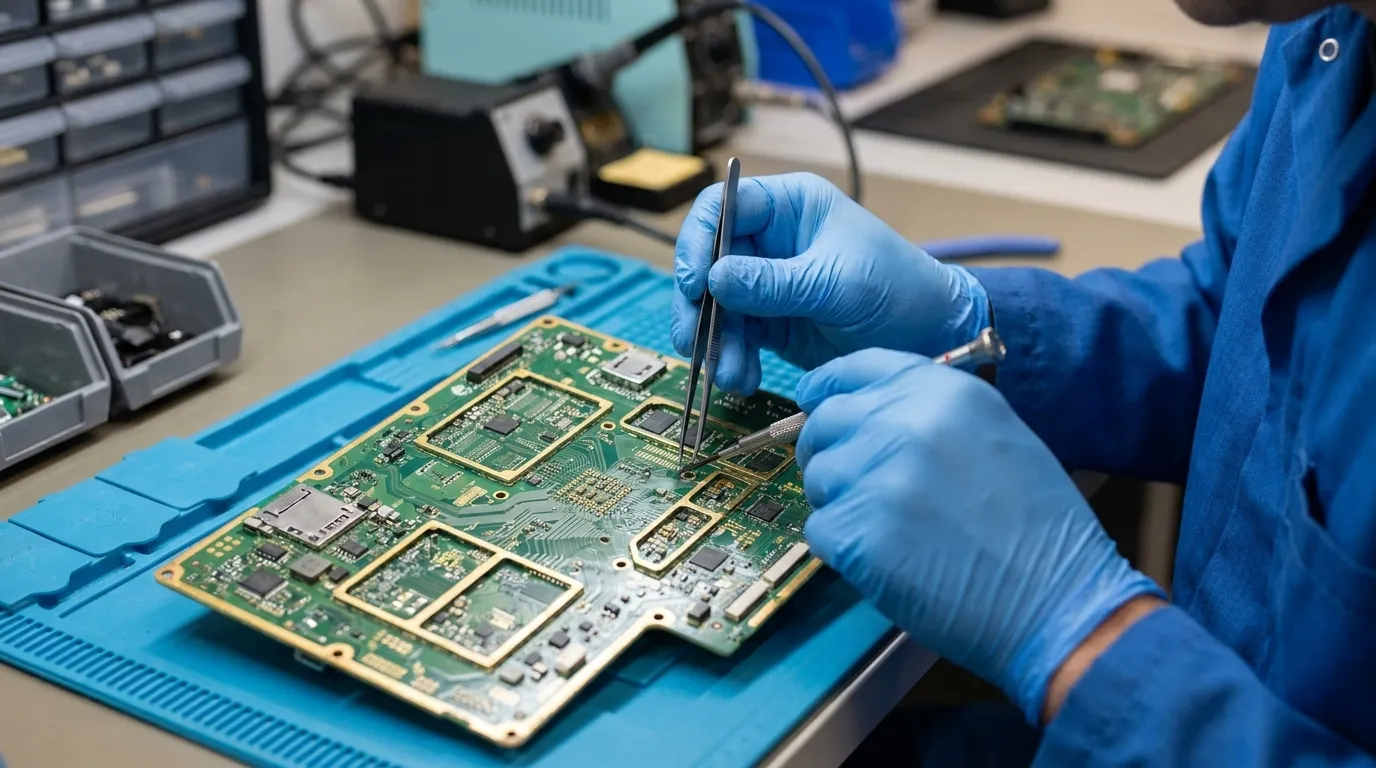
Staging and kitting transform individual components into deployment-ready units through activities that include device imaging, BIOS configuration, SIM and IMEI pairing, software installation, asset tagging, serialization and custom packaging. These technical activities require operational logistics infrastructure to receive new equipment, store it, prepare devices and ship to sites with full traceability. Premier Logitech operates dedicated kitting capacity across its DFW facilities to support high-volume programs with BOM-based kitting, multi-vendor product assembly and new hire kit fulfillment. Nearshore operations in Laredo and Nuevo Laredo extend capacity for labor-intensive configuration work while maintaining compliance oversight.
Stage 4: White-Glove Deployment Execution
White-glove deployment covers physical delivery, installation and validation at each site. Field technicians install equipment overnight or during off-hours to reduce disruption. Large rollouts execute in phases, with pilot sites first, then regional, then nationwide waves. Premier Logitech’s transportation network spans more than 120 vetted LTL carriers in North America and includes white-glove delivery, full and partial truckload services and intermodal logistics. The DFW hub provides geographic advantage for national distribution timelines. Installation scope covers workstations, peripherals, mobile devices, audiovisual systems and network switches across any operating system.
IT Hardware Rollout Logistics and Performance Metrics
IT hardware rollout logistics refers to the transportation, scheduling and field coordination layer that connects staging facilities to installation sites. Performance benchmarks for this phase include On-Time In-Full, Perfect Order rate, order accuracy, average days late and transportation cost per unit. Premier Logitech’s Transportation Management System provides real-time tracking and freight audit capabilities, giving operations and IT leaders visibility into shipment status across every site in a rollout program.
Stage 5: Hypercare and Reverse Logistics
Post-install hypercare activities include system and application migrations, business software configuration, data restoration, peripheral integration and user onboarding. Hypercare often falls outside vendor scope, which creates a gap between installation completion and operational readiness. Premier Logitech’s depot repair capabilities, authorized at L1 through L4 across more than 20 OEM brands, support rapid exchange and next-day replacement programs during the hypercare window. SOC 2 and NIST-aligned protocols govern data handling throughout this phase.
Reverse Logistics for Technology Deployment
Reverse logistics closes the deployment lifecycle by recovering, triaging and dispositioning retired assets. Services include RMA management, returns processing, sorting and grading, cosmetic refurbishment, secure data destruction and responsible recycling. Inventory accuracy and fill rate metrics apply directly to reverse logistics operations, where inaccurate asset records create compliance exposure and lost recovery value. Premier Logitech’s ISO 9001 and 14001, CMMC and NIST certifications govern its reverse logistics operations, supporting both enterprise and government disposition requirements. Asset recovery and remarketing programs extend product lifecycle value beyond the initial deployment cycle.
How to Evaluate and Select a Technology Deployment Partner
Service scope is the first filter. A partner should cover all five stages under a single contract with defined handoffs and a single point of accountability. Providers that cover only staging or only transportation force buyers to manage inter-vendor coordination, which reintroduces the fragmentation risk the engagement is meant to solve.
Technical capabilities matter at the device level because deployment quality depends on correct configuration and repair. ASC authorizations from OEM brands indicate that a provider meets manufacturer standards for configuration, repair and handling. Partners without ASC status cannot perform warranty-valid repairs, which limits their usefulness during hypercare and reverse logistics phases.
Compliance certifications are nonnegotiable for government and regulated enterprise programs. TAA compliance governs sourcing. TAPA, ISO, NIST, CMMC and SOC 2 certifications govern handling, data security and environmental disposition. A partner’s CAGE Code status signals pre-vetting for federal engagement.
Scalability and visibility determine whether a partner can grow with a program. Metrics such as average dwell time, truck turning and On-Time In-Full reveal whether a provider’s operations scale under volume pressure. Real-time TMS access and lifecycle analytics give operations leaders the data needed to manage program performance without relying on external status updates.
Network coverage affects both speed and cost. A partner with a DFW logistics hub, nearshore Mexico operations and more than 120 carrier relationships can serve national programs with geographic flexibility that single-facility providers cannot match.
Inline Decision Checklist: Avoiding Vendor Fragmentation, Visibility Gaps and Post-Deployment Issues
Operations and IT leaders should confirm that a technology deployment logistics partner can deliver end-to-end accountability across all five deployment stages. This checklist helps identify gaps in vendor capabilities before committing to a program structure.
- Coverage of procurement, staging, deployment, hypercare and reverse logistics under a single contract with defined handoffs
- Documented TAA compliance, TAPA certification and relevant ISO, NIST and CMMC credentials
- Active ASC authorizations from OEM brands included in the technology stack
- Real-time TMS visibility, freight audit tools and lifecycle performance reporting
- DFW-based hub operations with nearshore capacity and a broad North American carrier network
- Integrated reverse logistics with secure data destruction and documented environmental disposition
Frequently Asked Questions
What is the difference between technology deployment and IT asset management?
Technology deployment refers to the active process of distributing, installing and activating hardware and software at operating locations. IT asset management is the broader discipline of tracking, maintaining and managing technology assets across their full lifecycle, including procurement, deployment, maintenance and retirement. Deployment is one phase within a complete asset management program.
What compliance certifications should a technology deployment logistics provider hold?
The relevant certifications depend on the program environment. Government and defense programs typically require TAA-compliant sourcing, CMMC alignment and a CAGE Code for federal engagement. Enterprise programs handling sensitive data benefit from SOC 2 and NIST-aligned data handling protocols. Programs with environmental or quality requirements look for ISO 9001 and ISO 14001 certifications. TAPA certification applies to physical security of assets in transit and storage.
How does reverse logistics fit into a technology deployment program?
Reverse logistics is the final stage of the deployment lifecycle. It covers the collection, triage, repair, refurbishment and disposition of retired or replaced assets. Including reverse logistics in the original deployment contract ensures that asset recovery value is captured, data destruction is documented and e-waste is handled in compliance with applicable regulations. Treating reverse logistics as a separate engagement after deployment creates handoff delays and documentation gaps.
What metrics indicate strong performance from a technology deployment logistics provider?
Key performance indicators include On-Time In-Full rate, Perfect Order rate, order accuracy, average days late and inventory accuracy. For staging operations, kitting throughput and configuration error rates are relevant. For reverse logistics, triage cycle time, repair yield and asset recovery value are standard benchmarks. A provider with TMS-based reporting should be able to supply these metrics in near real time.
Can a single provider manage both forward deployment and reverse logistics for a multi-site program?
Single-source lifecycle partners can manage both directions of the hardware flow under one program structure. This approach removes the inter-vendor coordination burden, maintains a single chain of custody for compliance documentation and allows asset recovery data to inform future procurement decisions. Premier Logitech operates as both a single-source lifecycle partner and a modular services provider, depending on program scope.
Conclusion: Map the Deployment Flow and Engage a Lifecycle Partner
The five-stage technology deployment framework of procurement and sourcing, site survey and readiness, staging and kitting, white-glove deployment and hypercare with reverse logistics provides a complete operational map for large-scale multi-site rollouts. Managing these stages as isolated vendor engagements introduces fragmentation, compliance risk and visibility gaps that compound as program scale increases.
Premier Logitech operates as an end-to-end technology lifecycle partner, serving enterprises, OEMs, telecom providers and government agencies with ASC-authorized repair, the compliance certifications detailed earlier, DFW-based logistics infrastructure and nearshore Mexico capacity. The combination of certified compliance, geographic reach and unified accountability addresses the core risks that fragmented deployment programs create.
