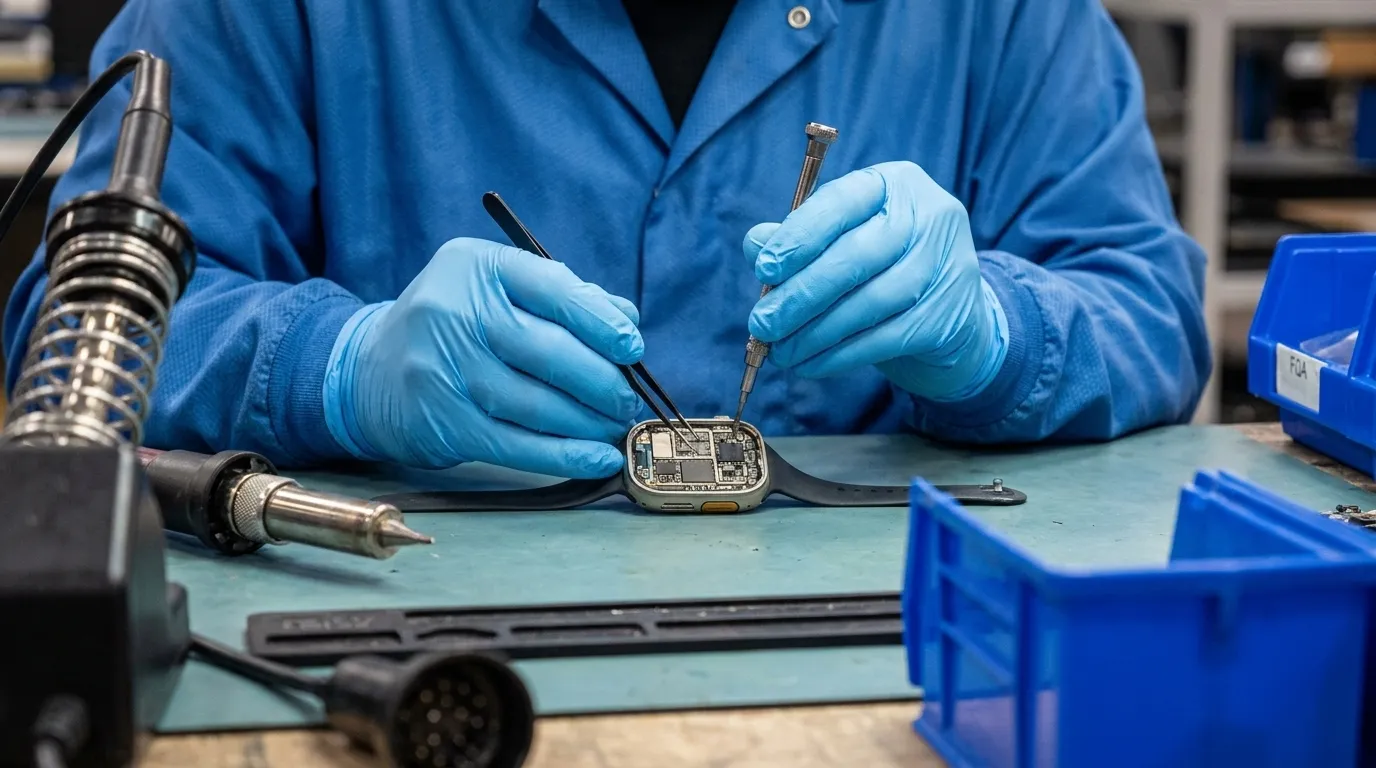
Key Takeaways for Wearables RMA Programs
- Wearables RMA depot repair follows a structured process with intake, triage, tiered repair, data sanitization and asset recovery to protect data and value.
- Effective triage and L1–L4 repair tiers prevent over- or under-repair, reduce repeat RMAs and align labor with device condition and resale potential.
- CTIA-aligned grading and standardized disposition decisions support accurate pricing, warranty tiering and responsible recycling that advances e-waste reduction goals.
- Authorized service center status and certifications such as NIST, SOC 2, CMMC and ISO 9001/14001 support warranty compliance, data security and enterprise or government eligibility.
- Premier Logitech delivers a compliant, scalable wearables RMA program with nearshore capacity and end-to-end lifecycle services; talk to a lifecycle expert to get started.
The Five-Step Wearables RMA Depot-Repair Workflow
-
Step 1: Intake and Authorization Controls
Uncontrolled intake creates chain-of-custody gaps that expose organizations to data-security liability and inventory shrinkage. Devices arriving without serialized tracking can disappear between pickup and triage, and fragmented reverse logistics networks amplify that risk at every handoff.
An enterprise-grade intake process assigns a unique RMA number to each unit at the point of origin, creating a tracking anchor that prevents inventory loss. That identifier pairs with IMEI or serial data to establish device identity, and both elements appear in chain-of-custody documentation before the device leaves the end user.
Serialized intake creates the chain-of-custody foundation that auditors require and shortens the highest-risk window for data exposure between decommissioning and verified sanitization.
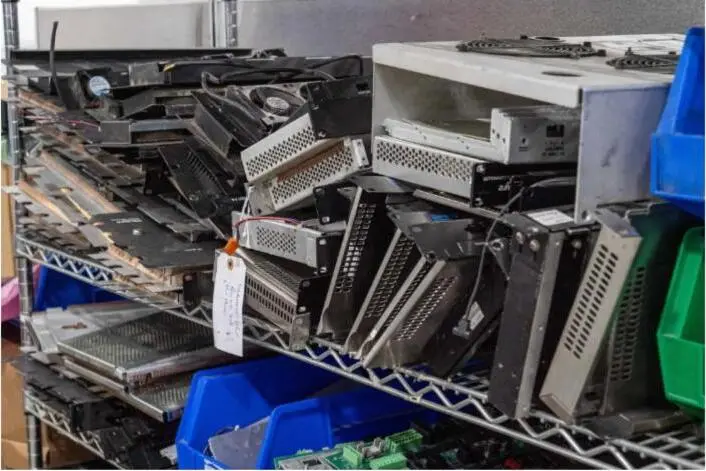
Reverse logistics turns returns into recovery. Retired IT assets are received, tagged, and triaged with secure chain-of-custody — the first step from end-of-life to resale, reuse, or responsible recycling. Step 2: Triage and Failure-Mode Diagnosis
Wearables exhibit failure patterns that differ from smartphones. Common hardware issues include via cracks, solder-joint fatigue, connector wear and antenna detuning caused by body proximity. Static bench tests miss intermittent faults that appear only under flex or motion.
Effective depot triage for wearables includes motion-condition testing, battery-health verification, RF validation and activation-lock checks. Returned wearables undergo testing under flex conditions because designs that pass rigid-PCB testing often fail under repeated bending.
Accurate triage routes each unit to the correct repair level and grading band, which prevents over-repair costs and under-repair returns that drive repeat RMAs and reduce satisfaction.
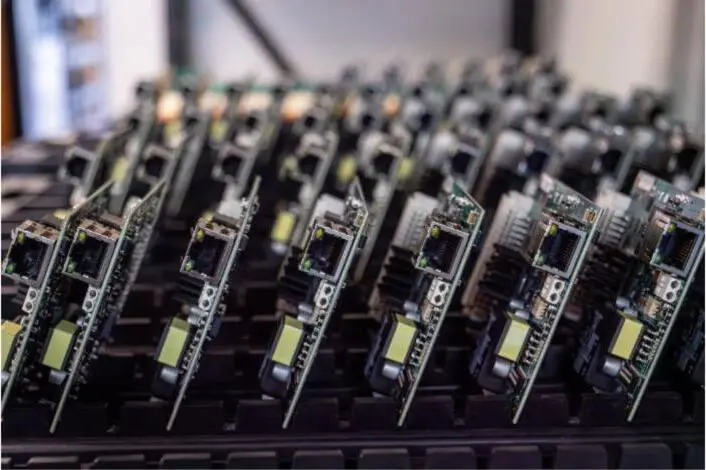
ASC-authorized depot repair at scale — 40,000+ repairs a week. L1–L4 diagnostics and functional testing on racks of boards keep enterprise and OEM electronics in service, not in landfill. Step 3: Repair Execution Across L1–L4 Tiers
Incorrect repair-tier assignment wastes labor on units that need only a software reset and returns cosmetically refurbished devices with unresolved board-level faults to the field. A structured L1–L4 repair matrix, aligned with CTIA grading, directs each unit to the appropriate intervention level, from software resets at L1 through board-level rework at L4.
A structured L1–L4 repair matrix routes each unit to the appropriate intervention, from software and cosmetic work at lower levels to component and board-level repair at higher levels, while using CTIA-aligned grading criteria to guide disposition decisions.
Tiered repair execution increases asset recovery value by matching labor investment to device condition and secondary-market potential instead of applying a uniform repair cost to every return.
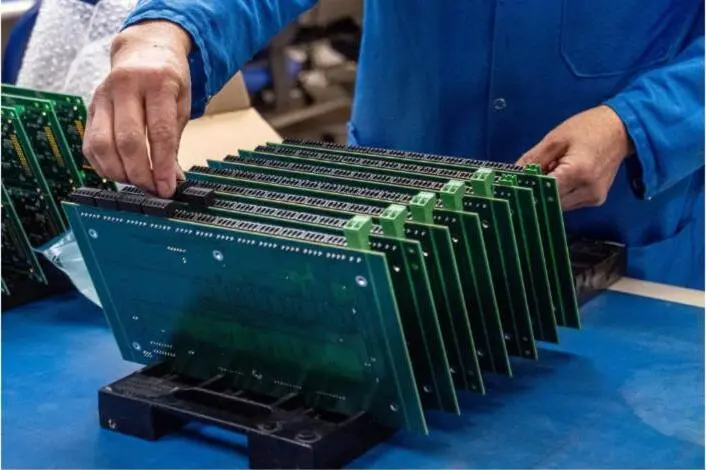
Contract manufacturing under one roof — PCBA, box-build, integration, flashing, and functional testing — with TAA-compliant sourcing and the traceability government and enterprise programs require. Step 4: Data Sanitization and Compliance Verification
Wearables collect biometric, location and health data that require strict handling. Returning a device to service without verified sanitization creates regulatory exposure under state breach-notification statutes and enterprise data-security policies.
Compliant depot repair applies NIST SP 800-88 sanitization methods, documents the process at the unit level and generates audit-ready records that satisfy SOC 2, CMMC and government contract requirements. That documentation builds on the serialized intake controls established in step 1.
NISTIR 8259r1 recommends that IoT product manufacturers perform foundational cybersecurity activities before products reach customers, and that expectation extends to refurbished units re-entering the supply chain.
Step 5: Grading, Disposition and Asset Recovery
Standardized grading keeps refurbished wearables correctly priced in secondary markets and reduces return rates and downstream warranty claims. CTIA Version 5.0 grading assigns cosmetic letter grades and functional numerical scores to each unit, which supports consistent pricing, warranty tiering and channel routing across A, B and C condition classes.
Standardized disposition decisions, including restock, refurbish, resell or recycle, increase recovery value per unit and support e-waste reduction goals aligned with R2V3 electronics reuse standards. These disposition decisions depend on accurate grading, and the CTIA framework provides the structure that keeps those decisions consistent and defensible.
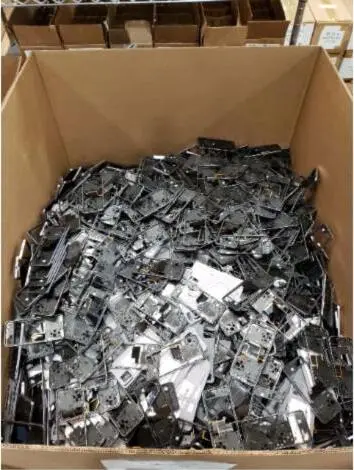
A reuse-first circular economy keeps material in play. What can't be refurbished is harvested for parts and responsibly recycled — reducing e-waste and landfill cost while closing the loop. CTIA Grading and Wearables Repair Levels L1–L4
The CTIA Wireless Device Grading Scales Version 5.0 standard provides a universal framework for wearable device grading that combines cosmetic letter grades A–E with functional levels 1–9. Section 4 of that standard defines a simplified cosmetic classification for wearables with specific surface zones.
- Surface AA: Main display and camera lenses
- Surface A: Bezel
- Surface B: Sides and back housing
- Surface C: Internal areas under covers
Cosmetic defect thresholds under the CTIA standard range from Level 1, which covers short, barely visible scratches, through Level 4, which covers longer scratches or any defect that catches a fingernail. Functional levels range from Level 1, which meets all OEM specifications, through Level 9, which indicates an inoperable unit routed to parts reclamation.
Depot repair tiers map to these grading outcomes and define the scope of work at each level.
- L1: Software and Cosmetic
Factory reset, OS update, screen cleaning and minor cosmetic buffing for functionally sound units with surface-level wear. - L2: Component Replacement
Battery swaps, button replacement and band or strap exchange that address common field-return drivers such as battery drain and pairing issues. - L3: Module-Level Repair
Display assembly replacement, charging port repair and sensor module swaps that require OEM-authorized parts and tooling. - L4: Board-Level Repair
PCB rework, BGA reballing, flex-circuit repair and solder-joint remediation that address copper-trace fatigue cracking, delamination and open circuits in high-flex zones common in wearable form factors.
The L3 and L4 repair tiers require OEM-authorized parts, tooling and process documentation, which makes authorized service center status essential for warranty-compliant depot operations.
Why Authorized Service Center Status Matters for Wearables
OEM warranty terms typically restrict covered repairs to authorized service centers. A depot that lacks ASC authorization cannot perform warranty-eligible repairs, which forces OEMs and carriers to route devices through multiple vendors and accept the compliance and cost risks that fragmentation creates.
Premier Logitech holds ASC authorizations with multiple OEM brands, which enables warranty-compliant repair across a broad wearables portfolio without secondary vendor handoffs. That authorization network pairs with certifications including TAA, NIST, CMMC, SOC 2 and ISO 9001/14001, the compliance stack that government and enterprise procurement teams require.
Data-security implications carry equal weight. Wearables processed outside a certified chain of custody create audit gaps that can trigger breach-notification obligations. Premier Logitech applies a program-level compliance framework that addresses those risks across the entire lifecycle.
ASC status and the related certification stack connect directly to shipping, cost and logistics decisions, because compliant handling must extend from pickup through final disposition. Talk to a lifecycle expert to review ASC authorization coverage for a specific wearables portfolio.
Cost Responsibility and Shipping Logistics for RMAs
Shipping cost responsibility in wearables RMA programs depends on the return reason and the program structure. For defective or incorrect products, businesses typically issue prepaid return labels and absorb inbound shipping costs. For non-fault returns, cost responsibility often shifts to the returning party under standard terms.
The fully loaded cost of a refurbished electronics return, which includes inbound shipping, inspection labor, value depreciation and lost fees, often reaches tens of dollars per unit before any refund. That cost profile makes rapid-exchange programs attractive because keeping the original sale in the channel avoids refund-related cash outflows and reduces per-unit processing cost through volume efficiency.
RMA authorization does not guarantee a refund because the final disposition, including repair, exchange, credit or refund, depends on device condition at intake and warranty eligibility. That uncertainty creates operational risk for programs that promise specific outcomes before triage. Premier Logitech uses rapid-exchange and next-day replacement structures that return devices to service quickly without committing to disposition outcomes before triage concludes.
Capacity, Scalability and Nearshore Depot Options
Seasonal return spikes and product launch cycles create volume surges that single-site depot operations struggle to absorb while maintaining turnaround performance. A multi-site footprint with nearshore capacity provides the surge buffer that high-volume wearables programs require.
Premier Logitech operates multiple facilities in the Dallas-Fort Worth area, near one of the world’s busiest air cargo hubs, and maintains additional nearshore operations in the Laredo and Nuevo Laredo corridor. That configuration supports cost-competitive labor for high-volume cosmetic and L1–L2 repair work while keeping compliance-sensitive L3–L4 and data-sanitization operations within U.S. jurisdiction.
Clients can engage Premier Logitech as a full-lifecycle partner or on a modular basis, selecting services such as depot repair, grading or transportation without a complete program restructure.
Asset Recovery and Refurbishment Grading for Wearables
Secondary-market value for wearables depends on consistent, documented grading. Grading systems that combine functional tests, battery performance, cosmetic condition, software status and device provenance checks create defensible condition classifications that support accurate pricing and reduce post-sale return rates.
Premier Logitech applies CTIA-aligned grading to assign each refurbished wearable to an A, B or C condition tier, then routes units to the appropriate secondary-market channel. Units that fail minimum safety or functional thresholds move to responsible recycling under R2V3 and ISO 14001 frameworks, which supports e-waste reduction commitments without creating downstream liability.

From wearables to smart appliances, consumer-electronics brands rely on Premier for returns, refurbishment, and product lifecycle management that recovers value and protects the brand. Cosmetic refurbishment, including buffing, housing replacement and band exchange, can move units from B or C cosmetic grades to A-grade resale eligibility when the functional score supports that upgrade, which increases per-unit recovery value without full board-level repair.
Frequently Asked Questions
What is the difference between L1 and L4 depot repair for wearables?
L1 repair covers software resets, OS updates and minor cosmetic work on units that remain functionally sound. L4 repair addresses board-level faults including PCB rework, BGA reballing and flex-circuit remediation. Intermediate tiers cover component and module replacement. Repair level assignment follows triage findings and CTIA functional grading, not a fixed cost schedule.
Who pays for RMA shipping on wearable devices?
Shipping cost responsibility depends on the reason for return and the program terms in place. Defective or warranty-covered returns typically use prepaid labels funded by the OEM or carrier. Non-fault returns commonly assign inbound shipping cost to the returning party. Hybrid models, such as prepaid labels offered in exchange for store credit rather than a cash refund, balance cost recovery with retention goals.
Does an RMA guarantee a refund?
An RMA authorization initiates the return and intake process and does not predetermine the disposition outcome. Refund, exchange, repair or credit decisions follow triage and condition assessment. Program terms, warranty eligibility and device grade at intake govern the final outcome.
What compliance certifications should a wearables depot repair partner hold?
Enterprise and government programs require the certification stack described in the ASC section above, including TAA for trade compliance, NIST SP 800-88 for data sanitization, SOC 2 for security controls, ISO 9001 for quality management and CMMC for federal contracts. R2V3 certification from Sustainable Electronics Recycling International covers downstream tracking and responsible recycling. A partner holding this full stack reduces the need to audit multiple vendors separately.
How does nearshore depot repair affect compliance for U.S. wearables programs?
Nearshore operations in Mexico can handle high-volume cosmetic refurbishment and L1–L2 repair in a cost-effective way. Compliance-sensitive work, including data sanitization, L3–L4 board repair and government-contract processing, remains within U.S. facilities to satisfy TAA and CMMC requirements. A partner with integrated U.S. and nearshore capacity allocates work by compliance tier rather than geography alone.
What wearable-specific failure modes should a depot repair program address?
Common wearable failure modes include solder-joint fatigue from cyclic flex stress, via cracking at connector and screw-mount locations, antenna detuning caused by body proximity, battery degradation and flex-circuit delamination from moisture and perspiration. Depot programs designed for smartphones often miss these failure modes because they rely on static bench tests. Wearables triage requires motion-condition testing, RF validation and battery-health verification to support accurate repair-level assignments.
Premier Logitech manages the full wearables RMA lifecycle, from serialized intake and CTIA-aligned triage through L1–L4 repair, data sanitization, grading and secondary-market disposition, under a single compliance-certified program. OEMs, telecom carriers and consumer-electronics brands that plan to consolidate fragmented repair networks and recover maximum asset value can engage Premier Logitech as an end-to-end partner or for targeted services. Talk to a lifecycle expert to scope a wearables RMA depot repair program.
