Last updated: July 31, 2026
Key Takeaways for EMS Inventory and Service Strategy
- EMS inventory management software selection shapes margins for large electronics manufacturers, with the market projected to grow from $2.7 billion in 2026 to $9.4 billion by 2036.
- Enterprise-grade platforms must deliver lot and serial traceability, multi-plant visibility, SMT kitting management, RoHS and REACH compliance documentation, and MES and PLM integration.
- Software alone cannot handle physical repairs, returns processing, or asset recovery, so authorized service partners protect margins in aftermarket operations.
- Multi-site operations require standardized KPI definitions and real-time visibility across plants to avoid fragmented data and enable meaningful cross-location comparisons.
- Premier Logitech complements any EMS inventory platform with ASC-authorized repair services, TAA/NIST/CMMC compliance and end-to-end lifecycle support, and leaders can talk to a lifecycle expert about building a complete software-plus-service model.
Core Requirements for EMS Inventory Platforms in Multi-Site Electronics Networks
Enterprise-grade EMS inventory platforms must address lot and serial traceability across multi-level BOMs, real-time multi-plant visibility, SMT kitting and feeder management, RoHS and REACH compliance documentation and bidirectional integration with MES and PLM systems. SaaS-based (cloud) deployment is expected to represent approximately 62% of the inventory management software market in 2026, which reflects the shift toward distributed access and faster implementation cycles over on-premise deployments.
Lot and Serial Traceability in Electronics Manufacturing
Forward and backward genealogy tracing is a nonnegotiable requirement for any platform that serves high-volume electronics production. Genealogy tracking automatically captures relationships between raw materials, work-in-process, subassemblies and finished goods to build a complete family tree for every unit produced.
Lot traceability links raw material lots to finished goods lots and supports quality investigations, recall readiness, yield analysis and supplier performance tracking. Strong ERP modules complete a forward and backward lot and serial trace quickly, which is critical when a recall requires identification of every affected unit across multiple plants and customer shipments.
Multi-level BOM structures in SMT and box-build operations require systems that maintain parent-child lot and serial relationships. When teams build subassemblies, systems must maintain parent-child lot and serial relationships so that recalls or quality issues cascade correctly through multi-level BOM structures. Platforms like WorkCell assign lot and serial numbers at receiving and track them through every assembly step to produce bidirectional genealogy records required for recalls, warranty claims and customer audits.
Key data captured at receiving forms the foundation of traceability. Effective lot traceability ERP captures supplier name, supplier lot or batch number, internal lot number, quantity, receipt date, expiration date, warehouse and bin location, quality status and inspection results at the receiving stage.
Multi-Plant Visibility Standards for Large Electronics Manufacturers
Manufacturers in 2026 demand real-time, transaction-level inventory visibility across raw materials, warehouse locations, job-allocated inventory, WIP and subassemblies. That level of visibility requires standardized KPI definitions before any platform rollout. Data standardization is the first and hardest challenge for multi-site visibility, because plants often define planned downtime, standard cycle times and downtime reason codes differently, which makes cross-plant comparisons meaningless without a uniform standard.
Platforms that address this challenge include 42Q Global Ops Live, which delivers a centralized dashboard that provides real-time cross-site visibility into KPIs across multiple electronics manufacturing plants through a single pane of glass, and enterprise platforms from SAP, Oracle and Microsoft Dynamics 365, which serve as leading options for large enterprises that require deep capability for complex, multi-site operations.
SMT Kitting and Feeder Management for High-Volume Lines
High-volume SMT lines need inventory platforms that connect BOM-linked kitting directly to feeder setup and revision control. Electronics and high-tech manufacturers require software that handles deep multi-level PCB BOMs, component-level lot and serial traceability and revision control under constant engineering change to support SMT and box-build operations.

Revision control protects throughput during engineering changes. WorkCell supports multi-level versioned BOMs with alternate part support and scrap percentages so engineering changes can be staged and released without disrupting active work orders, with updates that flow automatically into kitting, purchasing and production routing.
Component obsolescence risk connects directly to kitting management. Platforms that link open BOM lines to preferred and alternate suppliers, flag single-source risk and surface lead-time and supplier-performance data address component obsolescence and shortage exposure before it affects ship dates.
RoHS and REACH Compliance Embedded in Production
Compliance documentation must sit inside the production workflow, not be reconstructed at audit time. WorkCell captures supplier and lot data, inspection checkpoints and controlled work instructions during production to keep RoHS, REACH, IPC and related compliance documentation ready for auditors rather than reconstructed afterward.
Infor ERP supports RoHS and ISO compliance and audits through built-in lot and serial tracking across components and assemblies, rather than bolt-on solutions. Quality status integration plays an equally important role. Quality status integration allows material to be flagged as on hold, quarantined, released or rejected, and the system enforces these statuses during picking to prevent out-of-spec material from entering production.
MES and PLM Integration for Obsolescence and Change Control
A survey of more than 200 complex discrete manufacturers with annual revenue greater than $500 million found wide variation in PLM and MES integration maturity. Despite available technology, many manufacturers still rely on manual processes for engineering change impact analysis, which creates a significant gap between software capability and operational reality.
This gap explains why manufacturers now prioritize PLM and MES integration to achieve higher quality data and more timely information. Many teams also aim to support analytics and AI initiatives through improved product and production intelligence that spans design and execution.
These PLM and MES capabilities define the information layer for obsolescence and change control. The next requirement is a service layer that can act on those decisions in the physical world.
Why EMS Software Needs an Authorized Service Layer
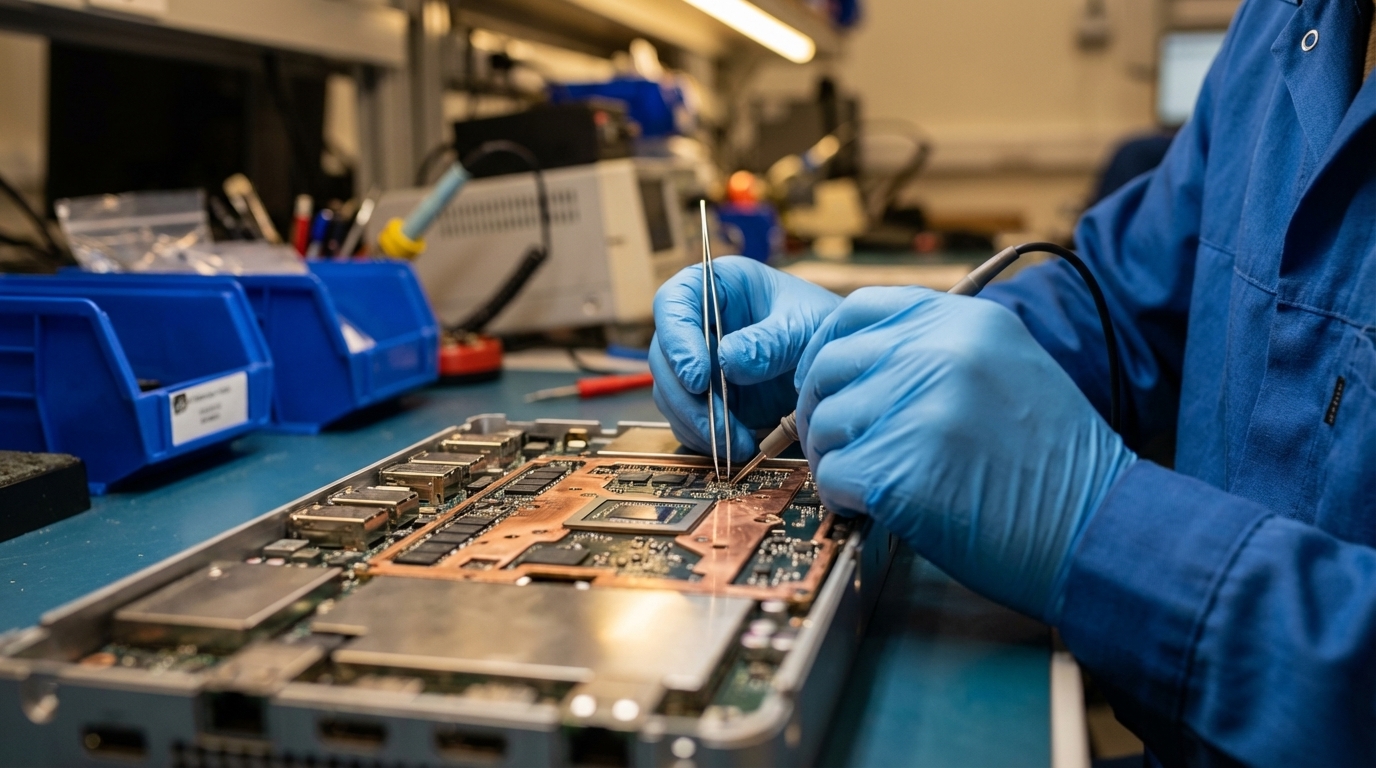
EMS inventory platforms deliver planning, visibility and compliance documentation, but they do not perform physical repairs, manage high-volume returns, execute rapid exchanges or recover asset value from end-of-life units. That gap is where operations and supply chain leaders lose margin.
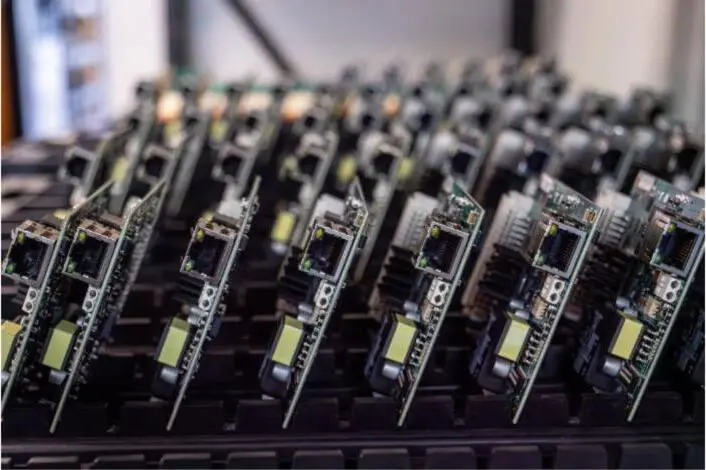
Aftermarket services including repair, parts and warranty carry operating margins around 2.5 times those of new-equipment sales, so the service layer protects high-margin profit pools rather than acting as a cost center.
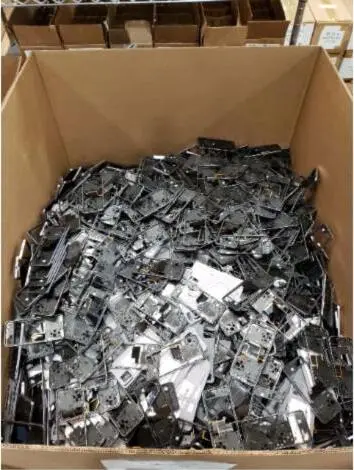
Premier Logitech, founded in 2007, operates as the authorized service layer that complements any software choice. The company holds more than 20 OEM Authorized Service Center designations and delivers L1 through L4 depot repair across three DFW facilities with nearshore operations in Laredo and Nuevo Laredo, Mexico. Supported compliance frameworks include TAA, NIST, CMMC, SOC 2, ISO 9001 and ISO 14001, which makes Premier Logitech a fit for both commercial OEMs and government programs.
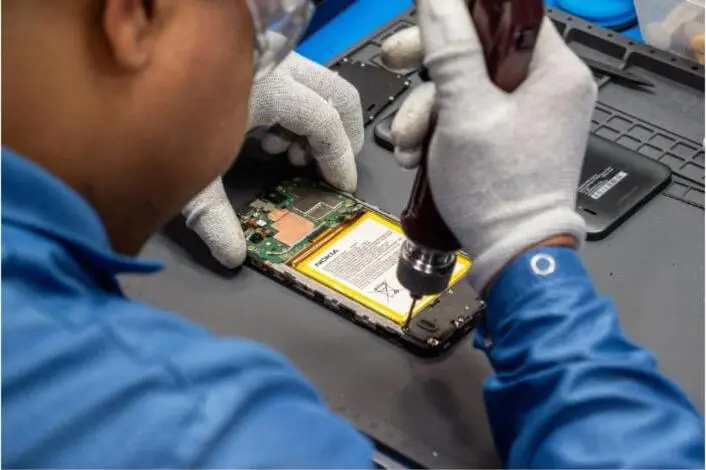
When evaluating a service partner to complement an EMS inventory platform, operations leaders should assess the following dimensions, starting with lifecycle scope and technical depth, then moving to compliance and operational fit.
- Service scope: The partner should cover the full lifecycle from sourcing and kitting through repair, refurbishment and recycling. Without full-lifecycle coverage, OEMs manage multiple vendors for workflows that function better as a single integrated stream.
- Technical capabilities: The partner should perform PCB-level repair, BGA rework, functional testing and cosmetic refurbishment. These capabilities determine whether the partner can handle the full range of failure modes without escalating units back to the OEM.
- Quality and compliance: The partner should hold certifications including TAA, NIST, CMMC and ISO frameworks. Gaps in compliance force OEMs to maintain parallel service networks for commercial and government programs, which increases overhead.
- Scalability: The partner should absorb volume spikes without new internal headcount. Scalable capacity protects service levels during recalls, product launches and seasonal peaks.
- Visibility: The partner should provide real-time inventory tracking and lifecycle analytics that feed back into the OEM software environment. Shared data closes the loop between planning systems and physical execution.
- Network coverage: The partner should operate facilities positioned for domestic and nearshore speed advantages. Strategic locations shorten transit times and reduce freight cost for returns and exchanges.
- Total cost: The partner should consolidate repair, fulfillment and recycling into one relationship that reduces vendor management overhead. Consolidation also simplifies governance and performance management.
Third-party logistics providers help manufacturers manage returns and reverse supply chains more efficiently through economies of scale, better carrier rates and specialized processes, which reduces profit drain from growing returns volumes. Premier Logitech extends that model with ASC-authorized repair depth that general 3PLs cannot match.
Frequently Asked Questions
The following questions address common evaluation criteria and implementation challenges that operations leaders face when selecting EMS inventory platforms and building the service layer around them.
What is EMS inventory management software and why do large electronics manufacturers need it?
EMS inventory management software is a platform that tracks components, subassemblies and finished goods across the full production cycle in electronics manufacturing service environments. Large manufacturers use it to maintain lot and serial traceability across multi-level BOMs, enforce RoHS and REACH compliance, manage SMT kitting and feeder setup and synchronize inventory data across multiple plants in real time. Without this software, operations teams rely on manual reconciliation that introduces errors, slows recalls and obscures true inventory positions across sites.
How does lot and serial traceability work in electronics manufacturing inventory systems?
Lot traceability assigns a shared identifier to a batch of components received from a supplier and carries that identifier through every production step, linking it to the finished goods that consumed those components. Serial traceability assigns a unique identifier to each individual unit and supports warranty tracking, repair history and anti-counterfeiting controls at the unit level. Strong systems apply both simultaneously, with lot numbers that capture batch-level lineage and shared risk attributes and serial numbers that define per-unit identity. When a quality issue surfaces, the system traces forward to identify every affected finished unit and backward to identify the source supplier lot, which supports surgical recalls without pulling unaffected inventory.
What should operations leaders look for when evaluating multi-plant inventory visibility platforms?
Operations leaders should prioritize platforms that deliver real-time, transaction-level data across all sites without manual consolidation. Key evaluation criteria include standardized KPI definitions enforced across plants, a single dashboard that aggregates yield, WIP and inventory status, integration with existing ERP and MES environments and support for multilingual interfaces and time-zone normalization for global footprints. A staged rollout that starts with a pilot cohort of two or three plants allows teams to establish a group-level data standard before scaling, which reduces the risk of cross-plant comparisons that fail because of inconsistent definitions.
How long does it typically take to implement an inventory management system for a large electronics manufacturer?
Implementation timelines vary by scope. A midmarket multi-plant deployment often requires several months, while a global enterprise rollout can take more than a year. Projects that exceed expected timelines usually suffer from scope creep rather than technical complexity. Common causes of delay include incomplete master-data cleansing before go-live, undefined safety stock policies and missing cutover plans. Manufacturers that invest in documented governance activities such as data cleanse, training and post-go-live stabilization tend to reach stable inventory record accuracy faster than those that skip these steps.
Why do large electronics OEMs need an authorized service partner in addition to inventory software?
Inventory software addresses the information layer, such as what to repair, where inventory sits and which units are affected by a recall. The physical execution layer requires different capabilities, including depot repair infrastructure, certified technicians, reverse logistics handling and asset recovery processes that software cannot perform. Large OEMs that manage warranty programs, government contracts or high return volumes benefit from a partner with ASC-authorized repair depth, certified compliance frameworks and the physical infrastructure to absorb volume at scale. An authorized service partner with L1 through L4 repair capability, multi-facility operations and certifications such as TAA, NIST and CMMC fills this execution gap and consolidates repair, fulfillment and recycling into a single vendor relationship.
How does component obsolescence management connect to EMS inventory software and PLM systems?
Component obsolescence management depends on lifecycle monitoring embedded in PLM workflows, with BOM scans that surface end-of-life risk before discontinued parts stop production. PLM systems serve as the central repository for part libraries, regulatory compliance data and supplier relationships, while ERP and MES systems execute the sourcing and production decisions that PLM informs. When a component approaches end-of-life, a mature integration allows engineering teams to evaluate form-fit-function alternatives, execute last-time buys and update BOMs with approved alternates without disrupting active work orders. OEMs without this integration typically discover obsolescence risk reactively after a supplier discontinues a part, which forces expensive spot-market purchases or production halts.
Next Steps for Operations and Supply Chain Leaders
Selecting an EMS inventory management platform is a necessary step, but building the authorized service layer that executes on what the software reveals separates manufacturers that recover margin from those that lose it to reverse logistics bottlenecks, compliance gaps and missed asset recovery. The service layer described above, which combines ASC-authorized repair depth with TAA, NIST and CMMC compliance and multi-facility scale, helps manufacturers convert aftermarket complexity into durable profit.
Talk to a lifecycle expert and build a defensible 2026 implementation roadmap.
