Key Takeaways
-
IT asset lifecycle services span procurement through secure disposal and support cost control, compliance and sustainability goals.
-
Organizations that manage the lifecycle proactively achieve lower total cost of ownership and avoid the 25–30% budget waste identified in Flexera’s 2025 report.
-
Outsourcing lifecycle management provides certified processes, OEM authorizations and scalable infrastructure that most companies cannot replicate in-house.
-
Security and compliance are critical, because improper data destruction can trigger multimillion-dollar penalties and liability remains with the data owner.
-
Premier Logitech delivers end-to-end lifecycle services with OEM Authorized Service Centers and compliance with TAA, NIST, CMMC and SOC 2.
Scope of Modern IT Asset Lifecycle Services
IT asset lifecycle services cover every activity involved in managing IT hardware such as laptops, servers, networking equipment and mobile devices throughout useful life. The discipline combines financial planning, physical logistics, technical operations and regulatory compliance.
The five core stages of the IT asset lifecycle are:
-
Planning and procurement — Assess organizational needs, standardize hardware models, align purchases with budget cycles and record warranty and contract details at acquisition.
-
Deployment and configuration — Tag assets, image devices, install software and stage equipment to approved configuration baselines before devices reach end users.
-
Operation and maintenance — Provide ongoing support, patching, repairs and performance monitoring to extend useful life and reduce unplanned downtime.
-
Upgrade and refresh — Plan replacements based on age, performance and end-of-support dates. Most laptops and endpoints follow a three-to-four-year refresh cycle, servers four to six years and networking equipment five to seven years.
-
Retirement and disposal — Execute secure data destruction, asset recovery, remarketing and responsible recycling with documented chain of custody.
IT asset lifecycle services differ from IT asset disposition. ITAD focuses on end-of-life disposition such as data destruction, remarketing and recycling. Lifecycle services manage the full continuum from initial procurement through final disposal.
The Business Case for Structured Lifecycle Services
Acquisition cost represents only part of total lifetime spend for IT equipment. Operation, maintenance and disposal drive the remaining cost. Organizations that manage the full lifecycle proactively achieve lower total cost of ownership than those that react to issues as they arise.
The primary benefits of structured lifecycle management include:
-
Cost reduction — Eliminate duplicate purchases, align maintenance schedules and recover residual asset value through remarketing.
-
Risk mitigation — Reduce security vulnerabilities from unmanaged or improperly retired devices.
-
Compliance assurance — Meet regulatory requirements for data destruction, chain of custody and audit documentation.
-
Sustainability — Support ESG goals through repair, refurbishment and responsible recycling.
Poor lifecycle management also contributes to the growing e-waste problem, as unstructured disposal programs often send retired devices to landfill instead of recycling.
In-House vs. Outsourced IT Asset Lifecycle Management
The choice between internal management and a specialized provider involves trade-offs across cost, capability, compliance and scalability.
In-house management provides direct operational control and avoids vendor dependency. For organizations with existing repair infrastructure and certified staff, internal programs can appear cost-effective on paper. The practical limitations remain significant. Building and maintaining repair facilities, attracting specialized technicians and achieving certifications such as ISO 9001, ISO 14001, NIST 800-88 alignment and R2v3 require sustained capital and management attention. This diversion pulls IT staff away from core business priorities and reduces overall productivity.
Outsourced lifecycle management converts fixed capital costs into variable operational costs. A qualified provider brings certified processes, OEM authorizations, scalable infrastructure and compliance expertise that most organizations cannot build internally. The trade-offs include transition effort, contract management overhead and the need for structured vendor oversight.
Most companies see savings from outsourcing compared with building the same function in-house, although actual results depend on scope, delivery model and clarity of requirements. The strongest case for outsourcing is access to certified capabilities that would take years and significant investment to build internally.
For example, Premier Logitech operates multiple OEM Authorized Service Centers and processes a high volume of repairs weekly across three DFW facilities with nearshore operations in Mexico. This infrastructure provides scale and specialization that many organizations cannot justify internally.
How to Choose an IT Asset Lifecycle Services Provider
Provider selection works best with a structured evaluation framework. A practical checklist of evaluation criteria includes:
-
Service scope — End-to-end versus modular services. A provider should manage the full lifecycle or integrate cleanly with internal functions at specific stages.
-
Technical capabilities — Repair levels L1–L4, refurbishment, configuration, kitting and imaging expertise. Depth here determines support for complex, high-volume programs.
-
Compliance and security certifications — For most organizations, providers should hold at minimum R2v3 or e-Stewards, NAID AAA for data destruction and ISO 27001 or SOC 2 Type II for regulated industries. TAA compliance is required for federal and government-adjacent work.
-
Scalability and flexibility — The provider must handle volume spikes, seasonal demand and custom program requirements without degrading service levels.
-
Visibility and reporting — Real-time asset tracking, lifecycle analytics and audit-ready documentation are essential for regulated environments.
-
Logistics network — Geographic coverage, nearshore options and transportation capacity influence cost and turnaround.
-
OEM authorizations — Authorized Service Center status enables warranty-compliant repairs that uncertified providers cannot perform.
Buyers should validate current certification status through third-party audit reports. Certifications are site-specific and can lapse. Verification must occur at the specific facility processing assets, not only at the vendor headquarters.
Premier Logitech aligns with these criteria through multiple OEM Authorized Service Centers, TAA compliance, NIST, CMMC and SOC 2 alignment and a DFW logistics hub supported by numerous LTL carriers and nearshore operations in Mexico.
Security and Compliance Considerations
Data security and regulatory compliance represent the highest-stakes aspects of lifecycle management for enterprise and government programs. Improperly retired devices remain an active compliance liability until data is verifiably destroyed.
Key compliance frameworks governing IT asset disposal in the United States include:
-
HIPAA — Requires documented destruction of all PHI-bearing media with Business Associate Agreements executed before any asset transfer.
-
GLBA Safeguards Rule — Mandates written disposal procedures, vendor oversight documentation and serialized certificates of destruction for financial institutions.
-
GDPR and CCPA/CPRA — Extend disposal obligations to personal data on retired devices with significant penalty exposure for noncompliance.
-
NIST 800-171 and CMMC — Apply to government contractors handling Controlled Unclassified Information, with media sanitization per NIST 800-88 as the baseline.
The SEC fined Morgan Stanley $35 million in 2022 for improper data center decommissioning, and combined penalties across multiple regulatory actions exceeded $155 million. The Morgan Stanley case confirmed that liability for data destruction remains with the organization that generated the data.
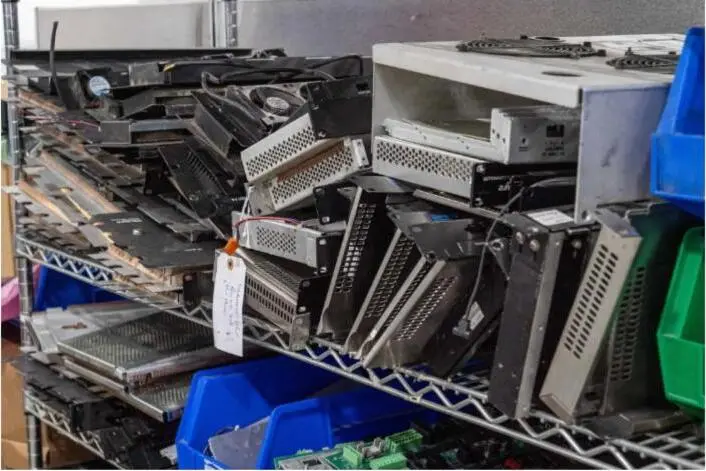
Chain-of-custody documentation and per-device certificates of destruction form the minimum evidentiary standard. Each device requires its own serialized certificate that includes serial number, destruction method, NIST 800-88 level, date, location and technician identification.
Premier Logitech holds CAGE Code 4WAJ9, which identifies the company as a pre-vetted, high-security partner for the U.S. federal government. The compliance framework spans TAA, ISO 9001/14001, NIST, CMMC and SOC 2.
Beyond compliance, lifecycle services also deliver measurable financial returns.
Cost Optimization and ROI
Lifecycle services reduce total cost of ownership through extended asset life, resale value recovery, fewer emergency purchases and avoidance of compliance penalties.
Reactive replacement cycles routinely cost more per unit than planned procurement, because deferred maintenance and delayed refresh decisions lead to higher emergency costs and shorter asset life.
Outsourcing lifecycle services converts capital-intensive fixed costs such as repair facilities, tooling, certification programs and specialized staff into variable operational costs that scale with demand. This model also removes the internal overhead of managing multiple vendors across repair, fulfillment and recycling and replaces fragmented relationships with a single point of accountability.
Asset remarketing at end of life recovers residual value that internal programs often miss. Residual value depreciates quickly in the secondary market, so timely disposition through established remarketing channels becomes a meaningful financial lever.
Trends in Sustainability and the Circular Economy
IT asset lifecycle services now sit at the center of many corporate sustainability strategies. Extending device lifecycles reduces demand for energy-intensive raw materials such as copper, cobalt and rare earth elements. The UN reported in 2024 that global e-waste levels had risen 82% since 2010 and were projected to rise another 32% by 2030.
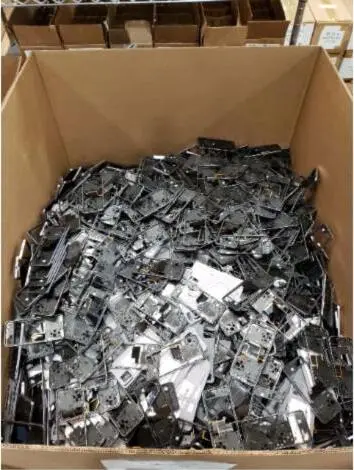
Measurable ESG outputs from a well-managed device lifecycle include tonnes of e-waste diverted from landfill, carbon savings from device reuse and refurbishment, the number of devices resold versus recycled and verified documentation of responsible disposal methods. These outputs feed directly into GRI, SASB, TCFD and SEC climate disclosure frameworks.
Premier Logitech supports ESG goals through e-waste reduction programs, responsible recycling and refurbishment operations that prioritize reuse before disposal. These sustainability trends align with the capabilities of a full-service lifecycle partner.
Premier Logitech Lifecycle Capabilities
Premier Logitech has delivered end-to-end technology lifecycle and reverse logistics services since 2007, serving large enterprises, OEMs, telecom providers and government agencies across the United States.
The company’s capabilities span every lifecycle stage:
-
Sourcing, procurement and vendor consolidation
-
Configuration, imaging, kitting and fulfillment
-
Depot repair at L1–L4 across multiple OEM Authorized Service Centers
-
Warehousing, asset management and real-time inventory tracking
-
Transportation management across numerous LTL carriers in North America
-
Reverse logistics, RMA management, refurbishment and grading
-
Secure data destruction and ITAD with full chain-of-custody documentation
-
Responsible recycling and e-waste reduction programs
Premier Logitech operates three DFW facilities with nearshore operations in Mexico, which supports competitive cost structures and geographic flexibility. The company holds CAGE Code 4WAJ9 for federal government work and maintains compliance with TAA, ISO 9001/14001, NIST, CMMC and SOC 2 frameworks.
Organizations can engage Premier Logitech as a single-source lifecycle partner or select individual service modules such as repair, configuration, fulfillment or transportation on a standalone basis.
Conclusion
IT asset lifecycle services support cost control, compliance and sustainability commitments. The full lifecycle from procurement planning through secure disposal forms a complex, security-sensitive discipline that requires certified processes, scalable infrastructure and regulatory expertise.
Many organizations lack the certifications, OEM authorizations and operational scale to manage the full lifecycle cost-effectively in-house. Partnering with a specialized provider delivers those capabilities as a variable-cost service with a single point of accountability across every stage.
The next step is to map current lifecycle processes, identify coverage or compliance gaps and evaluate whether existing capabilities meet the security, scalability and regulatory demands of the operating environment.
Frequently Asked Questions
What is the difference between IT asset lifecycle services and ITAD?
IT asset lifecycle services cover the full continuum of managing technology hardware from procurement planning and deployment through operation, maintenance, refresh and final disposal. IT asset disposition is a subset of lifecycle services focused on the end-of-life phase, including secure data destruction, asset remarketing and responsible recycling. An organization can engage an ITAD provider for disposal alone, while a lifecycle services partner manages every stage and provides continuity of data, documentation and accountability across the asset’s useful life. Premier Logitech delivers both as part of an integrated program or as standalone services.
What compliance certifications should an IT asset lifecycle services provider hold?
The minimum certification baseline for most enterprise programs includes R2v3 or e-Stewards for responsible recycling, NAID AAA for secure data destruction and ISO 9001 for quality management. Regulated industries add ISO 27001 or SOC 2 Type II for information security assurance. Government and defense-adjacent programs require NIST 800-88 alignment for media sanitization and CMMC compliance for handling Controlled Unclassified Information. TAA compliance is required for federal procurement. Organizations should verify certifications at the specific facility processing assets, because certifications are site-specific and can lapse. Premier Logitech maintains TAA, ISO 9001/14001, NIST, CMMC and SOC 2 compliance and holds CAGE Code 4WAJ9 for federal government work.
How does secure data destruction work, and what documentation should organizations expect?
Secure data destruction follows NIST SP 800-88 Rev. 2 and its defined sanitization levels described earlier. For magnetic hard drives, software-based overwriting or degaussing can achieve Purge-level sanitization. For solid-state drives, firmware-level commands such as NVMe Sanitize or cryptographic erase are required, because overwriting is unreliable on flash storage due to wear leveling. Physical shredding to a nominal 2mm particle size is the required method for high-sensitivity assets and for any drive that cannot be verified as fully sanitized. Every device should receive its own serialized certificate of destruction documenting the serial number, destruction method, NIST 800-88 level applied, date, location and technician identification. Batch certificates by count do not satisfy audit requirements under HIPAA, GLBA, SOX or CMMC.
What are the main cost drivers when comparing in-house and outsourced IT asset lifecycle management?
In-house lifecycle management carries capital costs for repair facilities, tooling and test equipment, plus ongoing costs for specialized staff, certification programs, training and compliance management. These costs remain largely fixed during low-demand periods. Outsourced lifecycle management converts those fixed costs into variable operational costs that scale with program volume. Additional cost drivers include the expense of reactive procurement, because unplanned replacements consistently cost more per unit than planned refresh cycles, and the cost of compliance failures, which can reach millions of dollars in regulatory penalties. Organizations should model total cost of ownership across the full lifecycle when comparing the two approaches.
Can organizations engage Premier Logitech for specific lifecycle stages rather than a full program?
Premier Logitech operates as both a single-source lifecycle partner and a modular services provider. Organizations can engage the company for end-to-end program management across sourcing, configuration, fulfillment, repair, reverse logistics and recycling or select individual services such as depot repair, kitting and fulfillment or transportation on a standalone basis. This flexibility allows organizations to supplement existing internal capabilities or vendor relationships at specific lifecycle stages without committing to a full program transition. Premier Logitech’s team collaborates with clients to define the right scope based on current gaps, volume requirements and compliance obligations.
