Key Takeaways
-
L1–L4 depot repair is a four-tier system that defines provider capabilities, from basic triage and parts replacement (L1) to advanced board-level remanufacturing (L4).
-
ASC/OEM authorization is required for L3 and L4 work on in-warranty devices, and unauthorized work risks voiding coverage.
-
Centralized depot repair supports enterprise programs by delivering all four repair tiers under one roof with consistent quality controls, compliance documentation and scalable capacity.
-
Compliance frameworks such as TAA, NIST, CMMC, SOC 2 and ISO 9001/14001 are essential criteria when selecting depot repair partners for enterprise and government programs.
-
Premier Logitech is an ASC-authorized L1–L4 depot repair provider with 20+ OEM authorizations and capacity for more than 40,000 weekly repairs.
How Many Levels Are In Mobile Repair? The L1–L4 Depot Repair Taxonomy
Mobile repair commonly uses four skill levels: L1 (basic repair and replacement), L2 (intermediate hardware and software repair), L3 (advanced motherboard and chip-level repair) and L4 (expert diagnostics, data recovery and complex board work). L4 is not a universal level, while L1–L3 are widely accepted across the industry.
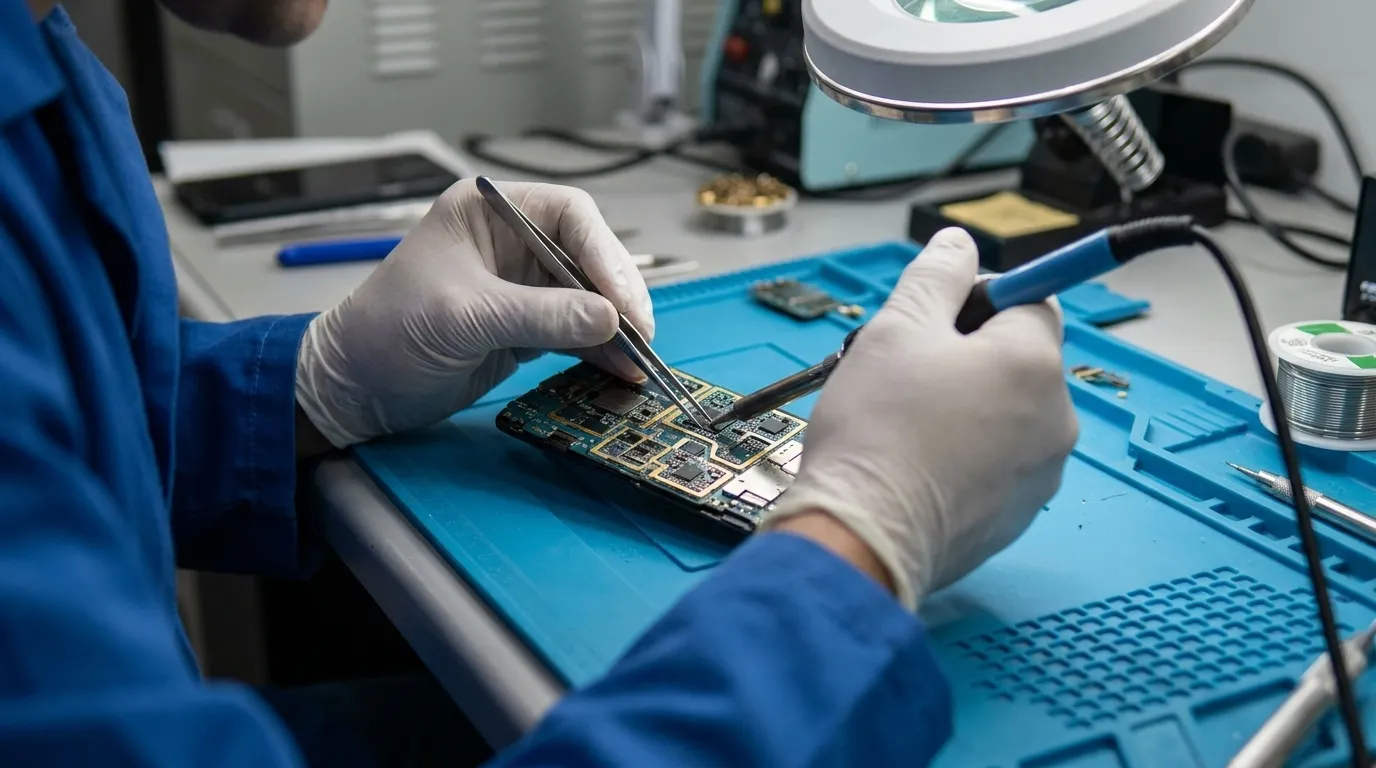
Each tier requires more specialized tooling and technician skill. L3 and L4 also require OEM authorization for warranty-compliant work. Board-level repair requires schematic reading, microscope use and micro-soldering skills that extend beyond the part-swap work at L1 and L2. An SMD hot air rework station marks the dividing line between screen-and-battery work and genuine board-level repair. L3 and L4 work also requires a microscope and BGA reballing stencils. The L3/L4 classification appears more often in specific training syllabi and country programs than as a global standard.
L1: Triage, Testing And Basic Parts Replacement
L1 covers functional testing, software reloads, battery and accessory replacement, cosmetic assessment and RMA intake. The most basic mobile device repairs are surface-level tasks such as cracked screens, stuck or missing buttons and scratched surfaces. These tasks involve part swaps rather than component-level board repair. Because L1 work stays at the surface level, it does not involve soldering or board-level repair. That scope also means most platforms do not require ASC authorization for L1, though OEM parts remain standard for in-warranty devices.
L2: Module-Level Repair And Sub-Assembly Replacement
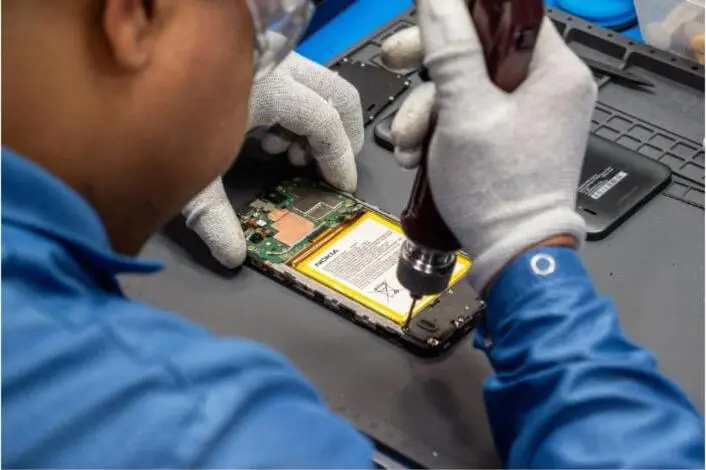
L2 covers screen and display assembly replacement, camera and speaker module swaps, charging port repair and sub-assembly replacement. Display repair requires separating the digitizer from the display using heat and pry tools, reapplying adhesive and testing touch calibration after replacement. L2 work does not include microsoldering or component-level diagnostics. Programs use OEM or OEM-equivalent modules for in-warranty devices. ASC authorization requirements at L2 vary by OEM, so multi-brand fleets need per-brand confirmation.
L3: Board-Level Repair And Microsoldering
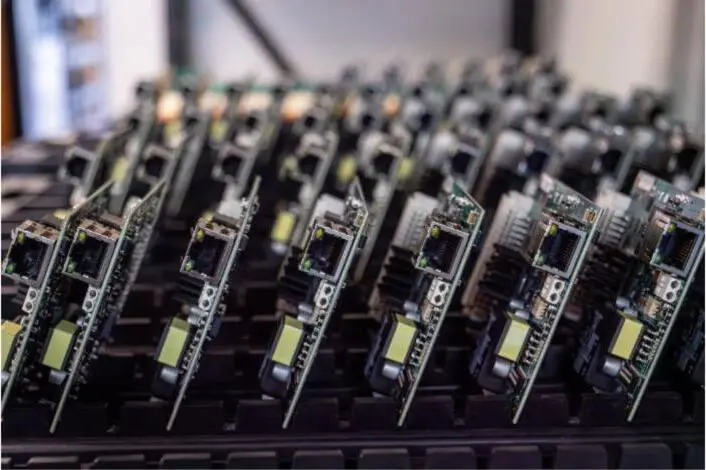
L3 covers board-level repair, microsoldering, BGA reballing, which includes cleaning chip pads, placing a stencil, applying solder paste and reflowing to create fresh solder balls, component-level diagnostics and PCB repair. Board-level repair includes replacing damaged chips such as charging ICs, power management ICs and Wi-Fi or Bluetooth modules, and repairing broken traces with jumper wires. L3 work on in-warranty devices requires ASC/OEM authorization. Unauthorized L3 work on covered units can void OEM coverage.
L4: Remanufacturing And Full Device Refurbishment
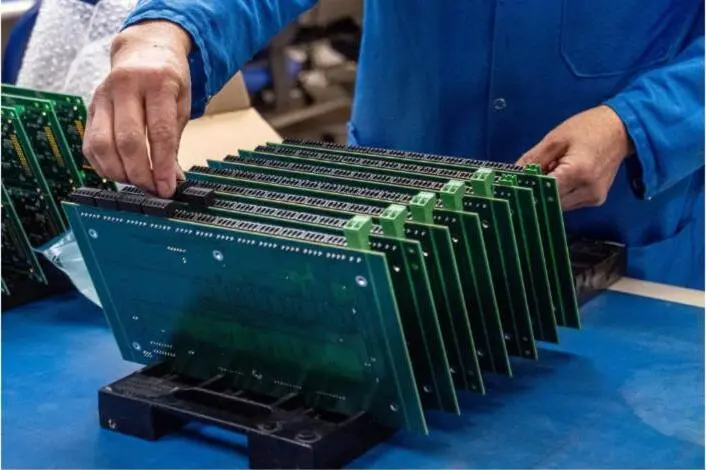
L4 covers advanced component-level and board-level repair, remanufacturing, full device refurbishment and regrading, and restoration to OEM or secondary-market specifications. Repair program infrastructure at the depot or OEM level, as defined in DoD MIL-HDBK-1390 Level of Repair Analysis, extends into lifecycle support including warranty repair, refurbishment of returned units, parts recovery and obsolescence management. L4 work on in-warranty devices requires ASC/OEM authorization. Parts sourcing at L4 can include OEM new, OEM harvested or certified refurbished components, based on program specifications.
Map fleet repair requirements to the appropriate L1–L4 tiers.
The Economics Of Each Repair Tier For Enterprise Fleets
Repair economics depend on device residual value, warranty status, fleet standardization, parts availability, device age and secondary-market demand. Programs evaluate these factors together rather than using a single fixed cost threshold.
L1 and L2 are lower-cost, high-volume interventions suited to in-warranty or recently deployed devices with surface-level faults where turnaround speed matters. Depot repair is normally priced per unit or per repair event, with pricing driven by product complexity, fault mix, volume, parts strategy and turnaround commitment. L1 and L2 faults such as screen swaps, battery replacements and module swaps require shorter bench time and lower parts cost. These tiers fit high-volume return flows.
L3 and L4 are higher-cost, higher-skill interventions that fit higher-value devices, out-of-warranty units with recoverable residual value or situations with constrained replacement supply. Chip-level board repair usually costs less than board replacement because only one component is replaced, while a board swap requires an entire new or donor board. When the fault is localized, such as a failed power management IC or a shorted charging circuit, L3 repair can recover the device at a fraction of replacement cost and keep it out of the e-waste stream.
L4 remanufacturing fits devices with enough residual value to justify full refurbishment and regrading for redeployment or secondary-market resale. Remanufacturing makes sense when the reman unit delivers near-new functionality at materially lower total cost than buying new. For enterprise fleets, L4 converts returned devices into recoverable assets instead of write-offs.
L3 and L4 capability separates a true depot repair partner from a provider that performs only L2 screen swaps. Without board-level capability, a depot returns devices as beyond economical repair that a qualified L3 or L4 partner would recover. Depot repair programs that include escalation to component-level repair and board-level BGA rework recover units many depots would return as unrepairable.
Premier Logitech provides L1–L4 depot repair for mobile devices, which helps enterprises recover more value from returned devices and reduce replacement spend through repair and refurbishment.
Review repair-versus-replacement economics for a specific fleet.
ASC/OEM Authorization And Its Role In L3 And L4 Depot Repair
An Authorized Service Center (ASC) is a repair facility that an OEM has formally authorized to perform warranty-compliant repairs on its devices. ASC status grants access to OEM parts, repair documentation, diagnostic tools and the right to perform in-warranty repairs without voiding device coverage.
Without ASC status, a provider cannot perform warranty-compliant L3 or L4 work on many OEM devices. Enterprises that route in-warranty devices to unauthorized providers risk voiding OEM coverage on those units, which converts a repairable warranty claim into an out-of-pocket replacement.
ASC authorization requirements vary by OEM brand. Enterprises managing multi-brand mobile fleets need to verify ASC status for each OEM before awarding L3 or L4 work. A provider with authorization for one brand may lack it for another, which creates gaps in warranty compliance across a mixed fleet.
Premier Logitech holds ASC status for more than 20 OEM brands, which enables warranty-compliant L1–L4 depot repair across a broad range of enterprise and government configurations. This authorization depth is a structural differentiator. Enterprises can verify each authorization directly with the OEM before awarding L3 or L4 work.
Confirm ASC coverage for specific OEM brands in a fleet.
Data Security And Compliance Across Depot Repair Intake And Disposition
Mobile device depot repair for enterprise and government programs requires documented compliance across the full intake-to-disposition workflow, from initial receipt through final disposition.
NIST SP 800-88 Rev. 2, published September 2025, requires organizations to establish a media sanitization program with a policy, media inventory, sensitivity categorization, method mapping, verification, serialized records and unbroken custody. For depot repair providers handling government or enterprise data-bearing devices, every unit must be tracked by serial number with a documented chain of custody. Sanitization must be verified and validated, with records that prove completion.
CMMC is a U.S. Department of Defense cybersecurity framework designed to protect Controlled Unclassified Information across the defense industrial base supply chain. CMMC readiness is required for organizations that want to stay eligible for DoD contracts involving CUI, Export Controlled Information or ITAR-regulated data. Depot repair providers handling defense-related devices must demonstrate compliance with CMMC control families including Access Control, Audit and Accountability, Incident Response and Media Protection.
ISO 14001:2026 requires organizations to control or influence how products and services are designed, manufactured, distributed, consumed and disposed of using a life cycle perspective. For depot repair and asset disposition operations, this standard guides e-waste reduction, responsible recycling and environmental management across repair and end-of-life workflows.
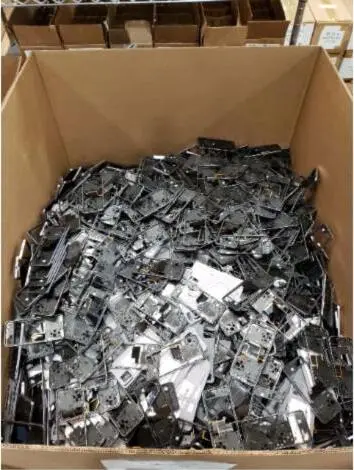
Premier Logitech supports TAA, TAPA, ISO 9001 and ISO 14001, NIST, CMMC and SOC 2 compliance, and holds CAGE Code 4WAJ9 for U.S. federal government work. Government and enterprise buyers require documented secure handling and disposition of devices containing sensitive data. Premier Logitech provides secure data destruction and compliance reporting as part of its depot repair disposition workflow.
Centralized Depot Repair Versus Local Repair For Enterprise Fleets
Centralized depot repair aligns with enterprise needs for scale, compliance and multi-tier capability, while local repair shops focus on consumer L1 and L2 work. Local operations typically lack enterprise-scale L3 and L4 capability, warranty compliance infrastructure and secure data handling.
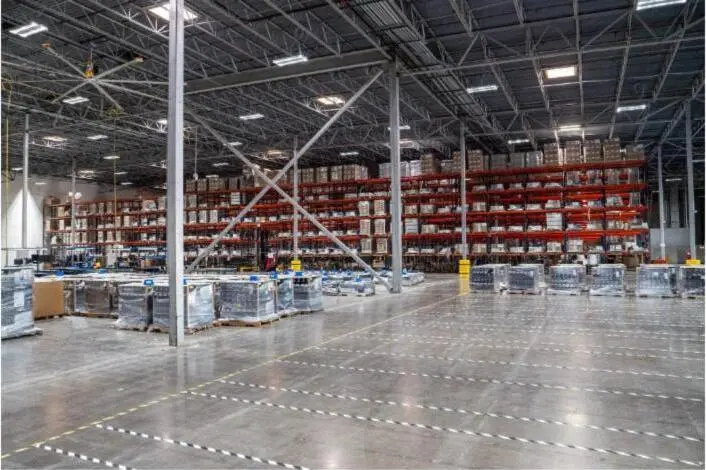
Mobile technicians at retail and local repair operations most often work at electronics stores, phone retailers or dedicated device repair businesses in brick-and-mortar stores or mall kiosks. These environments rarely provide controlled laboratory conditions, compliance infrastructure or ASC authorization for enterprise programs.
Centralized depot repair delivers several advantages at enterprise scale:
-
All four repair tiers, L1 through L4, performed under one roof with consistent quality controls
-
ASC/OEM authorization for warranty-compliant in-warranty repairs
-
Documented chain of custody, secure data handling and compliance reporting
-
Per-unit serial number tracking from intake through return
-
Scalable capacity for high-volume return flows
-
Parts sourcing, harvesting and reclamation integrated into the repair workflow
-
Program integration with RMA management, rapid exchange and fulfillment
Premier Logitech operates three DFW facilities with nearshore operations in Mexico (Laredo and Nuevo Laredo). This footprint provides a centralized depot model with scalable capacity and geographic positioning that supports enterprise and government mobile fleet programs across the United States.
How L1–L4 Depot Repair Supports Rapid-Exchange And Warranty Programs
Enterprise mobile fleet programs use L1–L4 depot repair as the operational backbone for rapid-exchange, next-day replacement and warranty claim workflows. Tier classification determines routing for returned devices and influences turnaround speed.
L1 and L2 devices with surface-level faults, software issues or module-level failures route to fast-turn repair queues. These high-volume, shorter-cycle repairs support in-warranty claim processing and rapid exchange programs where end-user downtime is the primary concern. Turnaround time is the total elapsed time from fault report to full restoration of service, including diagnosis, parts sourcing, physical repair and final testing. Advance exchange addresses the downtime gap by shipping a working replacement from buffer stock once a claim is approved, so downtime aligns with courier transit time instead of repair queue time.
L3 and L4 devices with board-level faults, component failures or full-refurbishment needs route to higher-skill queues with longer cycle times. These complex repairs recover higher-value devices for redeployment or secondary-market resale.
A single partner capable of all four tiers removes the vendor fragmentation that occurs when enterprises use separate providers for L1 or L2 and L3 or L4 work. Fragmented relationships create handoff delays, inconsistent quality controls and gaps in compliance documentation. Premier Logitech provides rapid exchange and next-day replacement programs, RMA management, in-warranty and out-of-warranty claim support and end-user repair, consolidating the full repair and exchange workflow under one contract.
Vendor Evaluation Checklist: Questions For An L1–L4 Depot Repair Partner
Enterprise procurement teams evaluating depot repair vendors can use the following questions before awarding L3 or L4 work or in-warranty repair programs:
-
Which repair tiers, L1 through L4, does the provider perform in-house, and which tiers are outsourced?
-
Which OEM brands does the provider hold ASC authorization for, and can that authorization be documented?
-
How does the provider handle in-warranty versus out-of-warranty devices, and what are the claim support workflows?
-
What compliance frameworks does the provider support, such as TAA, NIST, CMMC, SOC 2 or ISO 9001/14001?
-
How does the provider manage data security and chain of custody during intake, repair and disposition?
-
What is the provider’s repair capacity, and how does it scale for high-volume programs or peak return events?
-
How does the provider handle parts sourcing, harvesting and reclamation across repair tiers?
-
Does the provider offer rapid-exchange and next-day replacement programs integrated with depot repair?
-
How does the provider report on first-pass yield, turnaround and asset recovery metrics?
-
Can the provider consolidate repair, fulfillment and recycling under one contract?
Premier Logitech meets these criteria, including the authorization depth and capacity described earlier in this guide.
Compare Premier Logitech capabilities with program requirements.
Frequently Asked Questions
What Is L1–L4 Depot Repair For Mobile Devices?
L1–L4 depot repair for mobile devices is a four-tier classification system for centralized repair operations. Level 1 covers basic triage, functional testing, software reloads and parts replacement. Level 2 covers module-level repair including screen assemblies, cameras and speakers. Level 3 covers board-level repair, microsoldering, BGA reballing and component-level diagnostics. Level 4 covers remanufacturing, full device refurbishment and restoration to OEM or secondary-market specifications. This taxonomy defines provider capabilities and influences eligibility for in-warranty and government work.
How Many Levels Are In Mobile Repair?
Mobile repair commonly uses four levels, referred to as L1 through L4. Each tier requires more specialized tooling and technician skill. L3 and L4 also require OEM authorization for in-warranty work.
What Is The Difference Between L2 And L3 Mobile Repair?
L2 is module-level replacement for screens, batteries, cameras, speakers and sub-assemblies. The technician removes a failed module and installs a replacement without opening the logic board. L3 is board-level repair that requires microsoldering, BGA reballing, component-level diagnostics and PCB repair. L3 technicians diagnose and replace individual ICs such as power management chips, charging ICs and baseband chips directly on the logic board using microscopes, hot air rework stations and schematic software. L3 typically requires ASC/OEM authorization for in-warranty devices.
When Is L4 Depot Repair Worth It Versus Device Replacement?
L4 depot repair is typically justified when a device has enough residual value to support full refurbishment and regrading for redeployment or secondary-market resale. Key factors include device residual value, warranty status, fleet standardization, parts availability, device age and secondary-market demand. For higher-value devices with recoverable faults, L4 remanufacturing can deliver near-new functionality at materially lower total cost than replacement. For older devices with limited residual value or catastrophic board damage, replacement may offer better economics.
Why Does ASC/OEM Authorization Matter For L3 And L4 Repair?
Without ASC status, a provider cannot perform warranty-compliant L3 or L4 work on many OEM devices. Routing in-warranty devices to an unauthorized provider risks voiding OEM coverage and turning a repairable warranty claim into an out-of-pocket replacement. ASC authorization grants access to OEM parts, repair documentation, diagnostic tools and the right to perform in-warranty repairs without voiding coverage. Enterprises should verify ASC status for each OEM brand in a fleet before awarding L3 or L4 work.
What Compliance Frameworks Should A Depot Repair Partner Support?
Enterprise and government depot repair programs require alignment with several frameworks. The Trade Agreements Act, implemented in FAR Subpart 25.4, governs sourcing of products for covered government contracts and restricts acquisitions to U.S.-made or designated country end products while waiving the Buy American statute for eligible products. NIST SP 800-88 Rev. 2 governs media sanitization, requiring documented chain of custody, sensitivity-based method selection, verification and serialized records. CMMC covers cybersecurity for DoD contracts involving Controlled Unclassified Information and addresses access control, audit accountability, incident response and media protection. SOC 2 provides independent assurance of controls at a service organization related to security, availability, processing integrity, confidentiality or privacy. ISO 9001 governs quality management systems. ISO 14001 governs environmental management, including responsible recycling and asset disposition. Each framework addresses a distinct risk area, and enterprise buyers benefit from documented conformity instead of self-declaration alone.
How Does Centralized Depot Repair Compare To Local Repair Shops For Enterprise Fleets?
Local repair shops typically handle L1 and L2 consumer repairs in retail or kiosk environments without controlled laboratory conditions, compliance infrastructure or ASC authorization for enterprise programs. Centralized depot repair delivers all four repair tiers under one roof with consistent quality controls, documented chain of custody, per-unit serial number tracking, scalable capacity and integration with RMA management and rapid exchange. For enterprise mobile fleets that require consistent, compliant and scalable repair, centralized depot repair provides the appropriate model.
How Does L1–L4 Depot Repair Fit Into Rapid-Exchange And Warranty Programs?
Tier classification determines routing for returned devices within rapid-exchange and warranty programs. L1 and L2 devices route to fast-turn queues suited to high-volume in-warranty claim processing and rapid exchange programs. L3 and L4 devices route to higher-skill queues for board-level and component-level work on higher-value units. Advance exchange addresses downtime by shipping a replacement from buffer stock once a claim is approved. A single partner capable of all four tiers reduces vendor fragmentation, shortens handoffs and supports consistent compliance documentation across the full repair and exchange workflow.
Design a depot repair and rapid-exchange program for an enterprise mobile fleet.
Conclusion And Next Steps
The L1–L4 taxonomy defines what a depot repair provider can deliver. ASC/OEM authorization determines whether that work applies to in-warranty devices without affecting coverage. Compliance frameworks such as TAA, NIST, CMMC, SOC 2 and ISO 9001/14001 determine suitability for enterprise and government programs.
Enterprise procurement teams can take several practical steps:
-
Inventory the mobile fleet by OEM brand and warranty status
-
Identify required repair tiers based on fault profile and device value
-
Verify ASC authorization and compliance credentials for each shortlisted vendor by OEM brand
-
Map the returns flow to a centralized depot repair model with rapid-exchange integration
-
Evaluate whether a single partner can consolidate repair, fulfillment and recycling under one contract
Premier Logitech is an ASC-authorized L1–L4 depot repair provider with more than 20 OEM authorizations, capacity for over 40,000 weekly repairs, TAA, NIST, CMMC and SOC 2 alignment, CAGE Code 4WAJ9 for federal government work and end-to-end reverse logistics capabilities from intake through responsible recycling.
Discuss mobile device depot repair program requirements with Premier Logitech.
