Key Takeaways for Technology Returns Programs
- Returns management services handle the full lifecycle of returned products, from authorization through final disposition, to reduce costs and recover asset value.
- Technology and electronics programs gain the most from specialized providers with OEM authorizations, certified repair capabilities and formal compliance programs.
- Outsourcing returns management converts fixed overhead into scalable, variable-cost services while improving turnaround times, compliance and value recovery rates of 50% to 80%.
- Effective provider selection focuses on certifications, OEM authorizations, depot repair depth, scalability, technology visibility and documented experience with technology assets.
- Premier Logitech delivers end-to-end returns management for technology assets with OEM authorizations, multi-level depot repair and audited compliance; speak with a lifecycle expert to review program needs.
What Returns Management Covers in Practice
Returns management is the operational discipline that governs what happens to a product after a customer initiates a return, from authorization through final disposition. It covers return request handling, RMA issuance, receiving, inspection, grading, repair or refurbishment, restocking and reporting.
Returns management is the customer-facing slice of the broader reverse logistics discipline, running from return request through receipt, inspection, disposition and refund. Reverse logistics is the wider supply chain function that also covers recalls, repairs, warranty units, excess stock and end-of-life disposal. The two disciplines work in concert but serve different scopes.
Returns management can be handled in-house, by a third-party logistics provider or through a specialized reverse logistics partner. The right model depends on return volume, product complexity and internal bandwidth. Technology-intensive programs benefit most from specialized providers with OEM authorizations and certified repair capabilities.
The Returns Management Process for Technology Assets
The returns management chain follows six stable steps across providers: authorize, ship, receive, inspect and grade, disposition and write-back and settle. Each step carries distinct operational and compliance implications for technology assets.
- Return Initiation and RMA: The customer submits a return request. A unique RMA number is generated, linking the return to the original order, warranty terms and disposition path. Capturing serial numbers, IMEI and reason codes at this stage prevents downstream delays.
- Receiving: The returned parcel arrives at the processing facility, is scanned and matched to the RMA record. Intake teams record any transit damage or signs of tampering.
- Inspection and Grading: Cosmetic grading and functional testing should be kept separate to provide an accurate view of the device. A device may look clean but have functional faults. A worn device may still hold strong resale value.
- Data Security: For electronics, data sanitization is a required step. NIST SP 800-88 guidance states that media sanitization renders access to target data infeasible. Providers need documented processes that go beyond factory resets.
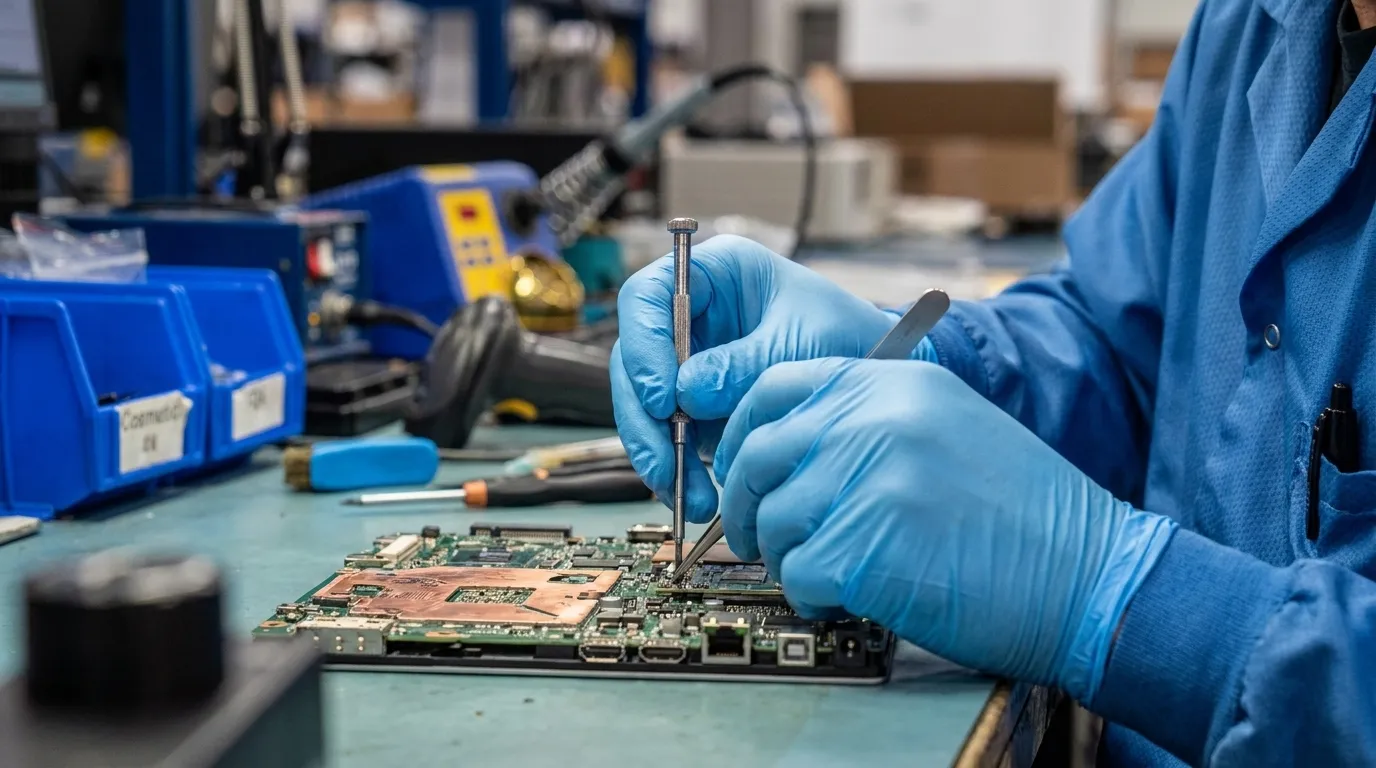
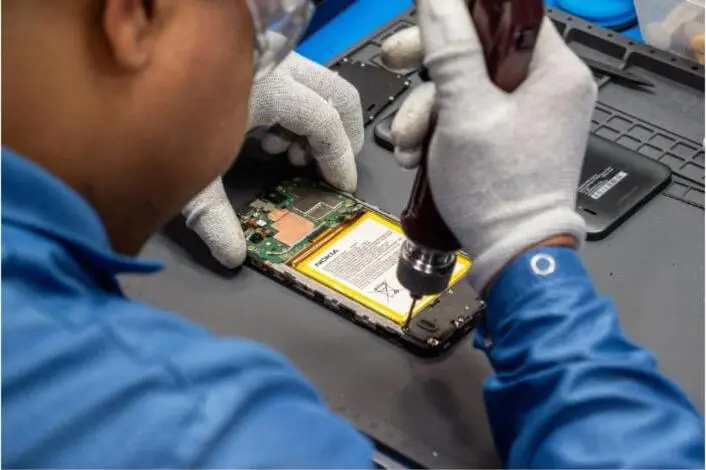
- Repair or Refurbishment: Items routed for repair undergo depot-level service. Refurbishment restores cosmetic and functional condition for secondary market resale.
- Restocking or Resale: Graded units move to the appropriate inventory channel. Typical paths include primary stock, certified refurbished and secondary market.
- Final Disposition: Disposition paths include restock as new, refurbish or repackage, return to vendor, liquidate or donate and dispose. The disposition decision determines the return’s recovered value.
Core Services Included in Returns Management
A mature returns management service follows a defined sequence covering return initiation, authorization, shipping and carrier coordination, receiving and inspection, grading, restocking or refurbishment, disposal or recycling, refunds and exchanges and reporting and analytics. Core service components include:
- RMA management and return authorization
- Returns processing and receiving
- Depot repair at multiple service levels (Level 1 through Level 4)
- Sorting and condition grading
- Cosmetic refurbishment
- In-warranty and out-of-warranty claim support
- Rapid exchange and next-day replacement programs
- Parts reclamation and harvesting
- Secure data destruction
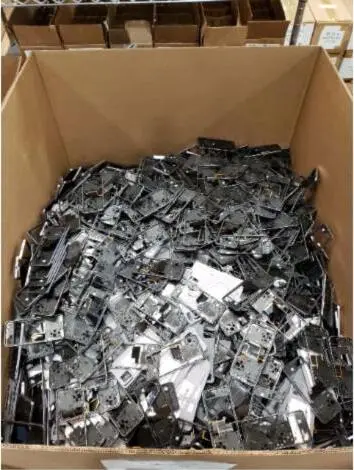
- Responsible recycling and e-waste reduction
- Compliance reporting
Technology-specific services extend this list to include firmware updates, IMEI validation, asset tagging and serialization. Some providers run end-to-end programs from sourcing through recycling. Others offer modular services that layer into an existing operation.
Benefits of Outsourcing Returns Management
Outsourcing returns management converts a fixed operational burden into a scalable, variable-cost service. These services deliver several connected advantages for technology programs.
- Cost Reduction: Processing a returned electronics item carries an estimated all-in cost of $35–$55 per unit, driven by two-way freight and refurbishment. A specialized partner with refined workflows and volume-based carrier rates reduces that burden.
- Value Recovery: Most returned electronics can be inspected, tested and resold as refurbished, recovering 50% to 80% of original value. Efficient disposition routing is the primary lever for maximizing that recovery.
- Faster Turnaround: Dedicated returns processing infrastructure and standardized workflows shorten cycle times from receipt to resale-ready status.
- Compliance and Data Security: Certified providers maintain documented processes for media sanitization, environmental disposal and regulatory reporting. This structure reduces liability for the enterprise.
- Scalability: Outsourced operations absorb volume spikes, including post-holiday surges, product recalls and warranty campaigns. This scalability requires no capital investment in internal capacity.
- Reduced E-Waste: Structured disposition routing diverts returned electronics from landfills through repair, refurbishment and certified recycling channels.
- Vendor Consolidation: A single partner handling repair, refurbishment, fulfillment and recycling replaces fragmented vendor relationships and simplifies reporting.
Types of Returns Management Providers for Tech Programs
Three distinct provider types serve the returns management market, and each plays a different role in technology asset programs.
Returns Management Software Platforms manage the customer-facing return request and authorization workflow. Platforms like Loop Returns provide self-service portals, rules-based RMA approval, carrier label generation and return-reason analytics. These platforms do not physically receive, inspect or process returned items. Software platforms work best when paired with a physical processing partner.
General 3PLs offer returns processing as one service among many. Providers like FedEx Supply Chain handle receiving, basic inspection and restocking for high-volume, lower-complexity return programs. Typical reverse logistics services from 3PLs include generating return labels, inspecting items, tracking shipments, refurbishment, recycling and compliant disposal. General 3PLs typically do not have the OEM authorizations, depot repair capabilities or compliance certifications needed for technology-intensive programs.
Specialized Reverse Logistics Providers combine physical processing with deep technology expertise. Premier Logitech operates in this category, offering end-to-end returns management services from RMA intake through depot repair, certified refurbishment, secure data destruction and responsible recycling. The company holds ASC authorizations for more than 20 OEM brands and maintains the compliance certifications detailed later in this guide. This combination of physical capability and compliance infrastructure defines the standard for enterprise and government programs that manage high-value technology assets.
Given these differences, a lifecycle expert can help evaluate which provider model fits specific program requirements.
How to Choose a Returns Management Provider for Technology Assets
Selecting a returns management partner requires structured evaluation across several dimensions, especially for technology assets where compliance and repair quality drive recovery value.
- Certifications: Look for ISO 9001 for quality management, ISO 14001 for environmental management, NIST SP 800-88 compliance for data destruction and SOC 2 for data security controls. For government programs, TAA compliance and CMMC certification serve as baseline requirements. The EPA recommends R2 or e-Stewards certification for electronics recyclers, as both standards require third-party audits, data destruction and responsible downstream management.
- OEM Authorizations: A provider with Authorized Service Center status for multiple OEMs can perform warranty-compliant repairs that generalist providers cannot. This status protects warranty coverage and ensures OEM-approved parts and processes.
- Repair Capabilities: Depot repair capacity across service levels, from L1 through L4, determines whether a provider can handle board-level repair as well as cosmetic refurbishment.
- Scalability: The provider must absorb volume spikes without degrading turnaround times. Facility capacity, staffing models and geographic reach all matter.
- Technology and Visibility: Real-time inventory tracking, RMA status reporting and return-reason analytics function as operational requirements for technology programs.
- Vendor Consolidation: A single point of contact across repair, refurbishment, fulfillment and recycling reduces coordination overhead and strengthens accountability.
- Industry Experience: Documented experience with technology assets, OEM programs and government contracts signals stronger capability than general 3PL volume alone.
Best Practices for Managing Technology Returns
Disciplined returns management reduces costs and improves recovery rates for technology assets. Effective programs follow several connected practices.
- Analyze Return Reasons: Only 48% of returned items get resold at full price. Structured return-reason data, captured at the RMA stage and reported by SKU, highlights product quality issues, fulfillment errors and description gaps that drive avoidable returns.
- Implement Clear Return Policies: Clear, published policies reduce support volume and exception handling at the authorization stage.
- Use Data Analytics: Return rate by SKU ranked descending is the most actionable metric to track first. A blended rate hides the small cluster of products that drive most volume.
- Prioritize Disposition Routing: The path a returned item takes, such as restock, refurbish, liquidate or recycle, determines recovered value. Routing decisions based on condition, market demand and compliance requirements outperform default write-off policies.
- Ensure Proper Packaging and Labeling: Standardized RMA labeling and packaging requirements reduce transit damage and intake errors.
- Measure Turnaround and Recovery Rate: Recovery rate, total recovered revenue from returned items divided by original retail value, is a direct measure of returns-process effectiveness. High-performing operations often target 60 percent or higher.
Technology and Electronics Returns: Key Considerations
Technology and electronics returns present requirements that extend beyond standard 3PL returns processing.
RMA and Warranty Compliance: OEM warranty terms govern which repairs are covered, which parts are approved and which service centers are authorized to perform work. Only providers with ASC status can perform warranty-compliant repairs, protecting the enterprise from warranty voidance and OEM relationship risk.
Data Security: Every returned device may contain sensitive data. NIST SP 800-88 defines three sanitization levels, Clear, Purge and Destroy, accepted across compliance frameworks including HIPAA, GLBA, PCI-DSS, FISMA and SOX. Documented, auditable data destruction functions as a compliance requirement.
Functional Testing: Identifying “no fault found” returns is important because many returns are due to setup issues or buyer confusion, and such products may still have strong resale value. Functional testing protocols that distinguish genuine defects from user error improve recovery rates.
Value Recovery: Electronics have an online return rate of 11 percent, and most returned electronics can be inspected, tested and resold as refurbished. As noted earlier, many programs recover 50 percent to 80 percent of original value through structured refurbishment. A provider with certified refurbishment and grading capabilities captures that value instead of routing units to liquidation.
Environmental Compliance: The EPA identifies R2 and e-Stewards as the two accredited certification standards for electronics recyclers. Both require third-party audits, data destruction and responsible downstream management. For government contracts, TAA compliance governs product sourcing and handling throughout the lifecycle.
Why Premier Logitech Is a Strong Returns Management Partner
Premier Logitech is an IT lifecycle and reverse logistics partner that provides scalable, secure and data-driven returns management services for enterprises, OEMs and government agencies. Programs reduce costs, recover asset value and meet demanding compliance requirements.
Founded in 2007, Premier Logitech operates across three DFW facilities with nearshore operations in Mexico. These locations support high-volume programs with repair capacity above 40,000 units per week. ASC authorizations for more than 20 OEM brands enable warranty-compliant depot repair at Levels 1 through 4. Compliance certifications include TAA, ISO 9001, ISO 14001, NIST, CMMC and SOC 2, supporting enterprise and government programs with strict security and regulatory needs.
Premier Logitech operates as both a single-source lifecycle partner and a modular services provider. Operations leaders can engage Premier Logitech for end-to-end program management, from sourcing through recycling. Alternatively, they can select individual services on a standalone basis, such as depot repair, certified refurbishment, secure data destruction or RMA management. A single point of contact replaces fragmented vendor relationships across repair, fulfillment and recycling.
Request a lifecycle review with Premier Logitech to discuss current and future returns management needs.
Conclusion: Returns Management as a Value-Recovery Engine
Returns management functions as a value-recovery engine that protects margins, supports compliance and extends product lifecycles. For operations leaders managing technology assets, data security obligations, OEM warranty requirements and significant refurbishment value make provider selection a strategic decision.
The right returns management services partner brings certified repair capabilities, OEM authorizations, documented compliance infrastructure and the operational scale to absorb volume without degrading turnaround. Premier Logitech delivers these capabilities under one program, with the flexibility to serve as a full lifecycle partner or a targeted service provider.
Schedule a conversation with a lifecycle expert at Premier Logitech to build a returns management program that recovers value, reduces risk and scales with demand.
Frequently Asked Questions
What Is the Difference Between Returns Management and Reverse Logistics?
Returns management is the operational process that handles a product from the moment a customer initiates a return through receipt, inspection, disposition and refund or replacement. It is the customer-facing, transaction-level function. Reverse logistics is the broader supply chain discipline that encompasses returns management and also covers product recalls, warranty unit flows, excess inventory, end-of-life disposal and the physical movement of goods backward through the supply chain. Both functions work in coordination, and returns management operates as a subset of reverse logistics.
What Certifications Should a Returns Management Provider Hold for Technology Assets?
For technology and electronics programs, relevant certifications include ISO 9001 for quality management systems, ISO 14001 for environmental management, NIST SP 800-88 compliance for media sanitization and data destruction, SOC 2 for data security controls and R2 or e-Stewards certification for responsible electronics recycling. Government and defense programs additionally require TAA compliance and CMMC certification. OEM Authorized Service Center status is a separate credential that confirms a provider is authorized to perform warranty-compliant repairs using approved parts and processes, which generalist 3PLs typically do not offer.
How Does Depot Repair Fit Into Returns Management Services?
Depot repair is the physical repair function within a returns management program. It covers multiple service levels. Level 1 addresses basic diagnostics and software resets. Levels 2 through 4 address component-level and board-level repair. For technology assets, depot repair determines whether a returned device can be restored to full functionality and resold as certified refurbished, which recovers more value than liquidation. A provider with multi-level depot repair capability and OEM authorization can handle the full spectrum of return conditions within a single program.
What Is an RMA and Why Does It Matter in Returns Management?
An RMA, or Return Merchandise Authorization, is the structured approval that initiates a return. It assigns a unique tracking number that links the returned item to the original order, warranty terms, reason for return and predetermined disposition path. Without an RMA, returns arrive without context, inspection errors increase and financial reconciliation becomes manual. A well-designed RMA process captures serial numbers, IMEI data and reason codes at the request stage, which enables faster intake, accurate grading and reliable reporting. For technology programs, RMA data also feeds compliance documentation and warranty claim processing.
When Should an Enterprise Outsource Returns Management Rather Than Handle It In-House?
Outsourcing becomes operationally and financially compelling when return volumes exceed internal processing capacity, when product complexity requires specialized capabilities such as depot repair or certified data destruction, or when compliance obligations require infrastructure that is costly to build and maintain internally. Enterprises that manage technology assets often face all three conditions. A specialized returns management partner provides certified repair capabilities, compliance infrastructure and scalable operations without the capital investment of building equivalent capacity in-house. Vendor consolidation, which replaces multiple repair, refurbishment and recycling vendors with a single partner, further reduces coordination costs and improves program visibility.
