Key Takeaways
- RMA workflow automation replaces manual return steps with rule-based digital triggers that validate entitlement, route returns and trigger refunds on standard cases.
- Successful automation requires deterministic policy logic first. Validation rules, routing criteria and exception conditions must be defined before technology executes them.
- The six-stage framework runs from initiation through financial closure. Integration across ERP, CRM, ITSM and WMS platforms keeps data aligned and inventory accurate.
- Exception handling design is critical. High-value items, fraud flags, incomplete data and compliance triggers route to human review while standard cases process automatically.
- Premier Logitech delivers end-to-end RMA workflow execution at enterprise scale. ASC-authorized repair, TAA/ISO/NIST/CMMC/SOC 2 compliance and a single-vendor model replace fragmented repair, fulfillment and recycling providers.
The Operational Gap In RMA Workflow Automation
Most organizations run an RMA process, but few run an automated one. Returns arrive through multiple channels, land in disconnected systems and sit in manual queues that cannot scale with volume. Slow cycle times, missed SLAs, compliance exposure and lost asset recovery value follow.
RMA workflow automation requires deterministic policy logic before technology can execute. Explicit rules must govern validation, routing, disposition and financial closure so automation tools have clear actions. The logic comes first, then the platform.
B2B returns and claims processing takes longer in manual environments than in automated ones. Automated environments compress standard returns to same-day credit issuance, which frees working capital and improves customer satisfaction. The gap between the two environments is where recoverable asset value sits.
This article provides a stage-by-stage blueprint for designing an end-to-end automated RMA workflow, grounded in enterprise-scale reverse logistics practice. It covers decision logic, exception handling, integration mechanics and disposition at depot scale. A short set of terms in the next section keeps the rest of the guide unambiguous.
Audience, Definitions And Compliance Context
This guide addresses directors of reverse logistics, directors of operations, supply chain program managers and lifecycle leaders at OEMs, telecom providers, electronics manufacturers and government agencies. It assumes familiarity with RMAs and focuses on design mechanics rather than basic definitions.
Key terms used throughout this article:
- RMA (Return Merchandise Authorization): A structured approval that validates a return before the product ships back.
- Automated RMA workflow: A rule-driven process that executes validation, routing and financial closure without manual intervention on standard cases.
- Depot repair: Centralized repair performed at a dedicated facility rather than on-site or in the field.
- ASC (Authorized Service Center): A repair facility holding OEM authorization to perform warranty-valid repairs under manufacturer procedures and parts channels.
- Grading: Assignment of a condition tier, such as Grade A through Grade D, to a returned asset based on inspection criteria.
- Disposition routing: Rule-driven assignment of a returned unit to a specific outcome such as restock, repair, refurbish, return-to-vendor, harvest or recycle.
- Entitlement check: Validation that a return request falls within active warranty or service contract coverage.
- Credit memo automation: System-triggered generation of a financial credit upon confirmed return receipt and inspection.
U.S. technology supply chains operate under layered compliance requirements. NIST SP 800-88 governs media sanitization for assets leaving organizational control. CMMC and NIST 800-171 apply to organizations handling Controlled Unclassified Information in the DoD supply chain. Premier Logitech maintains Trade Agreements Act compliance and provides trade-compliant product sourcing for government and enterprise customers. State-level e-waste regulations, EPA electronics stewardship guidance and R2v3 or e-Stewards certification requirements shape disposition decisions. These constraints belong inside workflow design rather than as later add-ons.
Six Stages Of An Automated RMA Workflow
An automated RMA workflow follows six logical stages. Each stage has a defined trigger, a set of system actions and decision logic that determines the path forward.
- Stage 1 — RMA Initiation And Intake: Returns initiate through a customer self-service portal, a CRM case, an EDI feed or an inbound email trigger. Structured intake captures serial number, order ID, reason code and proof of purchase at the point of request. RMA authorizations can issue across web portal, email, distributor portal, API and EDI channels, with approval rules configurable by product, value, customer tier, reason and region. Structured intake data enables every downstream automation step. Unstructured intake such as emails, voice notes and freeform text breaks automation at the source.
- Stage 2 — Validation And Entitlement Checks: This stage defines the core differentiation of a well-designed automated RMA workflow. The system executes deterministic validation logic against policy rules. ServiceNow’s RMA auto-approval logic evaluates product or SKU, PO and invoice references, reason code, item condition, required documentation and total return value against policy criteria. If all criteria pass, the request is approved. If any criterion fails, the result is manual review. Auto-approve conditions include valid warranty, low-value item and clean claim history. Auto-reject conditions include expired warranty and confirmed policy violation. Escalation conditions include high-value items, incomplete data, fraud flags and cross-border compliance triggers.
- Stage 3 — Routing And Label Generation: Approved RMAs trigger automated routing to the correct depot or repair center based on product type, warranty status, geography and repair capability. The system assigns an RMA number, generates a prepaid return label with encoded routing data and sends customer communication. Smart RMA labels encode scannable routing codes so dock workers can scan the outside of a box and see its priority before opening it. Static labels that route all returns to one facility create bottlenecks at scale.
- Stage 4 — Warehouse Receiving And Inspection: Automated receiving matches inbound units to open RMAs through barcode or serial scan. The system triggers an inspection workflow, captures condition data and assigns a grade. Best-in-class reverse logistics operations target short processing times per parcel at initial receiving. They separate the receiving scan from detailed grading to preserve throughput. Disposition routing follows inspection and sends units to restock, repair, refurbish, return-to-vendor, parts harvest or recycle. For enterprise hardware, parts harvesting serves as a standard disposition path before recycling and recovers component value from units that cannot be repaired economically.
- Stage 5 — Depot Repair And Refurbishment: Repair workflows trigger from inspection results and disposition routing rules. ASC-authorized repair constraints govern which facilities can perform warranty-valid repairs. Most warranties survive authorized service and are voided by unauthorized service. An OEM gains a clear argument to deny any future claim on a unit opened by a non-approved facility. Repair status feeds back into the RMA record in real time. L1–L4 repair capabilities determine which repair paths operate at a given depot. Rapid exchange programs fulfill replacement units before the defective unit arrives and require advance replacement exposure management.
- Stage 6 — Financial Automation And Closure: Confirmed receipt and inspection trigger automated credit memo generation, refund processing or vendor credit issuance. In Salesforce Order Management’s unmanaged RMA return order flow, submitting an activated return order triggers the system to create a change order, generate a credit memo and refund the customer’s payment. SAP Advanced Return Management documents a staged return process that can include automatic goods receipt, inspection, refund determination, credit memo request and credit memo creation. Inventory reconciliation updates ERP and WMS records. Customer notification closes the loop, and the RMA record is marked complete with a full audit trail.
RMA Process Automation By System: Integration Mechanics
The six stages above run effectively when systems that hold order, warranty and inventory data can share information. Four integration categories carry that load: ERP, CRM, ITSM and WMS.
ServiceNow: ServiceNow’s RMA auto-approver uses an inbound email trigger that matches messages containing “RMA Request” to initiate the workflow. The flow maps parsed request data into an RMA request processor action that creates ServiceNow records. Activating the auto-approver requires enabling a flow action toggle and activating the skill in Workflow Studio. ServiceNow fits IT service management environments where RMA cases originate from service desk tickets.
Salesforce: Salesforce Order Management supports managed and unmanaged RMA return orders. The unmanaged flow requires the return order to be in an “Activated” status before submission. Submission triggers change order creation, credit memo generation and payment refund. Unmanaged flows require manual updates to order summary quantities and financial objects, which affects financial closure automation design. Salesforce fits organizations that manage RMAs within a CRM-driven customer service model.
SAP: SAP Advanced Return Management supports a configurable staged return process that includes advanced returns order, automatic returns delivery, goods receipt, material inspection, refund determination and credit memo creation. For supplier returns, SAP documents outbound delivery, goods issue, optional supplier inspection and supplier credit memo or replacement purchase order. In SAP, RMA numbers can be required and tracked at the item level for returns purchase orders rather than at the header level. SAP fits organizations with complex ERP-driven supply chain and financial reconciliation requirements.
NetSuite: NetSuite supports RMA creation and return authorization workflows. Selecting the Standard Return Authorization – Credit form generates a credit memo for the returned item. With Advanced Receiving enabled, a credit is created from the return authorization before a refund. Marking the RMA received queues it for crediting. Integration touchpoints include order management, inventory adjustment and financial posting. NetSuite fits mid-market and growing enterprise organizations that manage RMAs within a unified ERP environment.
Shopify, Zendesk And Oracle: Shopify supports returns and refund automation through the GraphQL Admin API. That API provides return and refund mutations and, as of version 2023-01 and higher, webhooks for returns, refunds, reverse fulfillment orders and reverse deliveries. These capabilities enable returns apps to take actions on behalf of merchants, and self-serve returns and cancellations work with all orders, including B2B orders. Zendesk serves as an exception-handling and escalation queue for RMA cases that require human review, with full context attached from the automation layer. Oracle ERP, including Fusion Cloud Order Management, supports returns management, including referenced and unreferenced return sales orders, receiving returned items and integration with Oracle Receivables for crediting and financial closure.
Across all platforms, three integrations matter most. OMS integration supplies order data, ERP integration supplies inventory and finance data, and carrier integrations supply return labels and tracking. Without these connections, teams reconcile records manually and lose the gains of automation.
Exception Handling And Human-In-The-Loop Design
Effective RMA automation defines which cases run straight through and which cases escalate to people. Clear rules keep standard volume automated while risk-heavy cases receive human judgment.
The following rule list defines conditions and their corresponding automated action or escalation path:
- Valid warranty + low item value + clean claim history → Auto-approve: The system generates an RMA number, routing label and customer notification without human review.
- Expired warranty + no active service contract → Auto-reject: The system sends a policy-compliant denial notification with out-of-warranty service options.
- High-value item above a defined threshold → Escalate to human review: The system routes the case to a senior reviewer queue with full claim context and item history attached.
- Fraud flag such as mismatched serial or repeat high-value claim → Escalate to fraud review queue: The system suspends processing, preserves evidence and notifies the fraud team.
- Incomplete data such as missing serial or no proof of purchase → Escalate to intake queue: The system requests additional information from the customer before proceeding.
- Cross-border return with compliance trigger such as WEEE or TAA → Escalate to compliance review: The system routes the case to the compliance team before disposition decision.
- ASC warranty constraint conflict → Escalate to program manager: The system holds disposition until an authorized repair path is confirmed.
- Policy violation such as return outside window → Auto-reject with exception offer: The system sends a denial with an escalation path to manager review if the customer disputes.
Risk signals should be combined rather than used in isolation. A single unusual attribute may have a legitimate explanation, while multiple signals together justify stronger control. Escalation queues require defined SLAs for human review. Feedback loops from human decisions should refine automation rules and improve auto-approval rates over time without increasing fraud exposure.
Choosing Internal Build, Software Or Managed Partner
Organizations evaluating RMA workflow automation typically consider three structural options. They can build internal automation, purchase RMA automation software or engage a managed reverse logistics partner.
Internal automation fits when return volume is high and stable, policy rules are well-defined and rarely change, IT resources can build and maintain integrations and existing WMS and ERP infrastructure can extend. The trade-off includes time to build, ongoing maintenance burden and the risk of building automation on top of policy logic that has not been fully documented.
RMA automation software, such as ReverseLogix, ServiceCentral or BacTracs, provides purpose-built returns management capabilities. These platforms support serial-level tracking, inspection workflows, disposition routing and recommerce integration. The reverse logistics software market continues to grow. Software fits when the organization needs faster time-to-value than internal build allows but retains the operational capacity to run the process internally.
A managed reverse logistics partner fits when warranty constraints require ASC-authorized repair, compliance obligations require certified data sanitization and chain-of-custody documentation, return volumes require depot-scale infrastructure or the organization needs to consolidate fragmented repair, fulfillment and recycling vendors into a single accountable partner.
Premier Logitech operates as that single-vendor partner for enterprise and government organizations. ASC authorization covers multiple OEM brands, and substantial repair capacity spans multiple facilities with nearshore Mexico operations. Certifications covering TAA, ISO, NIST, CMMC and SOC 2 support regulated programs. L1–L4 repair capabilities, rapid exchange programs, parts harvesting, certified refurbishment and responsible recycling operate within a single program.
Common Challenges And Troubleshooting
RMA workflow automation often exposes operational problems that manual processes hide. Several challenges appear frequently at enterprise scale.
- Inaccurate asset data: This issue appears as serial number mismatches at receiving, failed entitlement checks and disposition errors. The root cause often involves poor asset tagging at deployment or inconsistent serialization across product lines. Mitigation requires enforced serial capture at intake and validation against warranty registration records before processing begins.
- Incomplete warranty entitlement data: This issue appears as high escalation rates and frequent manual overrides. The root cause often involves disconnected warranty databases or channel partner data gaps. Mitigation requires entitlement checks against a single authoritative warranty record source and clear fallback rules for unresolvable cases.
- Inconsistent processes across sites: This issue appears as grading variance, inconsistent disposition routing and reporting that cannot consolidate. The root cause often involves site-level SOPs that diverge from the documented standard. Mitigation requires embedding routing logic in the returns management system rather than in site-level spreadsheets or individual judgment.
- Missed SLAs: This issue appears as aging RMA queues, customer escalations and credit backlog at quarter-end. The root cause often involves exception queues without defined SLAs or insufficient staffing for human review volume. Mitigation requires SLAs for every queue, including exception queues, and real-time monitoring of queue aging.
- Non-compliant disposition: This issue appears as audit findings, data breach exposure or regulatory penalties. The root cause often involves disposition decisions made without reference to NIST SP 800-88 sanitization requirements or applicable recycling regulations. Mitigation requires compliance rules in disposition routing logic and certified documentation for every data-bearing asset.
- Lost or delayed returns: This issue appears as open RMAs with no inbound scan, customer disputes and chargeback exposure. The root cause often involves static return labels without encoded routing data or receiving processes that separate label scan from system update. Mitigation requires smart labels with encoded routing codes and real-time scan-to-system updates at the dock.
Measuring Success
Objective performance indicators for an automated RMA workflow fall into two categories. Leading indicators signal process health before outcomes appear, while lagging indicators confirm whether the process works.
Leading indicators include:
- Auto-approval rate, which measures the percentage of RMAs processed without human intervention
- Escalation rate, which measures the percentage routed to human review queues
- Queue aging, which tracks time-in-queue for each stage against defined SLAs
- First-pass inspection rate, which measures the percentage of received units graded and routed on first touch without exception handling
- Data completeness rate, which measures the percentage of intake records with all required fields populated
Lagging indicators include:
- RMA turnaround time, which measures total elapsed time from initiation to financial closure
- Asset recovery value, which measures revenue recovered through restock, refurbishment and parts harvesting relative to original asset value
- Disposition mix, which tracks the percentage of returns routed to each disposition path over time
- Compliance findings, which count audit exceptions related to data sanitization, chain-of-custody or disposition documentation
- First-pass fix rate, which measures the percentage of repaired units that do not return within a defined window
Standard dashboards, periodic cross-functional reviews and exception monitoring provide sufficient visibility for most enterprise programs. The goal is continuous improvement in auto-approval rate and asset recovery value, with escalation rate declining as automation rules mature.
Advanced Automation And Iterative Improvement
Organizations with stable, high-volume RMA programs and strong data infrastructure can extend beyond rule-based automation into more advanced practices.
Agentic workflows extend automation beyond deterministic rules and allow the system to reason across incomplete data. These workflows can take multi-step actions without human prompting on defined case types. Dynamic routing adjusts disposition paths in real time based on live channel economics, facility capacity and carrier rates. Bain & Company estimates that dynamic, AI-driven disposition and routing decisions can increase recovery value on returned inventory by 8–22%. Predictive analytics applied to return volume forecasting allows depot staffing, parts inventory and carrier capacity to be positioned ahead of demand rather than in response to it. Circular economy models formalize reuse, repair, refurbishment, remanufacturing and recycling as distinct value loops and convert the RMA program from a cost center into a margin contributor.
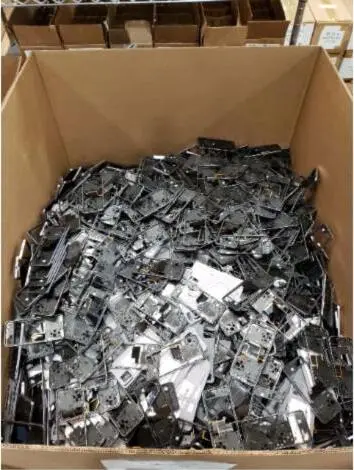
Readiness criteria for advanced automation include high data quality at intake, sufficient return volume to train and validate models and process stability in the underlying six-stage workflow. Organizations that have not yet standardized rule-based automation should complete that foundation before pursuing agentic or predictive capabilities.
A structured pilot approach reduces implementation risk and builds operator trust. Automation runs in parallel with manual review on a defined subset of volume, agreement rates are measured and coverage expands as confidence thresholds are met.
Conclusion: Design The Logic Before Automating
Manual, fragmented RMA processes accumulate cost, delay replacements, expose organizations to compliance risk and leave asset recovery value unrealized. The solution is deterministic policy logic that defines what the software executes.
Designing validation rules, exception conditions, disposition routing and financial closure mechanics before selecting or configuring a platform converts an RMA process into a scalable, compliant, value-recovering operation. The six-stage framework in this article provides the blueprint. The integration mechanics, exception rules and compliance requirements provide the constraints. The structural options of internal build, software platform or managed partner provide the decision criteria.
Premier Logitech provides end-to-end RMA workflow execution at enterprise scale. ASC-authorized repair covers more than 20 OEM brands, and operations support about 40,000 repairs per week across three DFW facilities with nearshore Mexico operations. TAA, ISO, NIST, CMMC and SOC 2 compliance are maintained throughout, and a single-vendor model replaces fragmented repair, fulfillment and recycling providers.
