Key Takeaways
-
ITAD forms the final, critical stage of the IT asset lifecycle where data security, regulatory compliance and environmental responsibility converge on every retired device.
-
Planning for ITAD begins at procurement. Organizations that consider disposition early recover more value and reduce compliance gaps.
-
A complete ITAD process covers secure collection, NIST-aligned data destruction, asset grading, refurbishment, value recovery and certified recycling, with audit-ready documentation at each step.
-
Certified ITAD providers hold R2v3, NAID AAA, ISO 27001 and ISO 14001 credentials. Premier Logitech additionally maintains TAA, NIST, CMMC, SOC 2 and CAGE Code 4WAJ9 for federal and enterprise programs.
-
End-to-end ITAD services, from secure logistics to certified recycling, can operate as part of a single, scalable lifecycle program.
Where ITAD Fits In The IT Asset Lifecycle
The IT asset lifecycle runs through five stages, and ITAD governs the final one while drawing on decisions made at the first.
-
Planning And Procurement – Asset selection, purchasing and initial tracking. Disposition costs and residual value projections belong in procurement decisions.
-
Deployment And Configuration – Imaging, asset tagging and user assignment. Serialized tagging at this stage supports chain-of-custody tracking at end of life.
-
Operation And Maintenance – Ongoing management, repairs and upgrades. Accurate asset registers maintained here feed directly into a smooth ITAD process later.
-
Upgrade Or Refresh – Identifying assets for replacement based on end-of-life or end-of-service-life thresholds. EOSL creates the operational deadline for disposition and marks the point when security patches and support end.
-
Retirement And Disposition (ITAD) – Secure data destruction, value recovery and recycling. This stage begins the IT asset disposition lifecycle and settles compliance, financial and environmental obligations.
Organizations that treat ITAD as a procurement consideration recover more value and reduce compliance exposure. Premier Logitech manages the retirement stage end to end, from secure asset recovery and certified data destruction through remarketing and responsible recycling, as part of a broader IT lifecycle management program.
The Core ITAD Process For Retired Assets
A complete ITAD engagement follows a defined sequence, and each step produces documentation that supports audit readiness and regulatory compliance.
-
Collection And Logistics – Secure pickup uses GPS-tracked transport, tamper-evident containers and vetted personnel. Industry forensic analysis finds that 99% of ITAD-related data breaches occur before the disposition vendor takes possession. Internal staging and handoff therefore represent the highest-risk point in the process.
-
Intake And Reconciliation – Every asset is scanned against the origin manifest at the receiving facility. This step, along with serialized reporting, separates audited ITAD from basic collection.
-
Data Destruction – Sanitization aligns to NIST SP 800-88 Rev. 2. The standard defines three categories: Clear for internal reuse, Purge for external reuse or resale and Destroy for high-sensitivity or classified data. Method selection depends on media type, data sensitivity and reuse intent. Purge serves as the minimum acceptable standard for any asset leaving organizational control.
-
Sorting And Grading – Each asset is assessed for condition and reuse potential. Grading determines whether a device routes to refurbishment, parts harvesting or recycling.
-
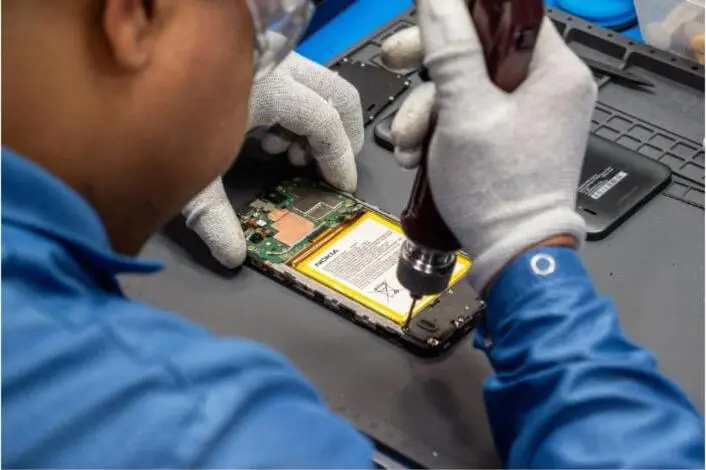
Refurbishment And Repair – Depot-level repairs restore functionality for secondary market resale. Premier Logitech performs depot repair at Levels 1 through 4, with capacity exceeding 40,000 repairs per week across its DFW facilities.
-
Value Recovery – Sanitized, graded assets move into secondary market channels, parts reclamation or employee buyback programs. Many enterprises find that remarketing revenue offsets the full cost of secure data destruction and recycling.
-
Responsible Recycling – Materials that cannot be reused move through certified recycling channels. These channels recover commodities and contain hazardous substances in line with applicable environmental regulations.
These process steps exist because ITAD delivers critical outcomes across security, compliance, sustainability and financial value. The next section details each outcome and how they reinforce one another.
Why ITAD Matters For Security, Compliance, Sustainability And Value
A structured ITAD program delivers four measurable outcomes, and each outcome supports the others.
Data Security And Risk Mitigation – Forty-two percent of used drives sold on secondary markets still contain recoverable sensitive data. Because that level of exposure persists, deleting files or running a standard format does not provide adequate protection. Only certified erasure, cryptographic erase or physical destruction, each documented per serial number, provides a defensible approach. Between 2020 and 2023, Morgan Stanley paid more than $161.5 million in ITAD-related penalties and settlements after unvetted subcontractors sold drives with data intact.
Regulatory Compliance – NIST SP 800-88 Rev. 2, GDPR, HIPAA, FACTA, PCI DSS v4.0.1 and SEC Regulation S-P impose specific obligations on how data-bearing assets are retired. A data breach caused by an improperly disposed device costs an average of $4.44 million globally, and for U.S. organizations that figure reaches $10.22 million. Compliance failures also damage reputation and long-term customer trust.
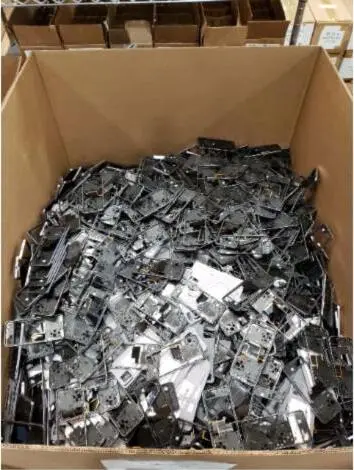
Environmental Sustainability – The world generated 62 million metric tons of e-waste in 2022, with only 22.3% formally collected and recycled. Reuse delivers greater environmental benefit than recycling. A remanufactured enterprise laptop generates roughly 6.34% of the CO2e of a newly manufactured one. ITAD programs that prioritize refurbishment and resale support ESG goals and Scope 3 reporting requirements under the GHG Protocol.
Financial Value Recovery – Enterprise equipment retains roughly 40% to 60% of its original value in its first two years and then depreciates steadily. Early, planned disposition captures more of that value. Premier Logitech remarketing and asset recovery programs return measurable capital to IT budgets and help offset refresh costs.
These outcomes connect directly to lifecycle planning. Clear ITAD policies reduce risk, support ESG reporting and strengthen the financial case for regular refresh cycles.
ITAD And ITAM In The Same Lifecycle
IT Asset Management, or ITAM, tracks and manages assets throughout their active lifecycle. It covers procurement records, license management, maintenance schedules and depreciation tracking. ITAD governs the disposition phase and defines what happens to an asset once ITAM designates it for retirement.
The two functions operate as a single continuum. ITAD picks up where IT asset management leaves off. Accurate asset registers, serialized tagging and lifecycle data maintained through ITAM feed directly into a smooth, auditable ITAD process. Organizations with weak ITAM practices, including the 43% of IT teams that still use spreadsheets as their primary asset tracking tool, face higher risk of ghost assets, missing chain-of-custody records and compliance gaps at disposition.
Compliance And Security Standards For ITAD Providers
The compliance landscape for ITAD spans data security, environmental management and information destruction. Key standards include the following frameworks.
-
NIST SP 800-88 Rev. 2 – Finalized in September 2025, this standard defines U.S. federal media sanitization requirements. It defines sanitization as rendering data recovery infeasible for a given level of effort and delegates technical methods to IEEE 2883-2022. Purge serves as the minimum for any asset leaving organizational control.
-
ISO 27001 – Information security management. It covers asset inventories, restricted access and documented chain-of-custody handoffs.
-
ISO 14001 – Environmental management. It governs how electronic waste is processed and tracked through downstream recycling channels.
-
R2v3 – Responsible recycling certification administered by SERI. It requires serialized device tracking, access-controlled processing areas, documented sanitization plans aligned to NIST 800-88 and forensic verification of at least 5% of logically sanitized media.
-
NAID AAA – Data destruction certification administered by i-SIGMA. It requires unannounced audits, criminal background checks for all personnel with access to client media and a minimum 90-day CCTV retention.
Government and defense work adds further requirements. Premier Logitech holds TAA, ISO, NIST, CMMC and SOC 2 certifications and carries CAGE Code 4WAJ9 as a pre-vetted partner for U.S. federal agencies. These credentials matter because improper disposal can disqualify a business from government contracts, and federal agencies require documented proof of compliant disposition for vendor approval.
Review specific compliance requirements for a program or agency with a Premier Logitech lifecycle specialist.
These standards also form the basis for evaluating any ITAD provider. The next section turns them into a practical selection checklist.
How To Choose An ITAD Provider With Less Risk
Provider selection functions as a risk management decision, and the following criteria form a practical evaluation framework.
-
Certifications And Compliance – Verify R2v3 status through the SERI directory and NAID AAA through the i-SIGMA directory, and confirm ISO 27001 and ISO 14001 coverage. Be cautious with vendors that claim to be “in the process of recertifying,” because that claim often signals misrepresentation. Verified providers supply the certificate PDF and verification URL proactively.
-
Data Destruction Methods – Confirm NIST SP 800-88 Rev. 2-aligned sanitization with serialized Certificates of Destruction per device. Batch certificates that cover a pallet of mixed drives carry no forensic value and function as a compliance liability under NIST 800-88 Rev. 2 practice.
-
Chain Of Custody – Require GPS-tracked logistics, tamper-evident container seals, serial-level scanning at each transfer point and a receiving manifest signed at the vendor facility. A single missing link in the chain invalidates the entire destruction event.
-
Repair And Refurbishment Capabilities – Assess depot repair levels and OEM authorizations. Premier Logitech holds Authorized Service Center status for more than 20 OEM brands, which enables certified repair that competitors without those authorizations cannot match.
-
Value Recovery Options – Evaluate remarketing channels, grading processes and resale programs. Request sample financial recovery reports from previous engagements.
-
Reporting And Visibility – Require audit-ready reports with serialized documentation covering make, model, serial number, sanitization method, disposition outcome and date. Reports must remain retrievable on demand for regulators, auditors or customers.
-
Scalability And Support – Confirm that the provider can handle program volume across multiple sites and offers responsive, dedicated support. Premier Logitech operates three DFW facilities with nearshore operations in Mexico and supports national programs with consistent turnaround.
-
Insurance Coverage – A qualified ITAD vendor carries General Liability, Cyber or Data Breach Liability, Errors and Omissions and Workers’ Compensation insurance. Cyber liability coverage matters most and often represents the gap in low-end vendors.
Questions to ask any prospective provider include:
-
What certifications do you hold, and can you provide verification links
-
How do you handle data destruction for SSDs and NVMe drives specifically
-
What does a sample Certificate of Destruction look like
-
Who are your downstream recycling partners, and are they R2v3 certified
Premier Logitech meets these criteria with the certifications listed earlier, ASC status for more than 20 OEM brands and a proven track record serving enterprises and government agencies across the full IT asset disposition lifecycle.
Make ITAD A Strategic Part Of The Lifecycle
ITAD functions as the final and strategically critical stage of the IT asset lifecycle, where data security obligations are settled, regulatory compliance is demonstrated and residual asset value is captured.
Organizations that plan for disposition at procurement, maintain accurate asset registers through ITAM and engage a certified ITAD partner recover more value, reduce compliance gaps and produce the audit-ready documentation that regulators, customers and ESG frameworks require.
Premier Logitech delivers end-to-end ITAD services, including secure logistics, certified data destruction, depot repair, remarketing and responsible recycling, as part of a single, scalable lifecycle program. Programs can range from a one-time data center decommission to an ongoing enterprise refresh initiative, and Premier Logitech provides the certifications, capacity and chain-of-custody controls those efforts demand.
Build or evaluate an ITAD program with a Premier Logitech lifecycle expert.
Frequently Asked Questions
What Is ITAD, And How Does It Differ From Standard E-Waste Recycling
ITAD, or IT Asset Disposition, is the governed, auditable process of retiring end-of-life IT hardware. It covers certified data destruction, serialized chain-of-custody tracking, asset grading, remarketing and certified recycling. Standard e-waste recycling focuses on recovering raw materials from devices that cannot be reused and does not address data security, compliance documentation or value recovery. ITAD treats recycling as one possible outcome within a broader process. Organizations that route retired devices to recycling without completing data sanitization and chain-of-custody documentation remain liable for any data exposure that results.
What Are The Five Phases Of The IT Asset Lifecycle
The five phases are Planning and Procurement, Deployment and Configuration, Operation and Maintenance, Upgrade or Refresh and Retirement and Disposition. ITAD governs the fifth phase. It begins when an asset is identified for retirement, typically at end of life or end of service life, and concludes when the asset has been sanitized, remarketed or recycled and all documentation has been issued. Planning for disposition during the first phase produces better compliance outcomes and higher value recovery.
What Certifications Should An ITAD Provider Hold
An ITAD provider should hold R2v3 certification for responsible recycling, NAID AAA certification for data destruction, ISO 27001 for information security management and ISO 14001 for environmental management. Government and defense programs also require NIST SP 800-88 Rev. 2 alignment, CMMC readiness and SOC 2 compliance. Certifications should be verified independently through official directories, including SERI for R2v3 and i-SIGMA for NAID AAA, rather than accepted on the basis of a logo or a verbal claim. As noted earlier, Premier Logitech holds the required certifications for federal work, including TAA, ISO, NIST, CMMC, SOC 2 and CAGE Code 4WAJ9.
How Does ITAD Support ESG And Sustainability Reporting
ITAD contributes to ESG programs by diverting devices from landfill through refurbishment and resale and by ensuring that nonreusable materials move through certified recycling channels. Under the GHG Protocol, IT hardware disposal falls within Scope 3 Category 5. Remanufactured devices generate a fraction of the CO2e of newly manufactured equivalents, and serialized ITAD reporting produces the per-device data needed for CSRD compliance, Scope 3 disclosures and ESG audits. A provider that issues only aggregate recycling summaries cannot support asset-level sustainability reporting.
What Documentation Should An ITAD Engagement Produce
A complete ITAD engagement produces a serialized Certificate of Data Destruction for every data-bearing device, a chain-of-custody log from pickup to final disposition, a Certificate of Recycling for materials processed through downstream recyclers, a value recovery settlement report and an asset disposition manifest that reconciles every serial number from the origin manifest to its final outcome. Each Certificate of Destruction should record the device make, model and serial number, the internal storage drive serial number, the NIST sanitization category applied, the specific method used, the tool or machine, a pass or fail verification result and the date, timestamp and operator attestation. Batch certificates that cover multiple devices without serial-level detail do not withstand a regulatory audit.
